Rolled Ankle on Ice: The First 72 Hours and When to Get It Assessed in Edmonton
Rolled your ankle on ice? What helps in the first 72 hours, the signs that need an X-ray, and when sprained ankle physiotherapy in Edmonton makes sense.
If you roll your ankle on ice, spend the first 72 hours protecting it, keeping it raised when you can, using compression for swelling, and moving within comfort rather than resting completely. Get it checked by a doctor or urgent care the same day if you cannot take four steps on it, or if the bone itself is tender. If it is still painful, swollen or giving way after a few days, that is a good time to book sprained ankle physiotherapy in Edmonton.
General information only, not a diagnosis. Our registered physiotherapists and registered massage therapists assess every patient first.
Winter brings a particular kind of ankle injury to our clinic in northwest Edmonton. It is rarely a dramatic sports moment. It is a driveway, a bus stop, a back step or a parking lot, a foot that slides, and an ankle that rolls under you. This guide covers what a sprain actually is, what helps in the first three days, the signs that mean you should be seen, what a physiotherapy assessment looks at, and how to get back on icy sidewalks with more confidence.
Key takeaways
- A sprain is an injury to a ligament. Most rolled ankles stretch the ligaments on the outside of the ankle.
- For the first 1 to 3 days, protect the ankle and limit what sharply increases pain, but avoid complete bed rest.
- Not being able to take four steps, or tenderness right on the ankle bones or the outer midfoot, means a doctor should check it for a fracture first.
- Exercise has strong evidence for ankle sprains and for reducing repeat sprains, which is where physiotherapy fits.
- No doctor referral is needed to see a physiotherapist in Alberta.
What counts as a sprain, and what does not?
A sprain is an injury to a ligament, the tough bands that hold bones together at a joint. A strain is different: it is an injury to a muscle. When your foot rolls inward on ice, the small ligaments on the outside of the ankle take most of the stretch. That is the classic “rolled ankle”.
Clinicians often grade sprains by how much of the ligament is affected. A mild sprain involves a few fibres, a moderate sprain involves more of the ligament, and a severe sprain is a complete tear, which can leave the ankle feeling loose or unstable. The grade matters because it changes how the ankle is protected and how quickly loading is built back up.
Not every painful ankle after a fall is a sprain. A fall on ice can also fracture a bone, injure the tendons on the outside of the ankle, or hurt the foot rather than the ankle. That is why the warning signs below matter, and why an assessment looks at more than the spot that hurts.
What should you do in the first 72 hours after rolling your ankle?
The current approach for soft tissue injuries comes from a 2019 editorial in the British Journal of Sports Medicine by two Canadian clinicians, known as PEACE and LOVE. For the first days it suggests:
- Protect. Unload or limit the movements that sharply increase pain for 1 to 3 days. Protecting is not the same as bed rest.
- Elevate. Rest the ankle above the level of your heart for short spells. The authors note the evidence is weak but the risk is low.
- Compress. A tensor bandage or compression sleeve. The authors write that compression after an ankle sprain seems to reduce swelling.
- Educate. Understand what is happening, and be wary of anything promising a quick fix.
What about ice? Many people find it eases pain for a while, and that is a fair reason to use it, wrapped in a thin towel and for short periods. The same editorial points out that there is no high-quality evidence that ice helps soft tissue injuries heal. For questions about pain medication, ask a pharmacist or your doctor, especially if you take other prescriptions.
We cover this first-aid stage in more detail, including the full PEACE and LOVE steps, in our guide to what to do after a sports injury in Edmonton. The same principles apply whether you rolled your ankle on a court or on your front step.
What signs mean a rolled ankle needs to be checked?
Emergency doctors in Canada developed a set of checks called the Ottawa ankle rules to decide when an ankle X-ray is needed. A 2003 review in the BMJ of 27 studies found the rules picked up almost all ankle and midfoot fractures. You do not need to apply them yourself, but two of the signs are easy to recognise. See a doctor or go to urgent care the same day if:
- You cannot take four steps on the injured foot, both right after the fall and when you try again later, even with a limp.
- Pressing on the bony knob on either side of the ankle, the back edge of those knobs, or the outer edge of the midfoot is sharply tender.
Also get medical help promptly if the ankle or foot looks deformed, if the foot below the injury is numb, cold or pale, if you heard a loud crack with immediate severe pain, or if you have diabetes or circulation problems and the foot is swollen and discoloured. Physiotherapy comes after fractures and other serious injuries are ruled out.
When should you see a physiotherapist for a sprained ankle?
Once the red flags are ruled out, earlier is usually easier than later. Book an assessment if:
- Walking is still painful or you are still limping after a few days.
- Swelling keeps coming back at the end of the day.
- The ankle feels unstable, gives way, or you do not trust it on uneven ground.
- You have rolled the same ankle before.
- You have a job, a sport, or a walk to the bus that you need to get back to.
You do not need a referral to see a physiotherapist in Alberta. Some extended health plans ask for a doctor’s note before they reimburse, so it is worth checking your policy.
How does a physiotherapist assess an ankle sprain?
Your first visit at Coronation Physiotherapy is one-on-one with a registered physiotherapist. We start with how you fell, what you felt and what you have been able to do since. Then the assessment usually covers:
- A fracture screen. The same checks a doctor uses. If anything points to a break, we tell you and send you for medical review first.
- Swelling and range of motion. How far the ankle bends up, down and side to side, compared with the other side.
- Ligament tests. Gentle stress tests that show which ligaments are involved and how much they have been stretched.
- Strength and balance. Calf, ankle and hip strength, and how well you balance on the injured leg.
- Walking. How you load the foot, and what you are doing to protect it.
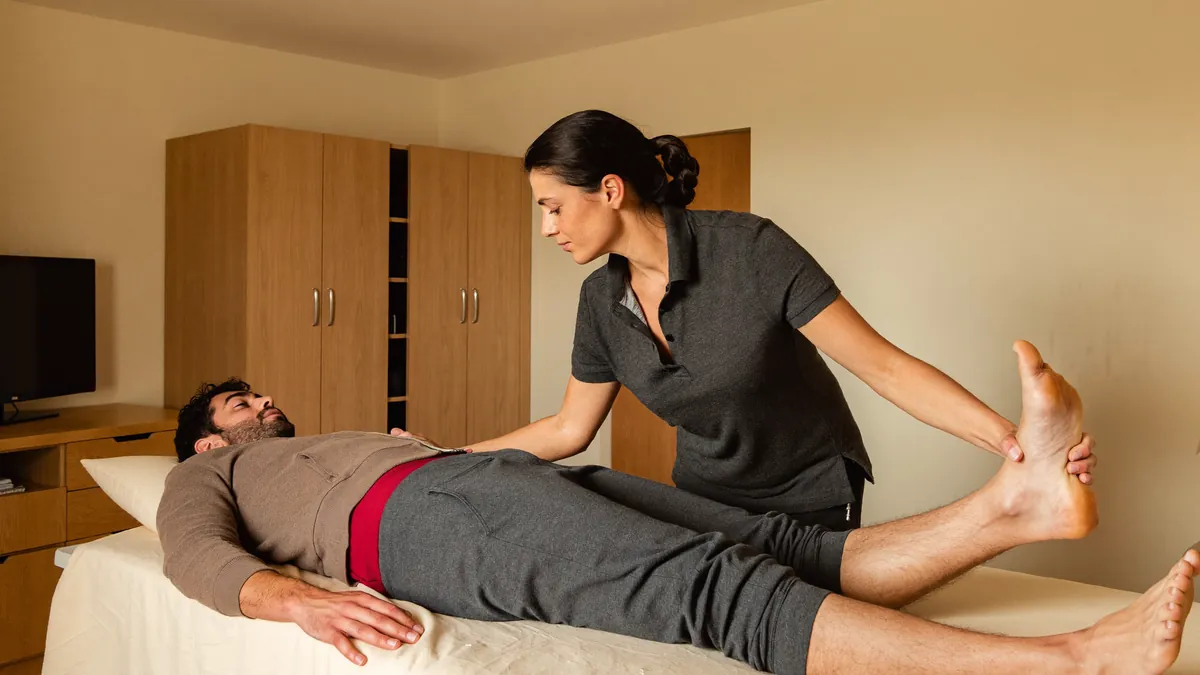
Treatment is then built around what we find. It usually combines hands-on care to ease pain and restore movement with a progressive exercise plan you do between visits, starting with range of motion and gentle loading and building toward strength, balance and confident walking. If the ankle needs extra support for a while, we will talk about taping or a brace. How quickly each person progresses varies, and your physiotherapist will give you an estimate based on your own assessment. Our physiotherapy in Edmonton page explains how assessment-led care works at the clinic.
Why do ankle sprains sometimes keep coming back?
The 2021 clinical practice guideline on lateral ankle sprains in the Journal of Orthopaedic and Sports Physical Therapy notes that most people’s symptoms resolve, but some are left with an ankle that keeps feeling unstable. Clinicians call that chronic ankle instability.
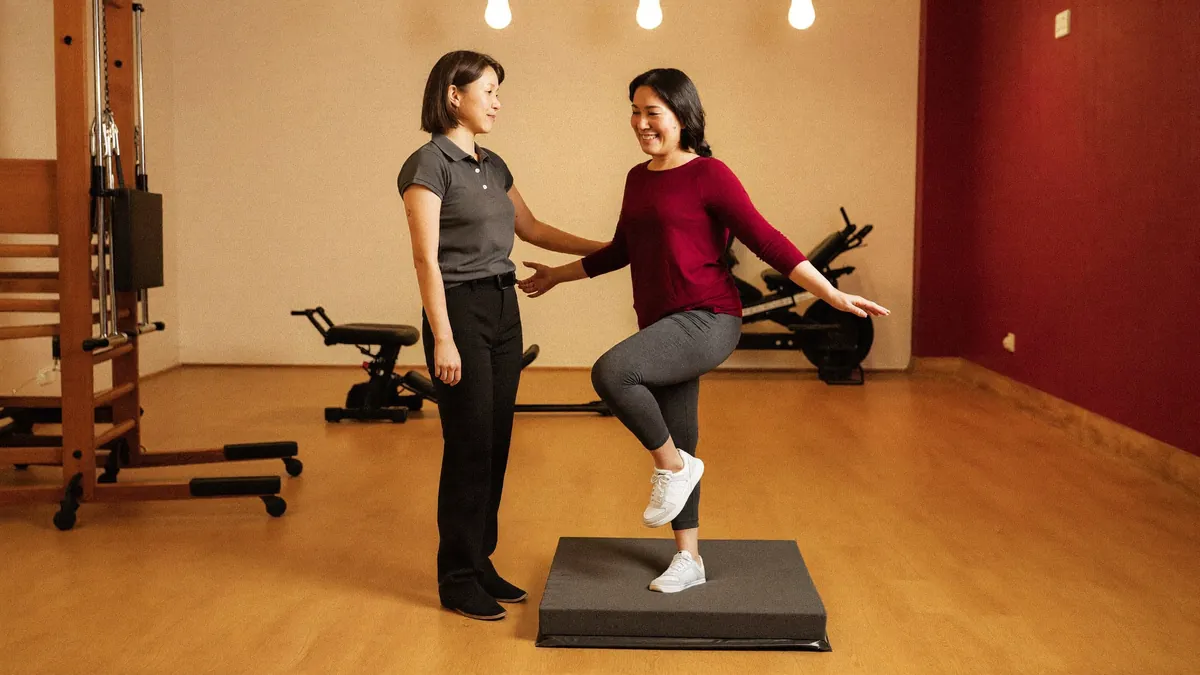
The PEACE and LOVE authors write that there is strong evidence supporting exercise for ankle sprains and for reducing repeat injuries. Exercise helps restore mobility, strength and the ankle’s sense of position, which is what lets it react when your foot slides. Pain going away is not the same as balance coming back, so the later stages of rehab focus on single-leg control, stepping, and the kind of uneven ground you meet in a Canadian winter.
The same thinking applies to other joints. If a fall on the ice also left you with a sore hip or shoulder, our guides to hip pain physiotherapy in Edmonton and rotator cuff injuries cover those.
How can you get back on icy sidewalks safely after a sprain?
Edmonton winters do not wait for an ankle to heal. A few habits help while you are rebuilding strength and balance:
- Footwear first. Boots with a deep, soft tread, and a pull-on ice grip for days when sidewalks are glazed. Take ice grips off before you walk onto smooth indoor floors.
- Shorten your stride. Short, flat-footed steps with your weight over your feet, sometimes described as walking like a penguin, keep your centre of mass where your feet can catch it.
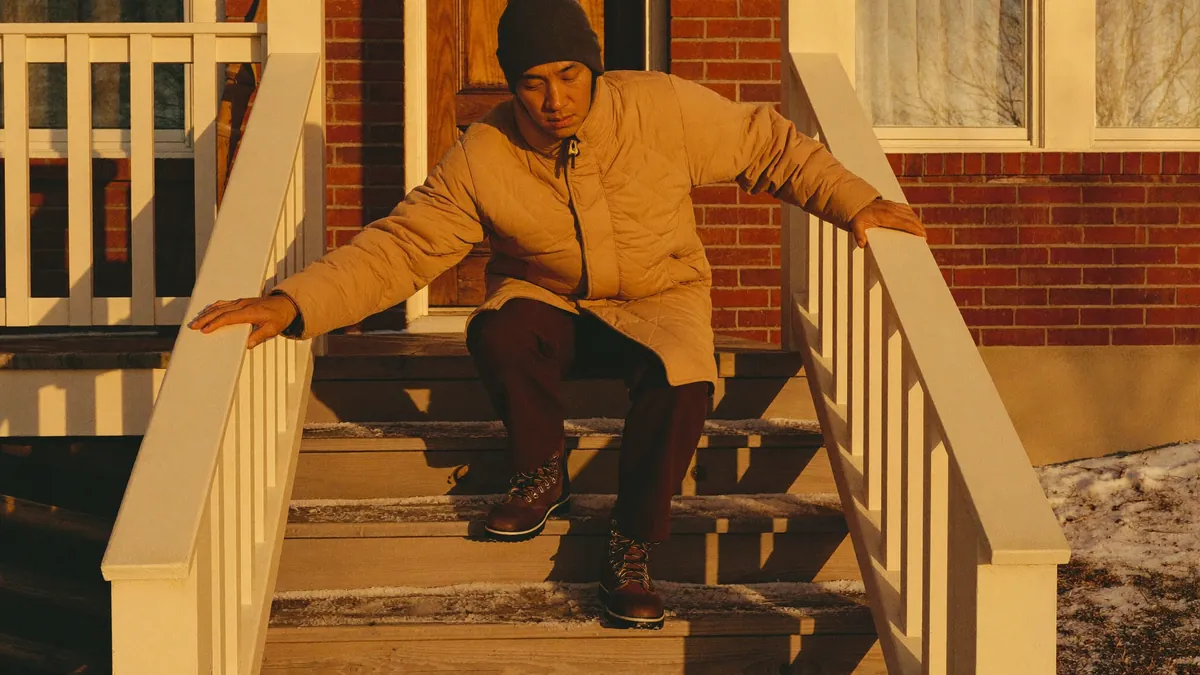
- Use the rail. On steps, porches and transit stairs, keep one hand on the handrail, and take stairs one at a time while the ankle is still sore.
- Keep your hands free. A backpack instead of a bag in each hand lets you catch your balance.
- Plan the slippery spots. Parking lots, bus stops and the edges of driveways often refreeze after a melt. Slow down there.
- Keep up the exercises. The balance work from your rehab is what helps the ankle react when a foot does slip.
Where can you get physiotherapy for a sprained ankle in Edmonton?
Coronation Physiotherapy is at 14315 118 Ave NW, Unit 142, in northwest Edmonton, with free parking at the front and back of the building. We are open Monday to Friday, 8:00 AM to 6:00 PM, and closed on weekends. The clinic is a practice Edmonton has trusted since 1987, now led by an experienced team of registered physiotherapists, and we direct bill most major insurers. You can see the full range of care on our services page.
The bottom line
A rolled ankle on ice usually needs a few days of protection, elevation and compression, then gradual movement rather than long rest. Get a fracture checked first if you cannot take four steps or the bone is tender. If it is still sore, swollen or unstable after a few days, an assessment gives you a plan for strength, balance and getting back out on winter sidewalks.
Sources
- Dubois B, Esculier JF. Soft-tissue injuries simply need PEACE and LOVE. British Journal of Sports Medicine, 2020;54:72-73.
- Stiell IG, et al. Decision rules for the use of radiography in acute ankle injuries. JAMA, 1993;269:1127-32.
- Bachmann LM, et al. Accuracy of Ottawa ankle rules to exclude fractures of the ankle and mid-foot: systematic review. BMJ, 2003;326:417.
- Martin RL, et al. Lateral Ankle Ligament Sprains Revision 2021. Journal of Orthopaedic and Sports Physical Therapy, 2021;51(4):CPG1-CPG80.
Important: This article is general information only. It is not medical advice and it cannot be used to diagnose or treat any condition. Every patient is assessed first by one of our registered physiotherapists or our registered massage therapists before any treatment, and your care plan is based on that assessment. If you have symptoms, please book an assessment.
Rolled your ankle on the ice? Book a sprained ankle assessment online with Coronation Physiotherapy at 14315 118 Ave NW, or call us at (825) 451-6263. No referral needed.