

Sports rehabilitation, northwest Edmonton
Back to sport when the testing says so, not when the calendar does
Getting out of pain is the beginning. Returning at full capacity without re-injuring yourself is the goal, and that takes objective criteria you have to meet.
The short answer
What sports rehabilitation here actually means
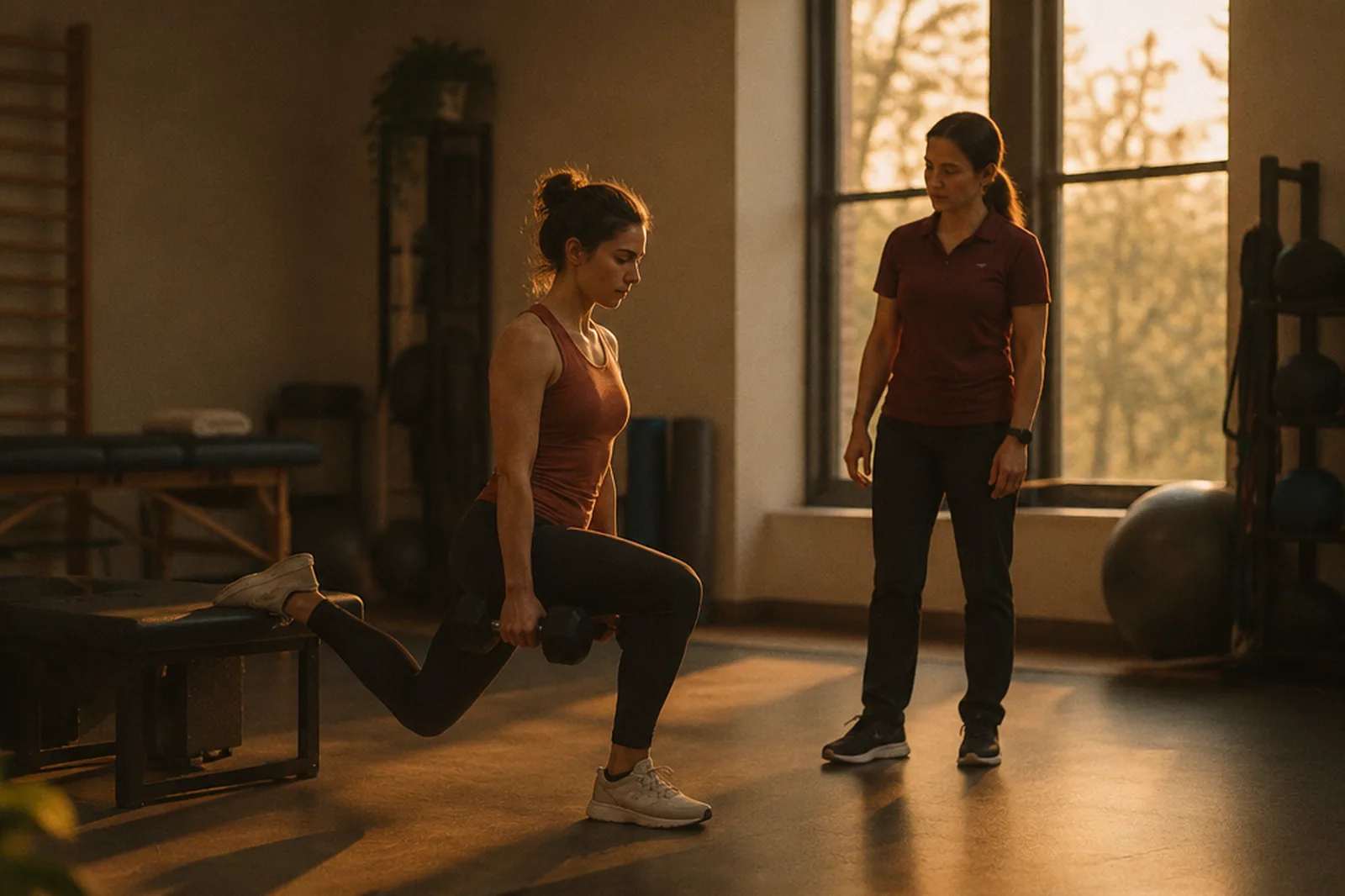
Sports physiotherapy at Coronation is rehabilitation for anyone whose recovery goal is tied to a physical activity, from competitive hockey to recreational running to the weekend hikes that keep you sane. It runs from assessment through loaded rehabilitation to a tested return to play.
What separates it is where we look. A recurring hamstring strain is rarely only about the hamstring, and a shoulder that keeps dislocating is telling you something a previous assessment may have missed. We assess the cause of the injury, not just the location of the pain.
Why patients choose Coronation Physiotherapy
Trusted since 1987
A practice Edmonton has relied on from the same northwest location since 1987, now led by an experienced team.
Owner operated
Both owners are registered physiotherapists who treat patients themselves, every day, in this clinic.
3,400+ sq ft
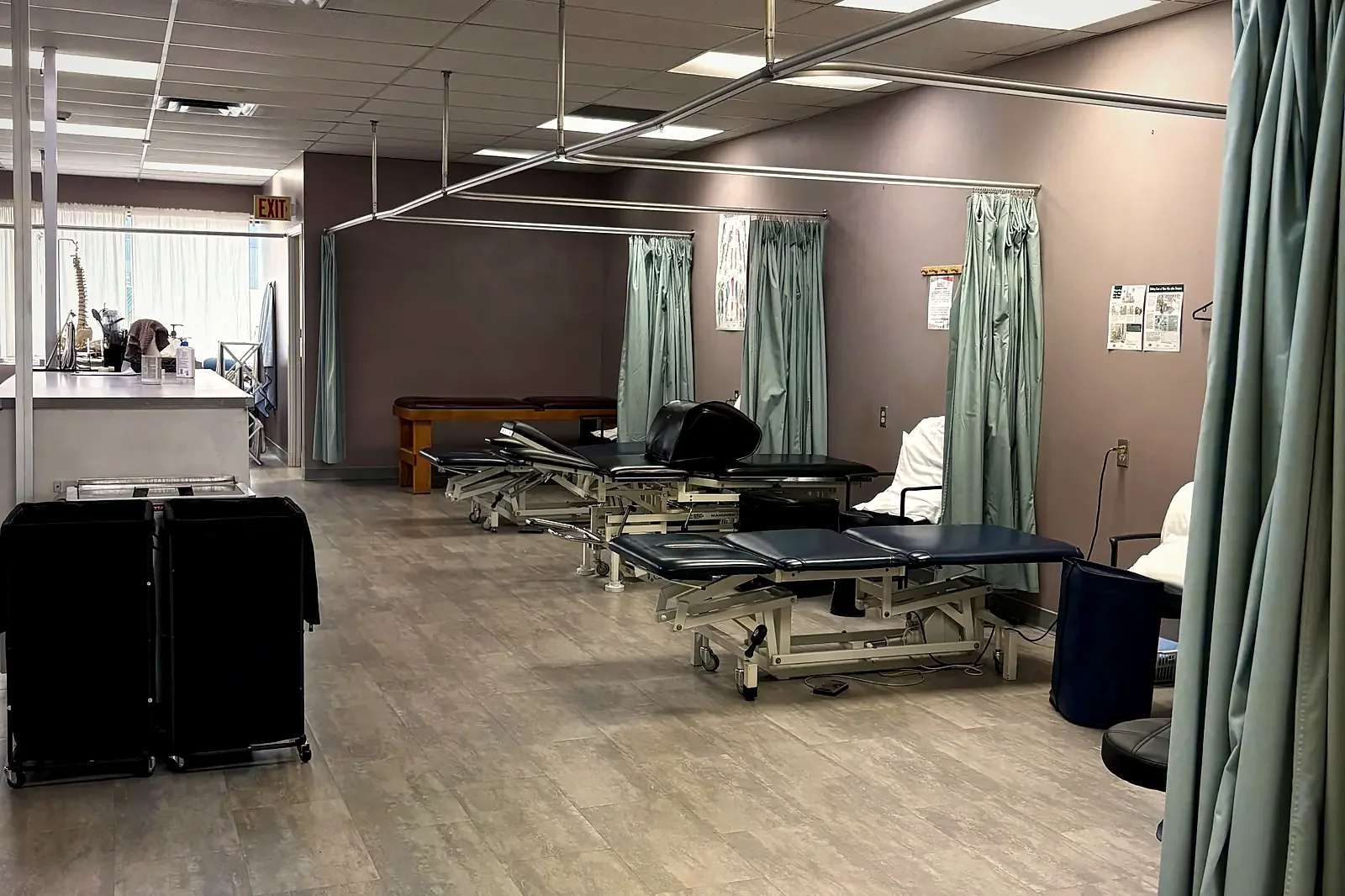
A dedicated rehabilitation facility with a full exercise gym, private treatment rooms and advanced equipment.
4.8 from 101 reviews
Rated 4.8 on Google by 101 patients across northwest Edmonton.
Return to sport
We do not send people back to sport on a timeline
Tissue healing has a timeline. Readiness does not. Every sports rehabilitation programme here includes criteria you must meet before return to activity is cleared.
Strength symmetry
The injured side has to measure up against the uninjured side under real load, not just feel fine walking around.
Control under fatigue
Injuries happen late in a game. Control is tested when you are tired, because that is when it fails.
Sport-specific load
Cutting, landing, throwing or sprinting, whichever your sport actually demands, tested before you meet it in competition.
Confidence to load it
An athlete who does not trust the limb will protect it, and protecting it is how the next injury starts.
Injuries we assess and treat
The injuries that bring athletes in
The three stages
From assessment to cleared for play
Assessment
We identify the underlying cause of the complaint, not just the painful structure, and look at the biomechanical factors feeding the dysfunction. You get the working diagnosis and the expected timeline.
Treatment and loading
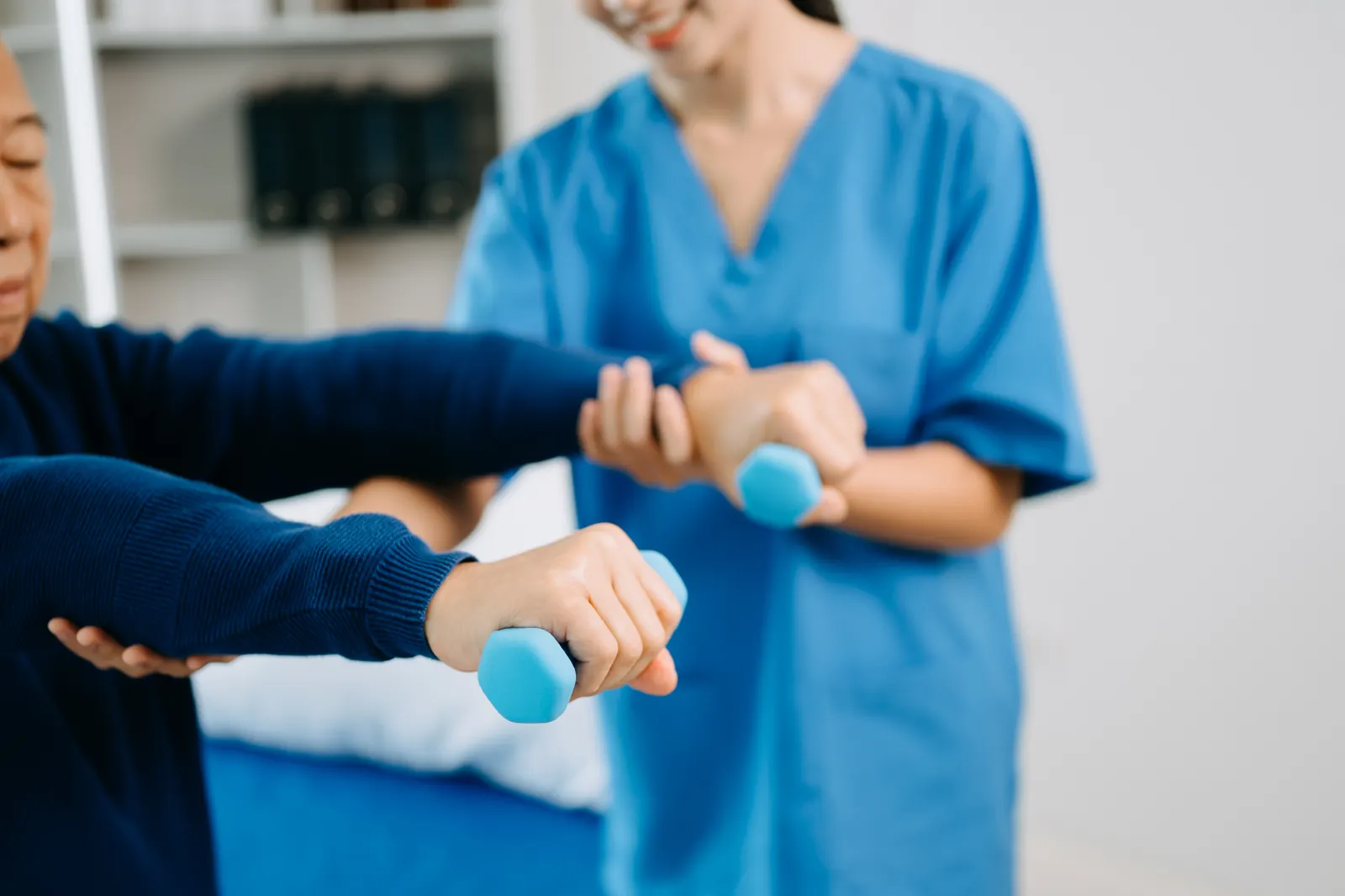
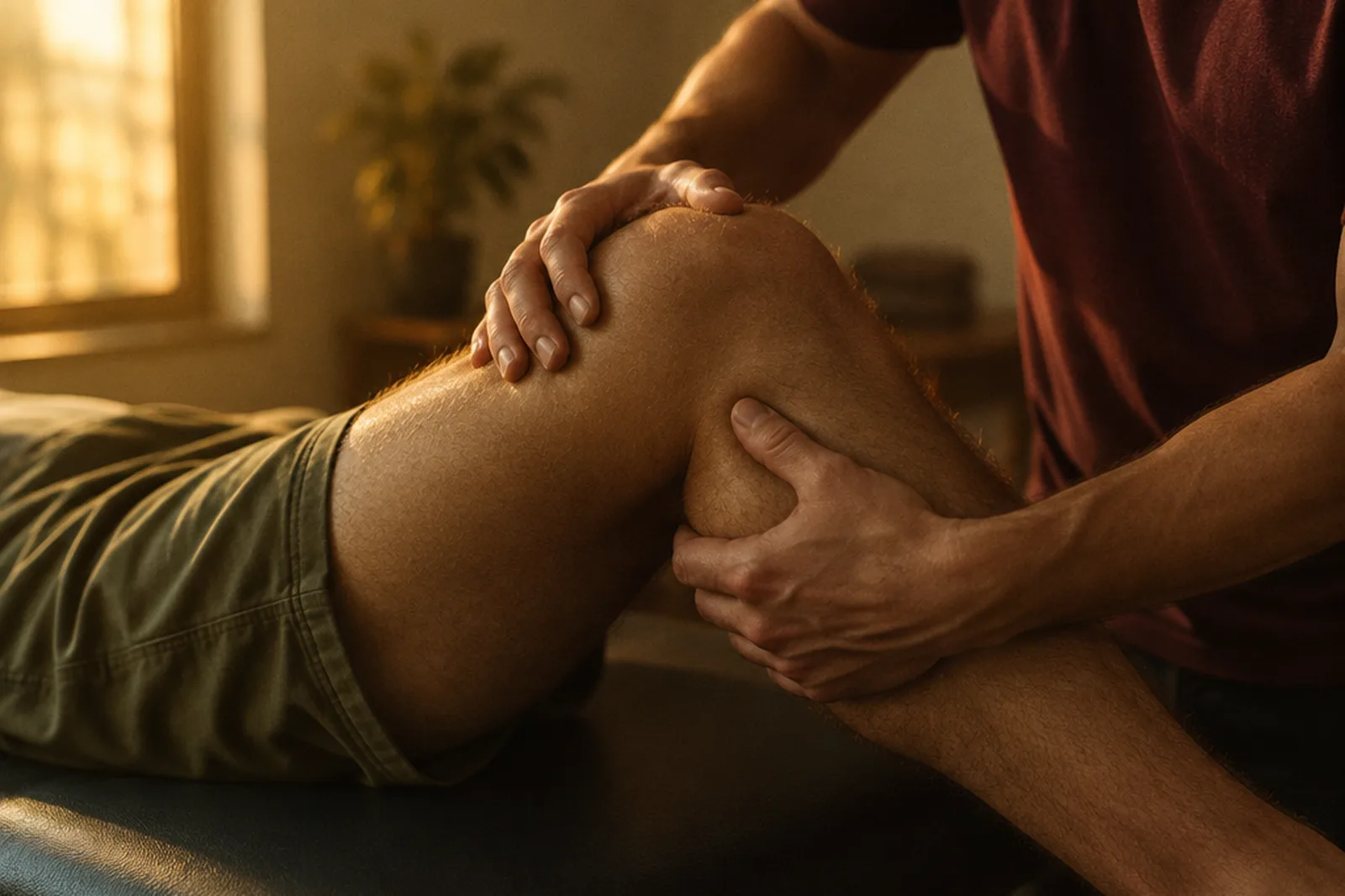
Manual therapy to restore joint and muscle function, combined with Gunn IMS, shockwave and a progressive exercise programme built in the on-site gym as capacity returns.
Tested return
Objective criteria, met and measured, before return to activity is cleared. You also leave with the exercises and loading strategy that keep the injury from recurring.
Why the gym matters
A 3,400 square foot floor to rebuild strength on
The last third of sports rehabilitation is load, and load needs equipment and space. Coronation runs a 3,400 square foot facility with a full rehabilitation gym, cardio and strength equipment, and room to test movement properly.
Where the assessment indicates it, treatment also draws on three types of shockwave therapy for tendon conditions, Gunn IMS for chronic muscle dysfunction, and traction and decompression.
How shockwave therapy works

Who you will see
Your sports rehabilitation is run by a registered physiotherapist
Both physiotherapists below are registered with the College of Physiotherapists of Alberta, and the College's own public register records both of them as practising at this clinic. Both are authorized by the College to use needles in practice and to perform spinal manipulation, so dry needling and manual therapy are carried out by a physiotherapist who holds that authorization. You can check either of them on the register yourself.

Gugan Dakshnamurthy
Co-owner, Registered Physiotherapist
Authorized by the College to use needles in practice and to perform spinal manipulation. Recorded on the public register as practising at Coronation Physiotherapy.
Registered with the College of Physiotherapists of Alberta, permit #8475 Verify
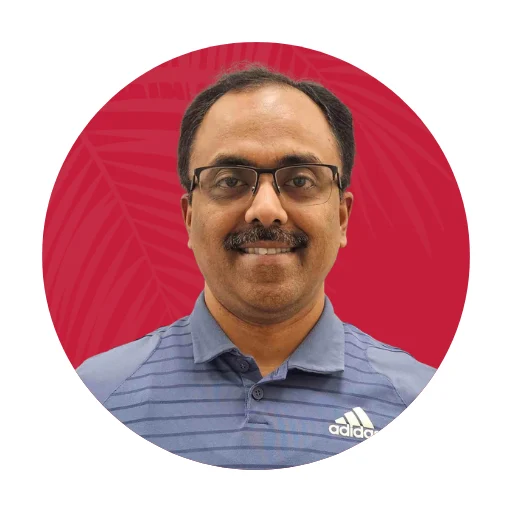
Muthuukaruppan Muthiah
Co-owner, Registered Physiotherapist
Known to patients as Muthu, and the most senior physiotherapist on the team. Authorized by the College to use needles in practice, to perform spinal manipulation, and to order diagnostic imaging, which in Alberta is limited to x-ray, MRI and ultrasound.
Registered with the College of Physiotherapists of Alberta, permit #8071 Verify
Straight answers
Sports rehabilitation questions
Do I have to be a competitive athlete?
No. Sports rehabilitation here means any recovery goal tied to a physical activity. Returning to recreational running, weekend hockey or a hiking trip counts, and is treated with the same method as a competitive return.
How do you decide when I can return to sport?
By testing, not by the calendar. Your programme includes objective criteria you have to meet before return to activity is cleared, such as strength symmetry, control under load and tolerance of sport-specific movement.
Why does my injury keep coming back?
Usually because the treatment addressed the painful site rather than the cause. A recurring hamstring strain is rarely only about the hamstring. The assessment looks upstream and downstream of the symptom for the movement fault driving it.
Do you treat concussion?
We assess concussion and manage return to sport, including the vestibular and balance symptoms that often persist after the initial injury. Where a medical assessment is required first, we will tell you.
Can I rehabilitate a post-surgical knee or shoulder here?
Yes. Post-surgical return to sport for knee, shoulder and hip is a core part of the caseload, and the on-site gym is what makes the later loaded stages possible.
Is sports rehabilitation different from physiotherapy?
Sports rehabilitation describes a process rather than a single profession, and depending on the injury and the setting it can involve different kinds of qualified provider. What you get here is physiotherapy: assessment and treatment by a registered physiotherapist, with your return to activity planned around criteria you have to meet rather than a fixed number of weeks. If you are comparing clinics, the useful questions are who will actually assess you, whether you see the same person at every visit, and whether there is the space and equipment to load you properly in the later stages.
What equipment do you have on site?
A 3,400 square foot facility with a rehabilitation gym, cardio and strength equipment, three types of shockwave therapy, Gunn IMS and dry needling, and traction and decompression.
Related guides
Guides for injured athletes
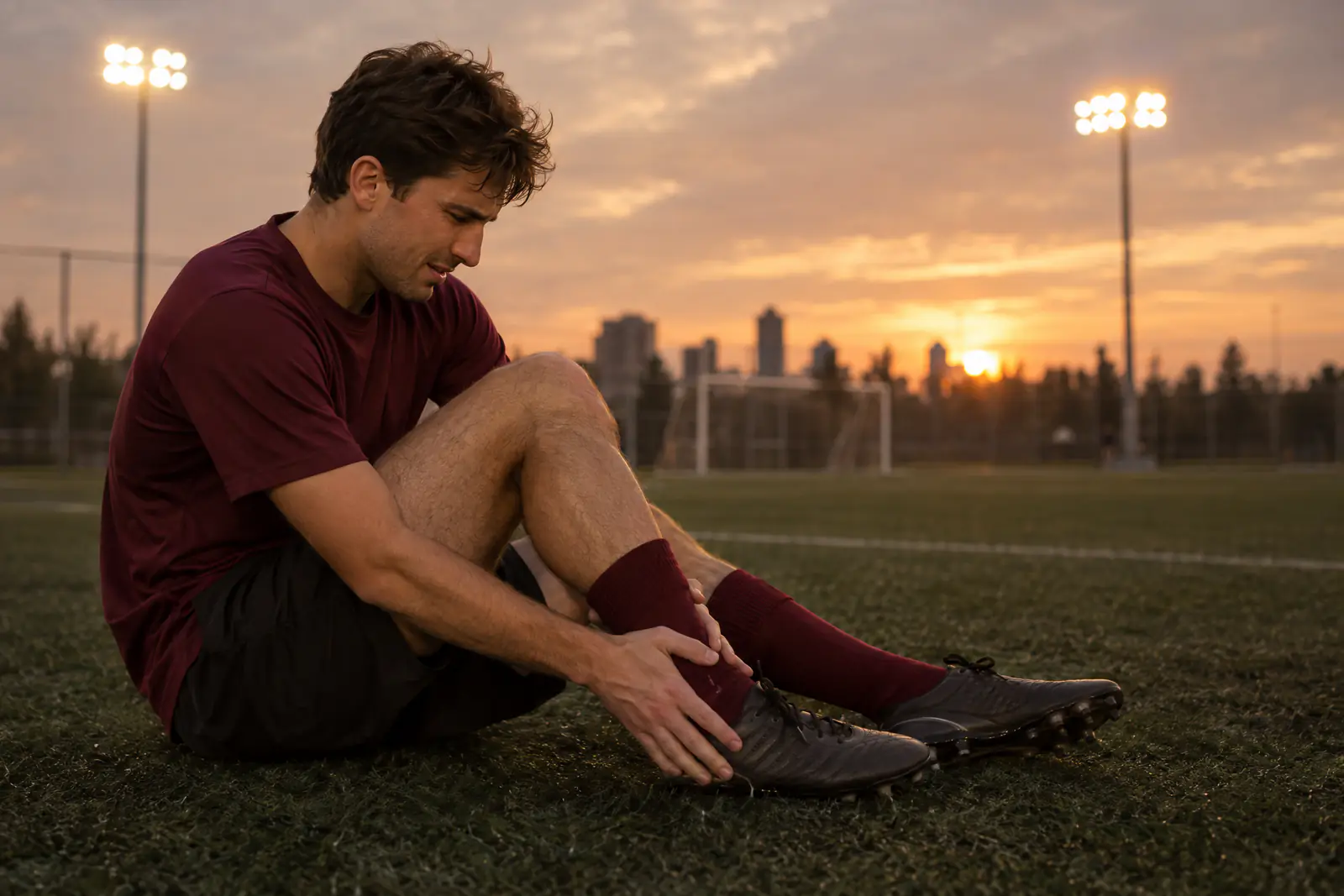
Sports Injury Physiotherapy in Edmonton: What to Do After You Get Hurt
Hurt playing sport? What to do in the first 72 hours, the truth about ice, and the signs that mean emergency before physio.
Read the guide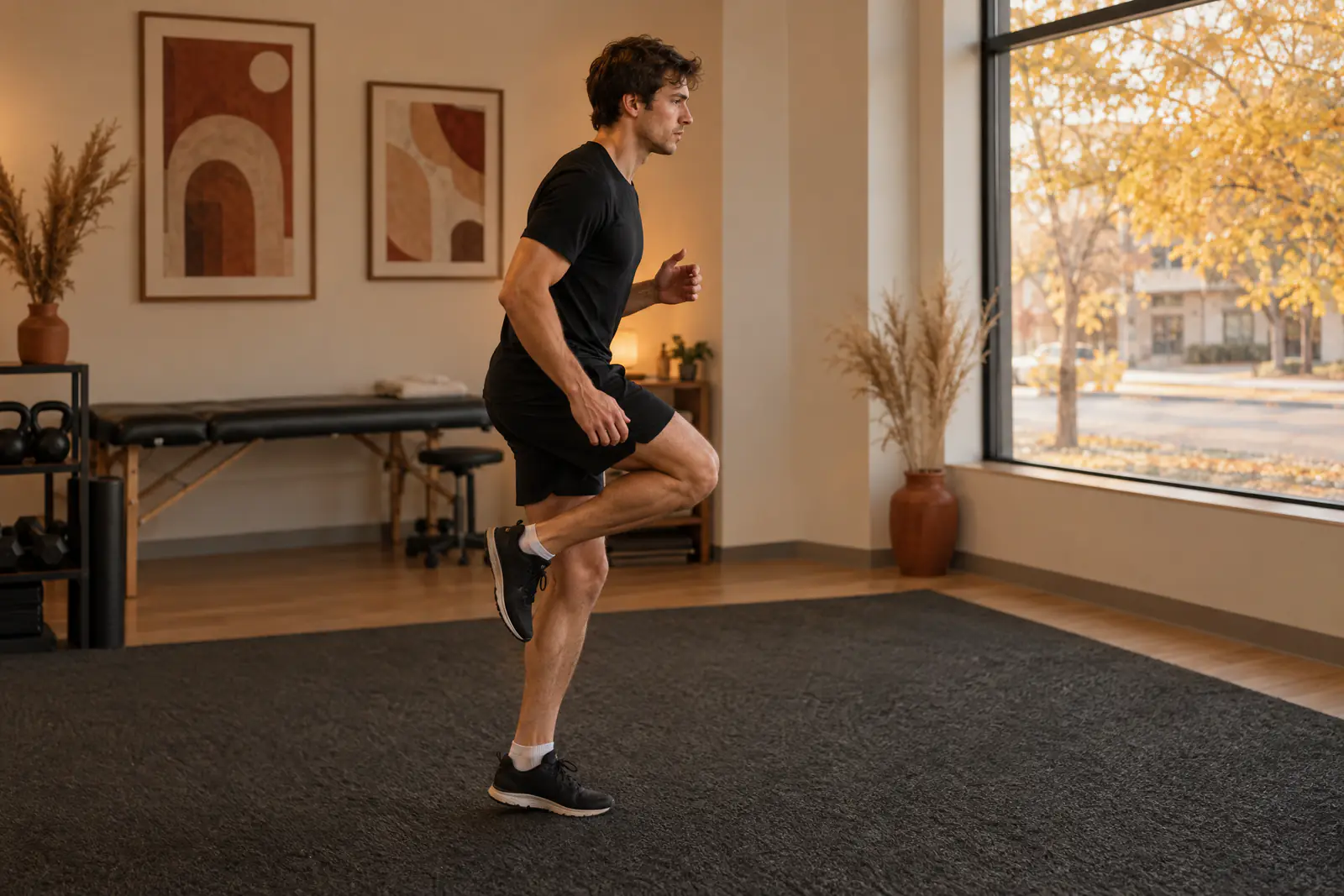
Return to Sport After Injury: How a Physio Decides You’re Ready
Why pain going away is not the test, and how strength, hop and agility testing decide when you can safely play again.
Read the guide
Rotator Cuff Injury Physiotherapy in Edmonton: Tears, Tendons, Rehab
Tendinopathy, partial tear or full tear: how physiotherapy helps a rotator cuff injury, what to expect and how long recovery often takes.
Read the guideFind out why it keeps coming back
Book an assessment with a registered physiotherapist and get a straight answer about the cause, not just the symptom.