Sports Injury Physiotherapy in Edmonton: What to Do After You Get Hurt
Just hurt yourself playing? What to do in the first 72 hours, whether to ice, red flags for emergency, and when sports injury physio in Edmonton helps.
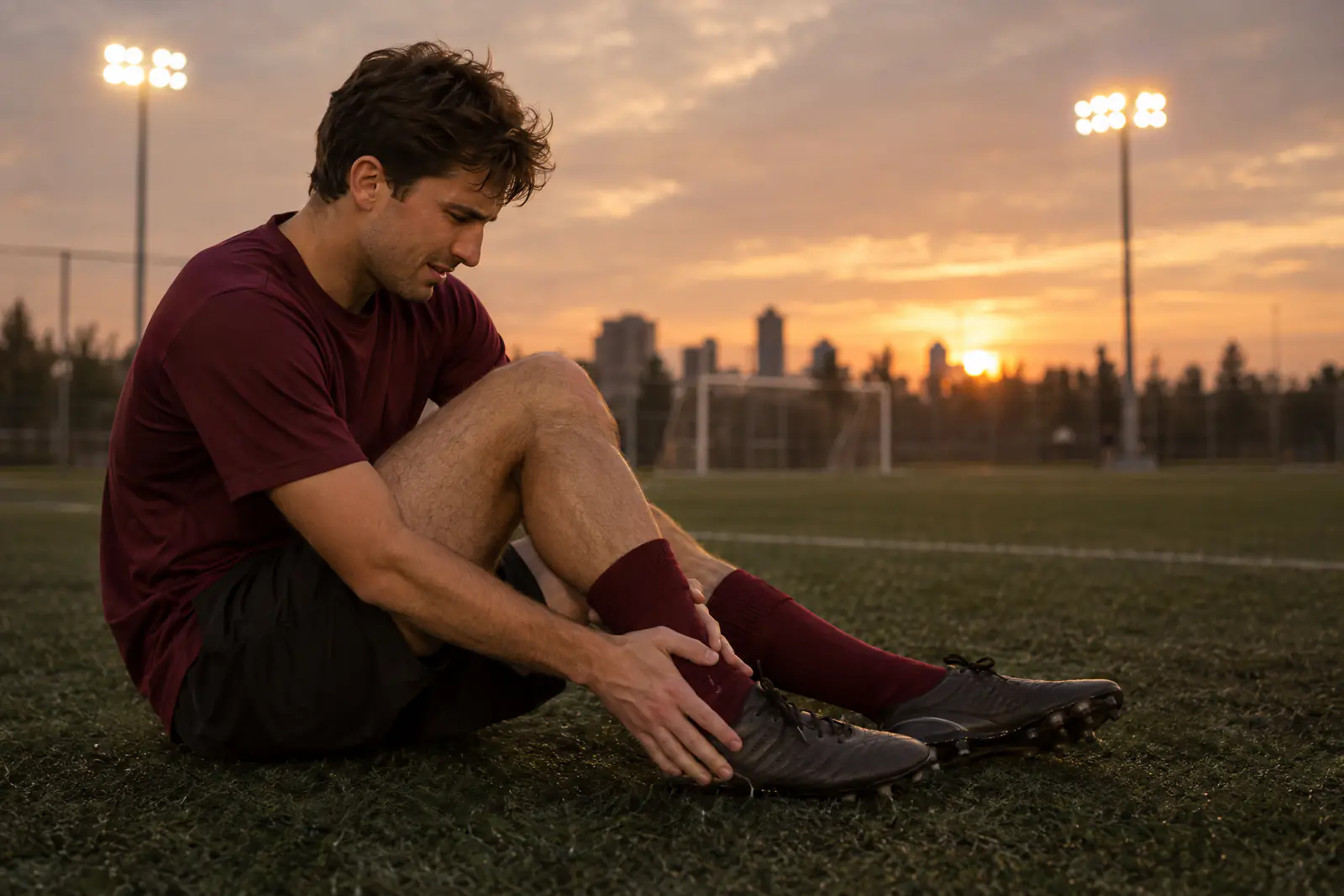
You rolled your ankle going up for a rebound, felt your hamstring grab halfway through a sprint, or took a hit into the boards. For the first two or three days, protect the area, keep it raised, use compression, and let pain guide how much you move. After that, gradual movement and loading usually do more for healing than rest does. Good sports injury physiotherapy in Edmonton builds on exactly that.
At Coronation Physiotherapy in northwest Edmonton, we see a lot of people in that first week, still unsure whether they need an X-ray, a brace, or just time. Below is what to do, what to skip, and the signs that mean you should go to emergency first.
General information only, not a diagnosis. Our physiotherapists and massage therapists assess every patient first.
Key takeaways
- For the first 1 to 3 days, follow PEACE: protect, elevate, avoid anti-inflammatories early, compress and educate yourself.
- Ice can take the edge off pain for a short while, but it is not a healing tool.
- Go to emergency or urgent care for deformity, a suspected fracture, numbness, rapid knee swelling, or any concussion symptoms.
- After the first few days, guided loading and movement usually beat prolonged rest.
- No doctor referral is needed to see a physiotherapist in Alberta, and we direct bill most major insurers.
What should you do in the first 72 hours after a sports injury?
The most useful framework right now comes from two Canadian clinicians at The Running Clinic in Quebec. Their 2019 editorial in the British Journal of Sports Medicine, Soft-tissue injuries simply need PEACE and LOVE, replaced the old RICE advice with something closer to what the research supports.
PEACE covers the first few days:
- Protect. Limit the movements that sharply increase pain for 1 to 3 days. Protect does not mean bed rest. Long rest tends to weaken tissue.
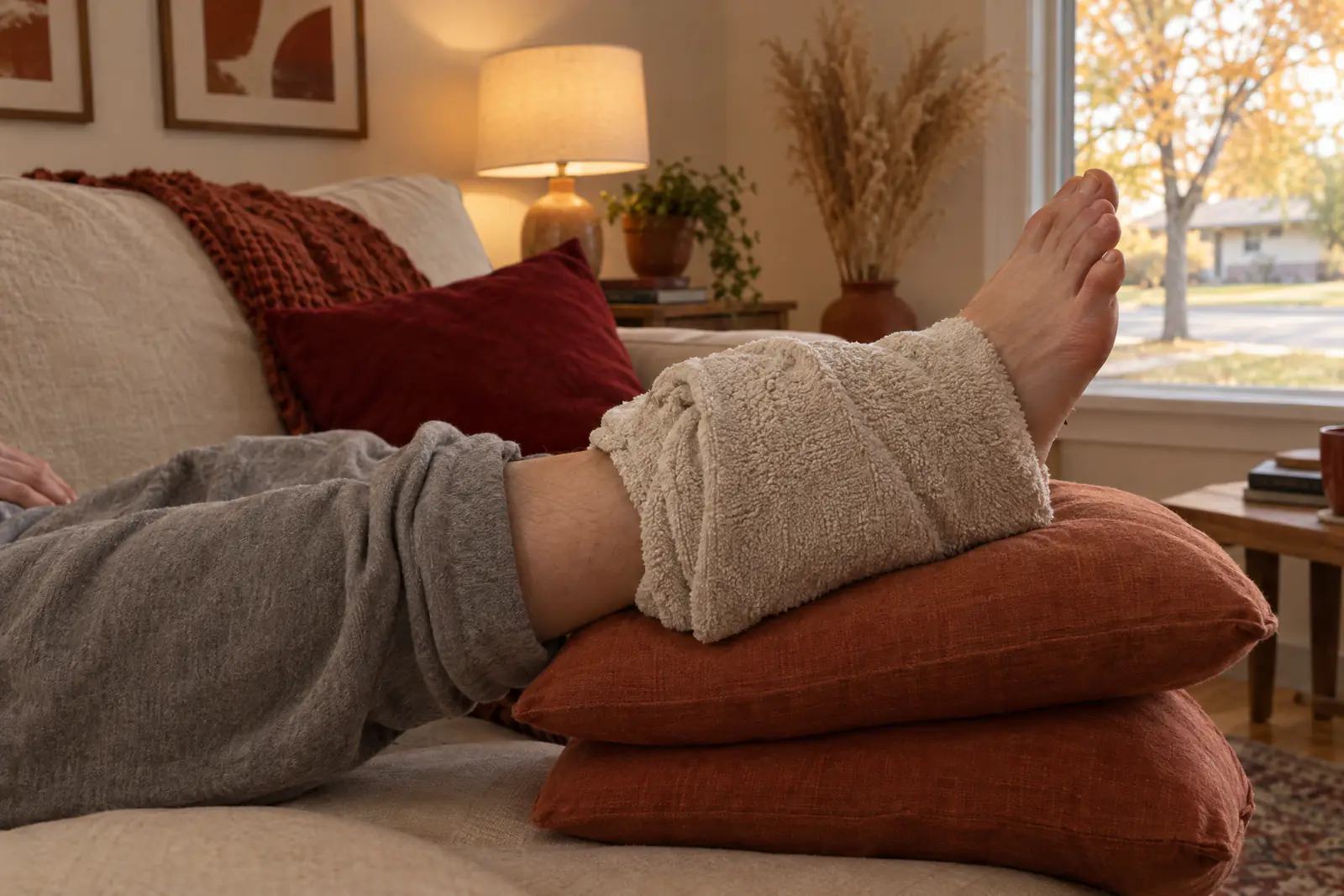
- Elevate. Raise the injured limb above your heart when you can, to help fluid drain away.
- Avoid anti-inflammatories early. Inflammation is part of how soft tissue starts to repair, and the authors question blocking it in the first days. Talk to your pharmacist or doctor about medication, especially if you take other prescriptions.
- Compress. A tensor bandage or compression sleeve can help limit swelling.
- Educate. Understand what is happening and avoid chasing passive treatments that promise a shortcut. Your body sets the pace, and that is normal.
Most people do a few of these by instinct. The one they get wrong is rest: a week on the couch with a sprained ankle usually leaves it stiffer, not stronger.
Should I ice an injury?
You can, for comfort. Ice numbs the area and many people find it takes the edge off pain for a while, which can make it easier to sleep or move. That is a fair reason to use it.
What ice does not do is speed up healing. The PEACE and LOVE authors point out that there is little good evidence ice improves recovery from soft tissue injuries, and there is a theoretical concern that heavy icing may interfere with the early inflammatory phase the body uses to start repairs. That is why the current view treats ice as short-term pain relief, not a treatment.
If you do ice, wrap the pack in a thin towel, keep it to roughly 10 to 15 minutes at a time, and stop if your skin goes numb or white. Do not ice right before you go back on the field to mask pain. Pain during play is information, and numbing it is how a mild sprain turns into a worse one.
When should you go to emergency or urgent care instead of physio?
Physiotherapy is the right first stop for most sprains and strains. Some injuries need a doctor or a hospital first. Go to emergency or urgent care, or call 911, if you notice:
- An obvious deformity, a bone out of place, or a joint that looks wrong.
- You cannot take four steps on an injured ankle or foot, both right after the injury and when you try again later. This is one of the Ottawa ankle rules clinicians use to decide whether an X-ray is needed.
- Bone tenderness right on the ankle knobs or the outer edge of the midfoot.
- Numbness, tingling, or a cold or pale limb below the injury.
- A knee that swells up quickly and heavily within the first hours, especially after a pop or a twist.
- Any head knock with headache, confusion, vomiting, double vision, neck pain or loss of consciousness.
Head injuries deserve their own line. Parachute Canada’s concussion guidance is clear that anyone with suspected concussion stops playing that day, and red flag symptoms mean calling an ambulance. Physiotherapy can help later with return to activity, but medical assessment comes first.
What are the most common sports injuries in Edmonton?
Edmonton plays a lot of different sports across the year, and the injuries follow the season. A few patterns come up again and again in recreational players.
Ankle sprains in soccer and basketball
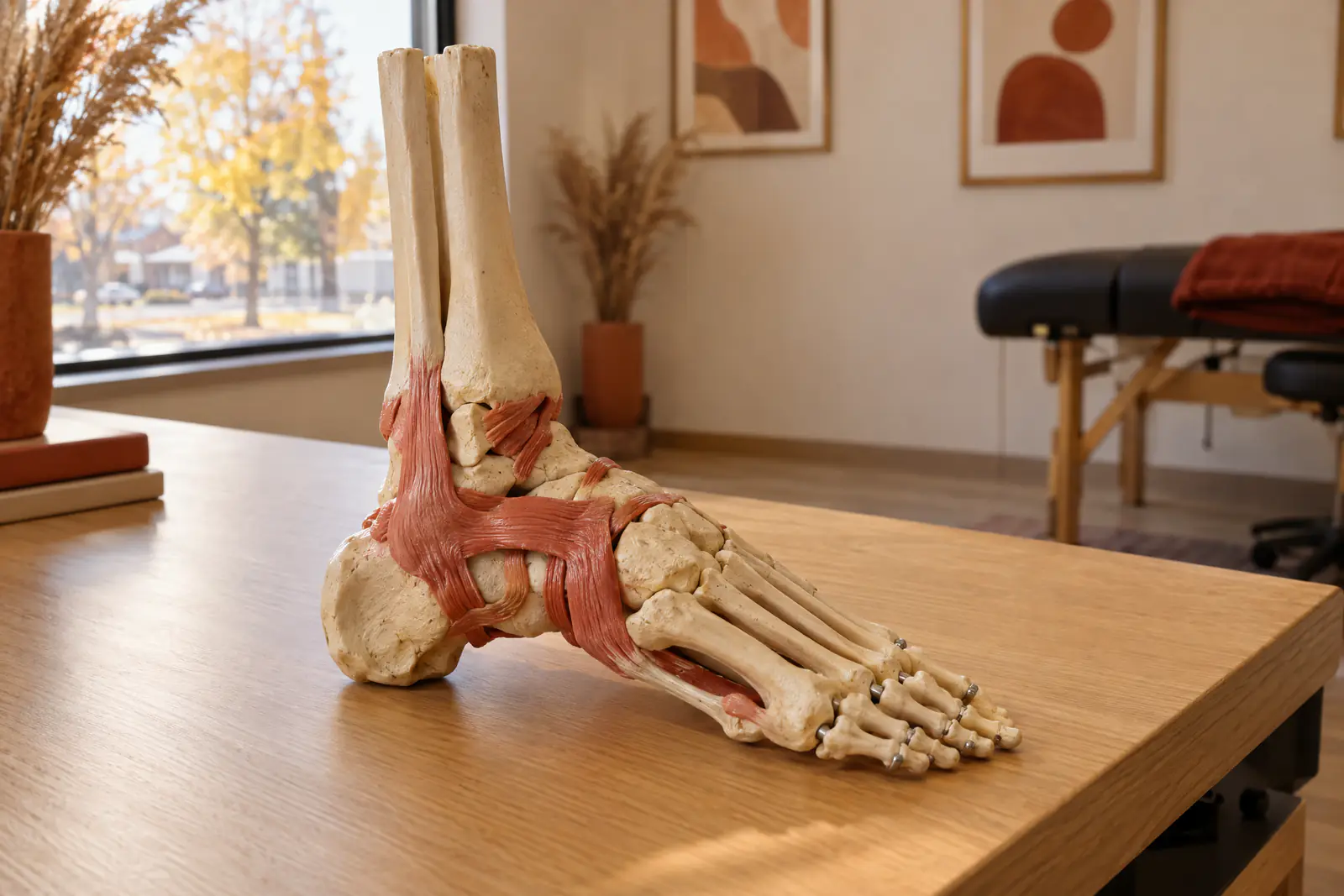
Landing on someone’s foot or cutting hard on turf usually rolls the ankle inward and stretches the ligaments on the outside. Ankle sprain physiotherapy focuses on restoring range, strength and balance, because an ankle that is never properly rehabbed can be more likely to roll again.
Knee injuries, including the ACL
Twisting with the foot planted can injure the ACL or meniscus. A pop and quick swelling needs medical review first. Our guide to knee pain causes and recovery covers the wider picture.
Hamstring strains in running
Sprinting, slo-pitch base running and fast finishes on the river valley trails are classic triggers. A sharp grab at the back of the thigh is the usual story.
Shoulder injuries in hockey and volleyball
Hockey brings falls and contact into the boards. Volleyball brings repeated overhead hitting and serving. Both can strain the rotator cuff or irritate the joint.
When should you see a physio for a sports injury?
Once the red flags are ruled out, earlier is usually better. Many people wait to see whether it settles, and two or three weeks later they are still limping and have lost strength around the joint. You do not need a doctor’s referral to book sports injury physiotherapy in Edmonton, or anywhere in Alberta.
The reason timing matters is the second half of the framework. LOVE covers what comes after the first few days:
- Load. Let pain guide a gradual return to normal activity. Tissue adapts to the load you put through it.
- Optimism. Expectations matter. Fear of movement can slow recovery.
- Vascularisation. Pain-free cardio, such as a stationary bike, keeps blood flowing and fitness up.
- Exercise. Restore strength, mobility and balance with a planned programme.
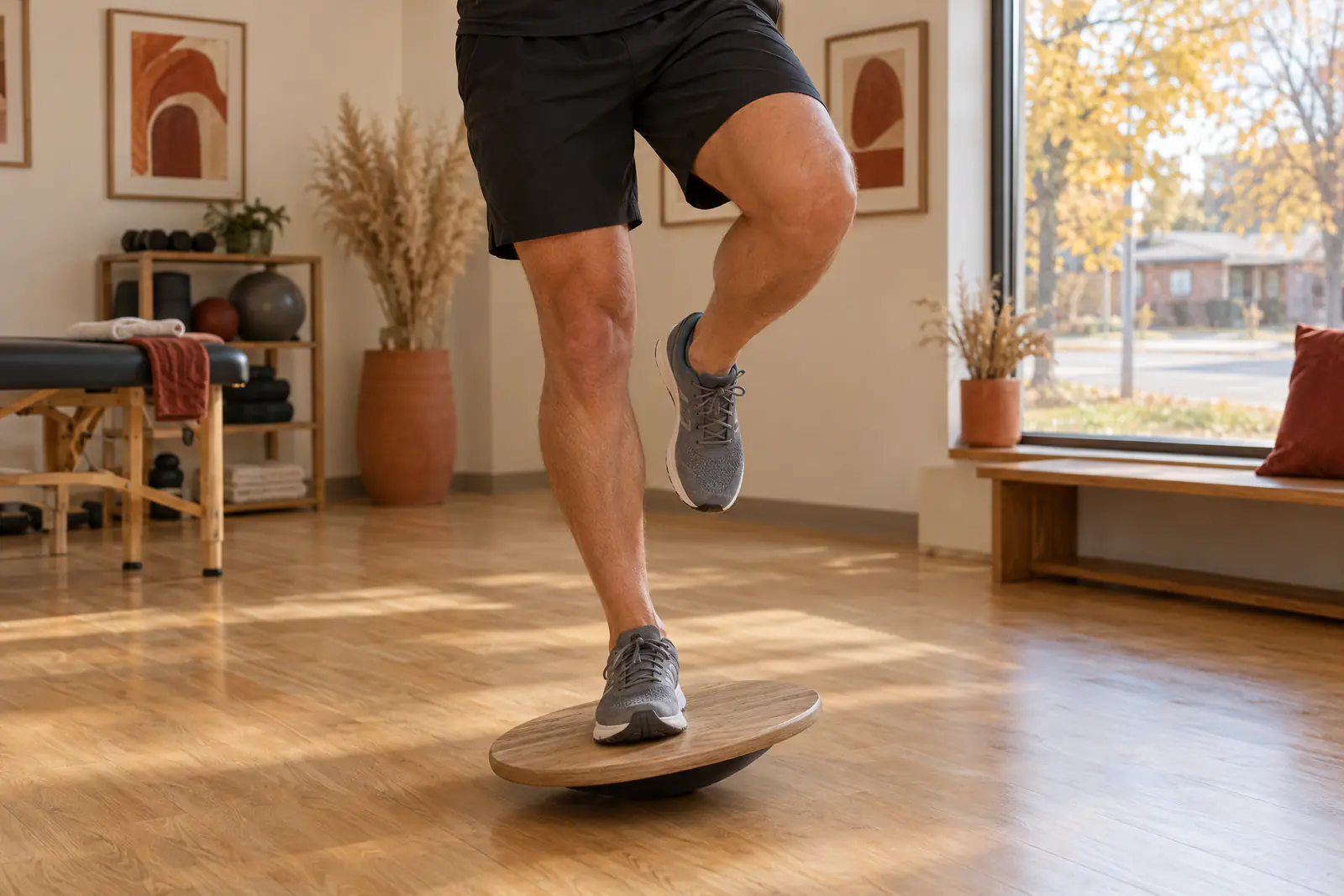
Guided loading is where a physiotherapist earns their keep. Too little and the tissue stays weak. Too much, too soon, and you flare it. Getting that dose right for your injury, your sport and your week is most of the job.
What does sports injury physiotherapy in Edmonton look like at Coronation?
Many physiotherapy clinics in Edmonton treat sports injuries. What matters is that the care starts with a proper assessment and moves you toward your sport, not just away from pain.
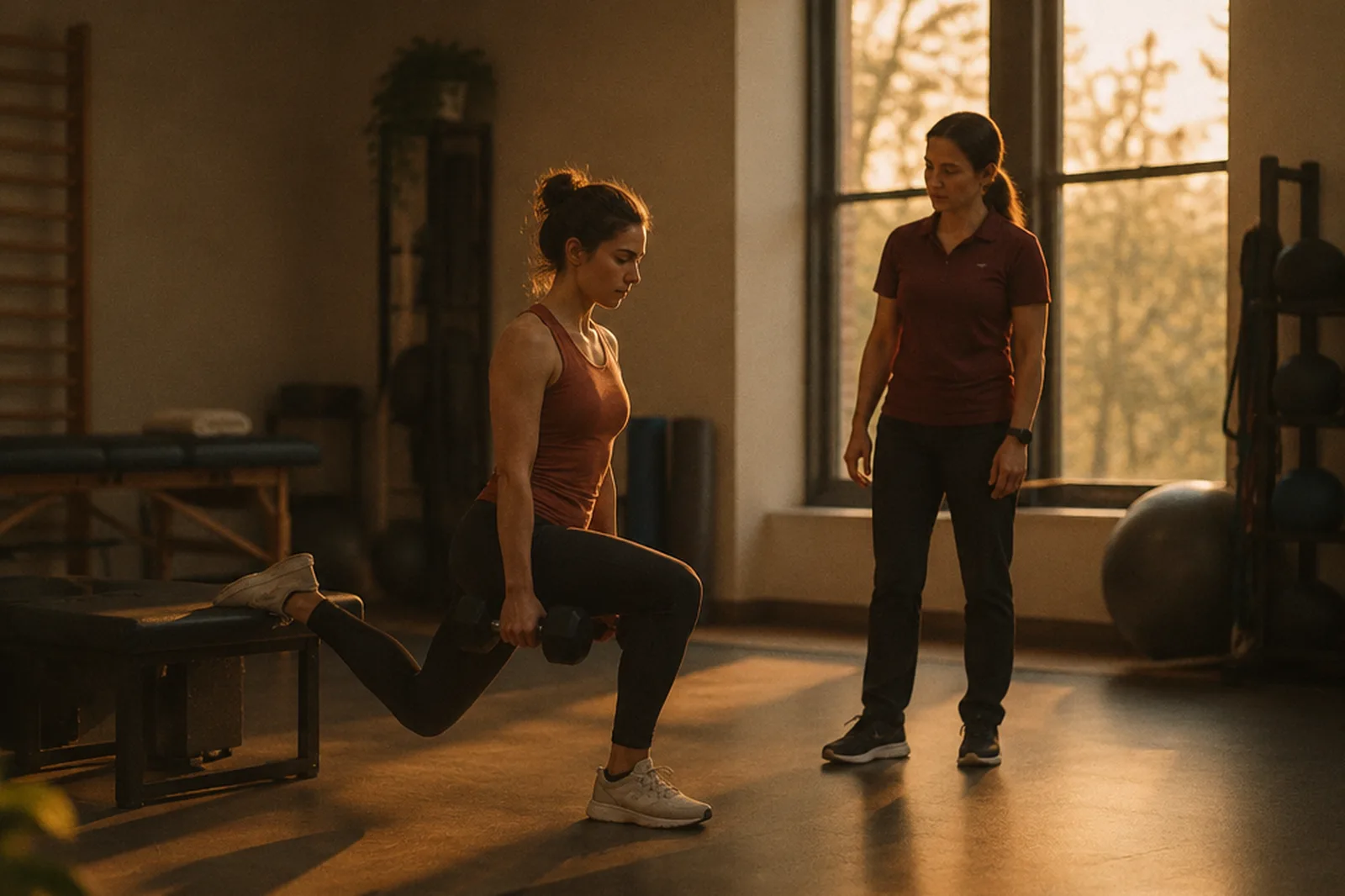
At Coronation, your first visit is one-on-one. We ask how the injury happened, what you felt, and what you need to get back to. Then we assess: range of motion, strength, ligament and joint stability tests, balance, and how you move. If anything suggests a fracture or a more serious tear, we will tell you plainly and point you to your doctor or urgent care.
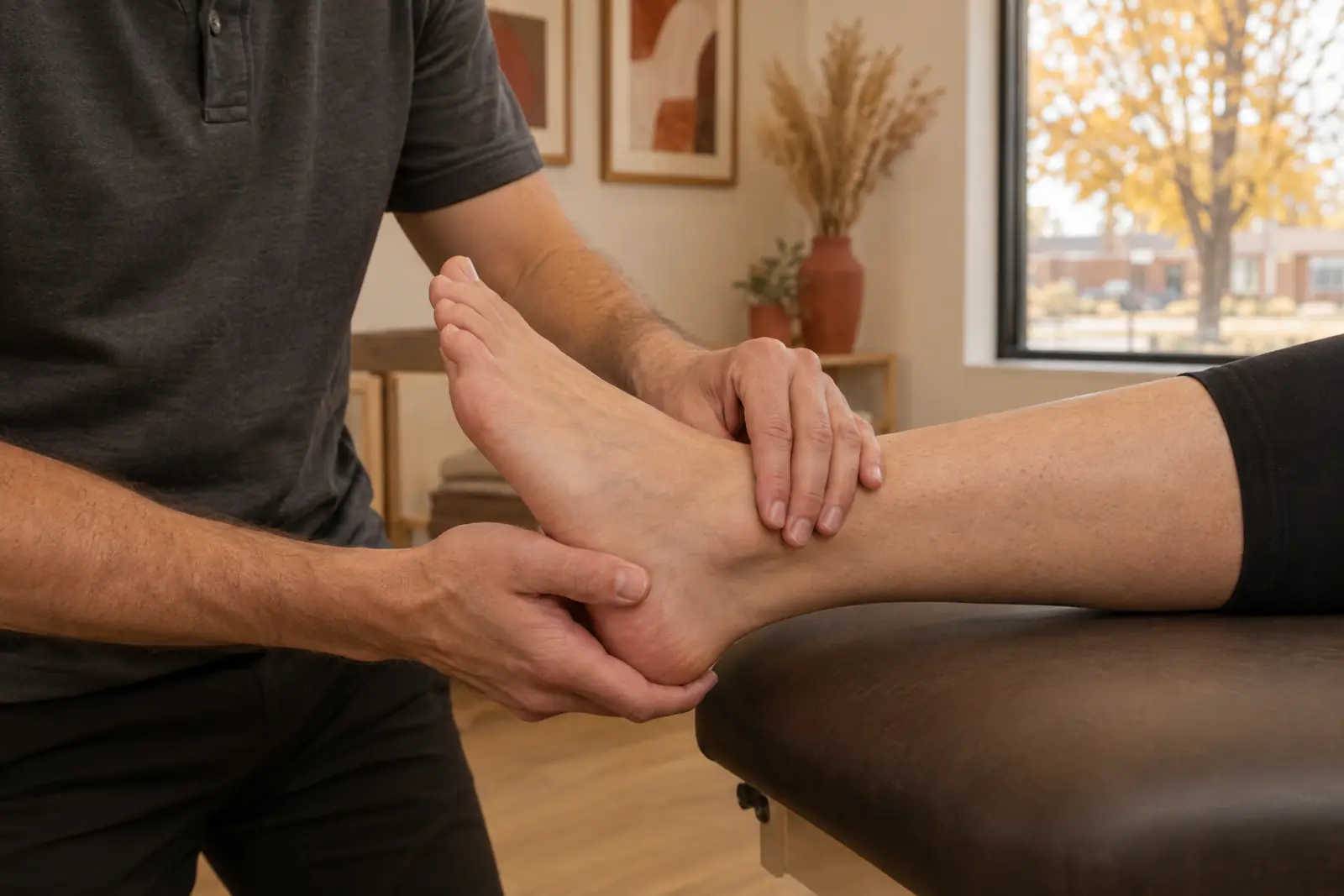
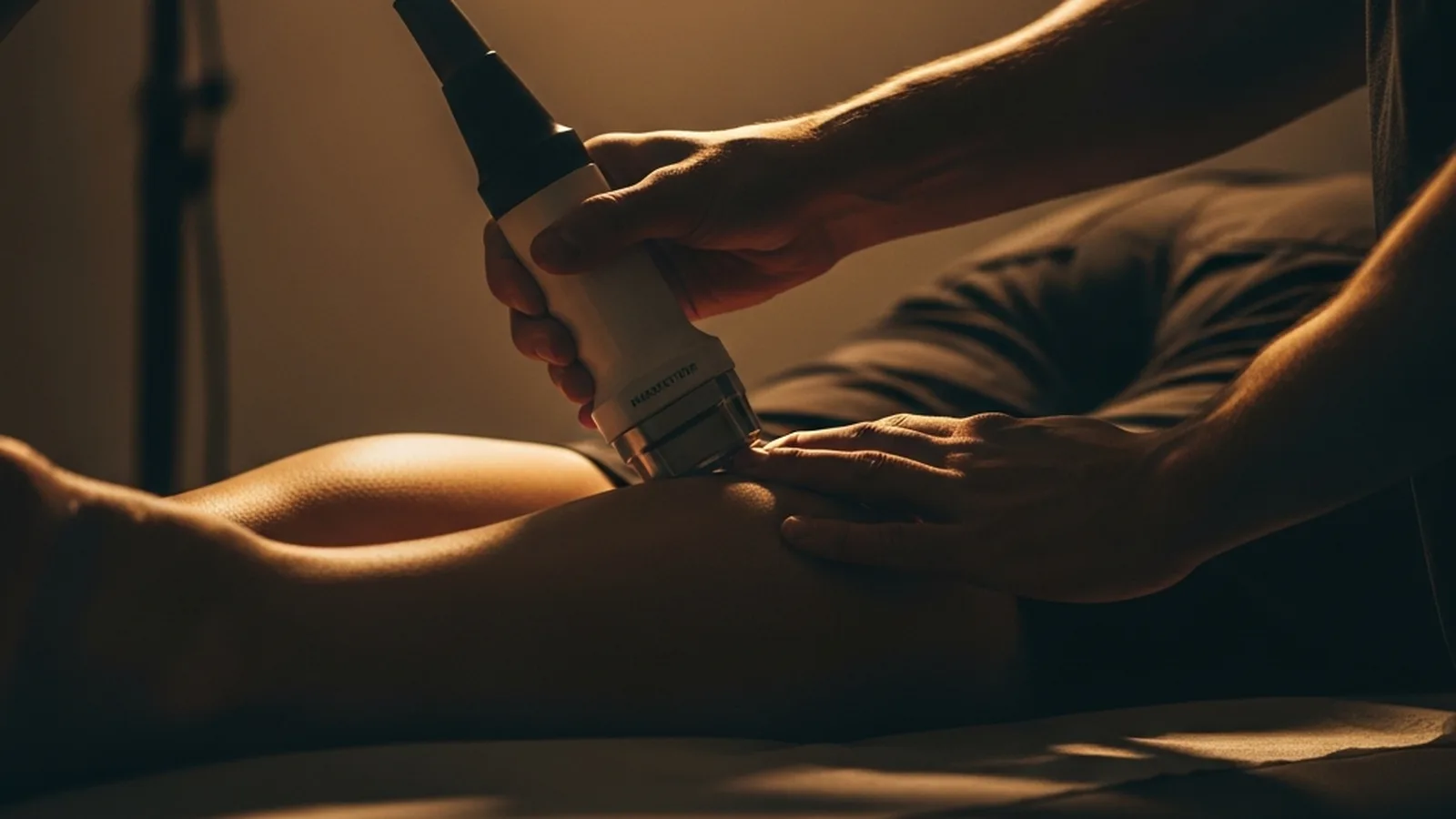
Treatment usually combines hands-on work to ease pain and restore movement with a graded exercise programme you do between visits. For selected cases, options such as dry needling or shockwave may be discussed at assessment, always alongside exercise rather than instead of it. Our co-owners, Gugan Dakshnamurthy and Muthuukaruppan Muthiah, are both registered physiotherapists who treat patients. Gugan has 14+ years of musculoskeletal experience with a particular interest in knees and shoulders, and Muthu has 24+ years of clinical practice, the most senior physiotherapist on our team.
You can read more about our sports rehabilitation at Coronation. We direct bill most major insurers, and there is free parking front and back of the building on 118 Avenue.
How long does a sports injury take to heal?
It depends on the tissue, the severity and how the first weeks go. As a rough guide, a mild sprain or strain often settles within a few weeks. Moderate injuries commonly take 6 to 12 weeks to get back to full sport. Bigger ligament injuries, especially in the knee, can take many months, and some need a surgical opinion. Everyone responds differently, and pain going away is not the same as being ready to play.
Hamstring strains are the classic example. They tend to feel fine at walking pace well before they can handle a full sprint, and a rushed return is a common way to strain the same muscle again. Testing strength and speed before you go back is part of what our return to sport guide covers.
The bottom line
Most sports injury treatment in Edmonton starts the same way. For the first few days, protect the injury, raise it, compress it and go easy on anti-inflammatories and ice. Then start moving again, guided by pain, and get the red flags checked by a doctor first.
Important: This article is general information only. It is not medical advice and it cannot be used to diagnose or treat any condition. Every patient is assessed first by one of our registered physiotherapists or our registered massage therapists before any treatment, and your care plan is based on that assessment. If you have symptoms, please book an assessment.
If you are not sure how bad it is, or it is not improving after a week, book an assessment with our physiotherapy team in northwest Edmonton. Book online or call (825) 451-6263.