Hip Pain Physiotherapy in Edmonton: Where It Hurts Tells You a Lot
Groin, outer hip or buttock pain? Learn what each usually means, how hip pain physiotherapy in Edmonton works, and when to see a doctor instead.
Where your hip hurts tells you a lot. Pain deep in the groin often comes from the hip joint itself, pain on the outer side is usually a tendon problem, and pain in the buttock is frequently coming from the lower back. Hip pain physiotherapy in Edmonton starts by working out which of these you have, because each one is treated differently.
At Coronation Physiotherapy in northwest Edmonton, that sorting happens at your first assessment. Then the work is mostly load management and strength, with hands-on care and other options added where they fit.
General information only, not a diagnosis. Our physiotherapists and massage therapists assess every patient first.
Key takeaways
- Front of hip or groin pain often points to the hip joint, such as osteoarthritis or a labral or FAI problem.
- Outer hip pain is most often gluteal tendinopathy, the condition many people were told was hip bursitis.
- Buttock pain may be referred from the lower back or the sciatic nerve, so a good hip assessment always checks your spine.
- For gluteal tendinopathy, a trial found education plus exercise did better than an injection or waiting it out.
- A fall you cannot stand up from, fever, night pain or a child who is limping needs a doctor first, not a physio.
What does pain at the front of the hip or groin usually mean?
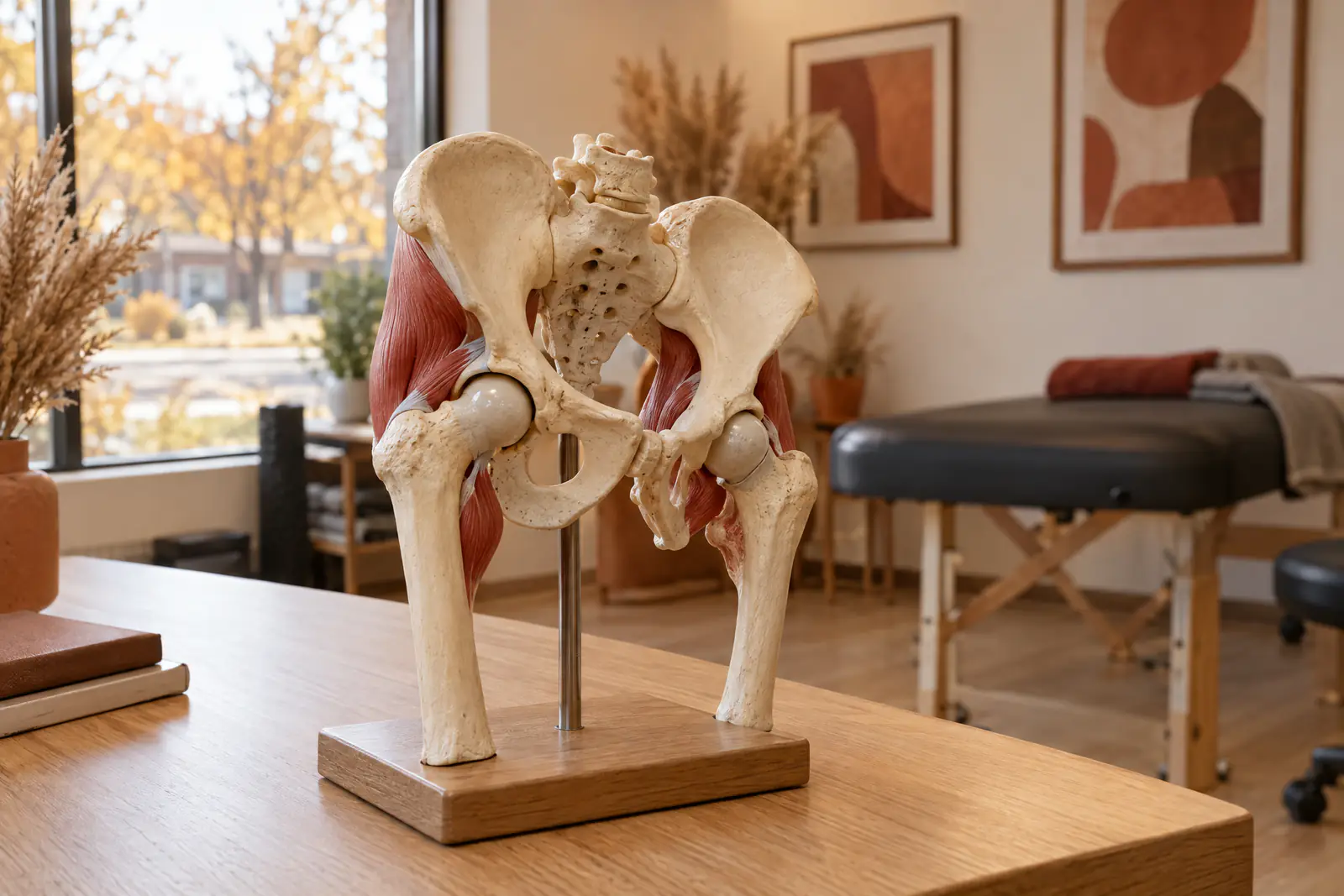
The hip joint sits deeper than most people think. The ball of the thigh bone fits into a socket in the pelvis roughly behind the crease of your groin, so true hip joint pain is usually felt at the front, in the groin, sometimes running down the front of the thigh toward the knee.
In adults over about 50, a common cause is hip osteoarthritis. People describe stiffness first thing in the morning, hip pain when walking any distance, and trouble with socks, shoes or getting out of the car. The Arthritis Society of Canada reports that osteoarthritis affects more than four million Canadians, and the hip is one of the joints it commonly involves.
In younger, active people, groin pain with a pinching feeling when you squat deep, sit low or pull your knee to your chest can point to femoroacetabular impingement (FAI) or a labral tear. These are shape and cartilage problems in the joint, and many people with them do well with a structured exercise plan. We cover arthritis in more depth in our post on physiotherapy for arthritis in Edmonton.
Why does the outer hip hurt? Gluteal tendinopathy and hip bursitis
Outer hip pain, right over the bony point on the side of your hip, is usually gluteal tendinopathy. The tendons of the gluteus medius and minimus attach there, and when they are overloaded they become irritable and sore to touch.
For years this was called trochanteric bursitis, and many people still get told they have hip bursitis. The bursa can be involved, but imaging studies have shown the tendon is often the main problem. That matters, because a tendon needs to be gradually loaded, not just rested or injected.
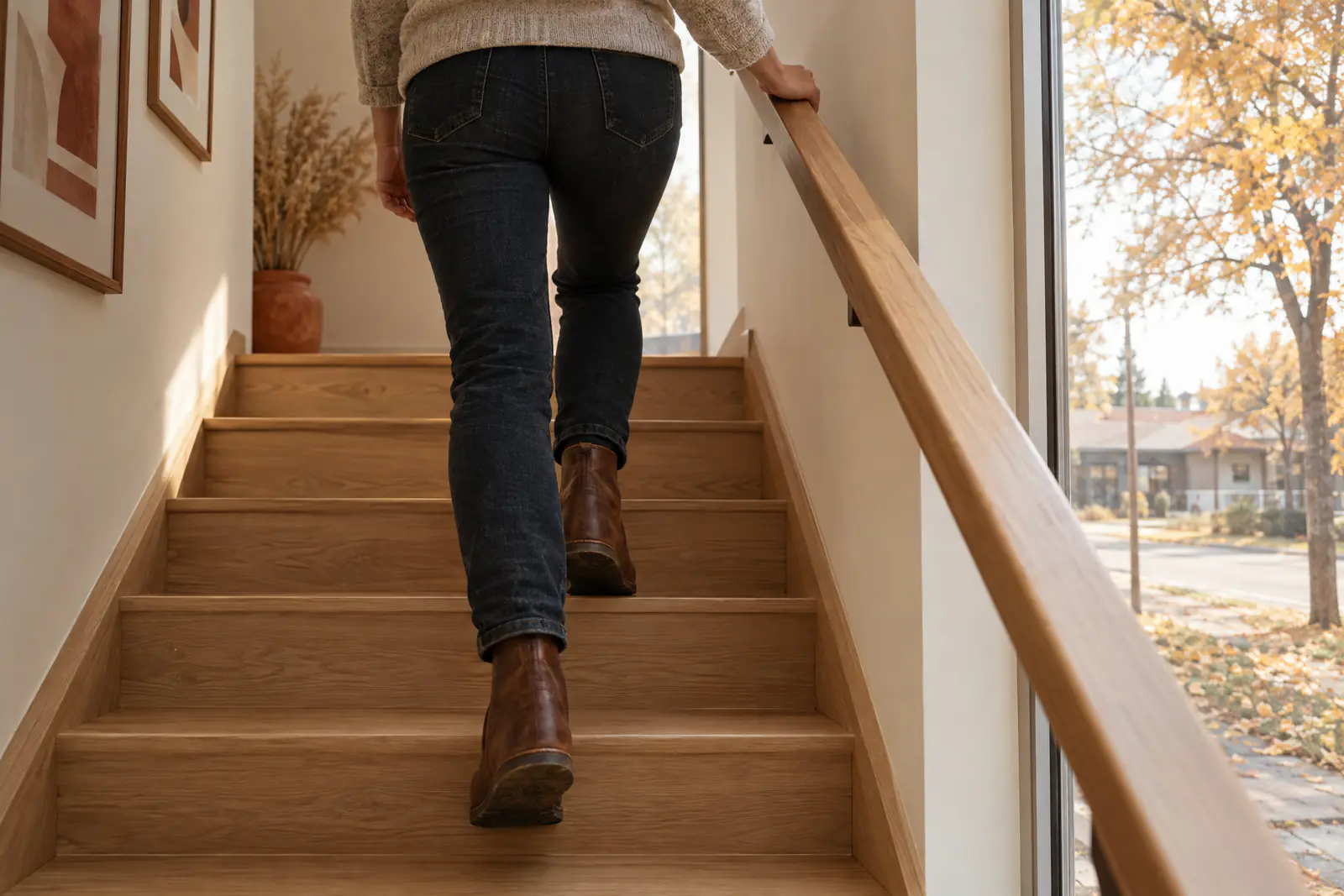
The pattern is recognisable. It hurts to lie on that side at night, and often on the other side too, because the top leg drops across and squeezes the tendon. Standing with your weight hung on one hip, crossing your legs, climbing stairs and getting up from a low couch all tend to aggravate it. It is more common in women, especially from their 40s on, and it often flares after a sudden jump in walking, such as the first long weekends on the river valley trails in spring.
One thing worth knowing early: hard stretching of the outer hip, the classic IT band stretch, often makes this condition worse, because it compresses the tendon against the bone.
Is pain in the buttock coming from your hip or your lower back?
Pain at the back of the hip or deep in the buttock is the trickiest of the three. It can come from the hip joint or the deep gluteal muscles, but it is very often referred from the lower back or caused by irritation of the sciatic nerve.
A few clues point toward the spine. The pain changes when you bend, sit for a long time or cough. It travels below the knee. You have pins and needles, numbness or a band of burning down the leg. Or you have had back trouble before, even if your back does not hurt today.
This is why a physiotherapist does not stop at the hip. Treating a buttock that is really a nerve problem with glute exercises alone tends to go nowhere. If your symptoms sound more like a nerve, our post on nerve pain versus muscle pain in sciatica and lower back pain walks through the difference in more detail.
How does a physiotherapist assess hip pain?
Assessment starts with your story: where it hurts, what sets it off, what eases it, how it behaves at night and what you need your hip to do, whether that is a 5K, a shift on your feet or getting down to the floor with grandchildren.
Then we look at three areas, not one. The hip itself is checked for range of motion, especially rotation, and for which movements reproduce your pain. The lumbar spine is screened with movement and nerve tests, because the back is such a common source of hip and buttock pain. The knee gets a look too. Hip and knee pain often travel together, partly because a weak or painful hip changes how the knee is loaded on stairs and when you land. That is why hip and knee pain physiotherapy in Edmonton is often one plan rather than two.
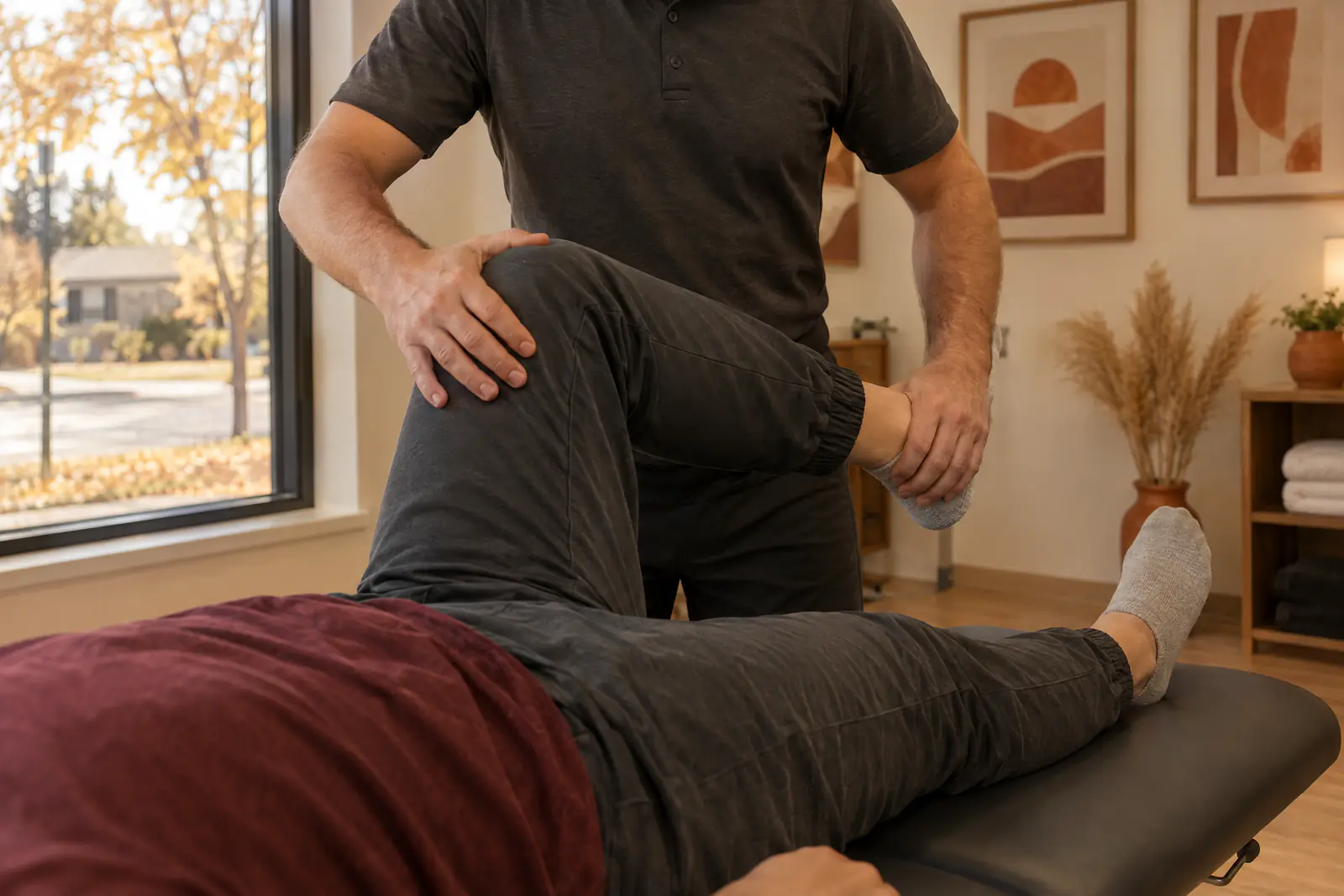
We also test glute strength, single-leg balance and how you walk. By the end of the visit you should know what we think is going on, what the plan is and roughly how long it is likely to take. If your history or tests suggest something that needs imaging or a medical opinion, we will tell you and point you back to your family doctor.
What does hip pain physiotherapy in Edmonton look like at Coronation?
Hip pain physiotherapy at Coronation is one-on-one and assessment-led. You are seen by a registered physiotherapist for the whole visit, not handed off to a machine. Our co-owners both treat patients: Gugan Dakshnamurthy, who has 14+ years of clinical experience in musculoskeletal conditions, and Muthuukaruppan Muthiah, known as Muthu, who has 24+ years of clinical practice and is the most senior physiotherapist on our team.
Treatment is built around four pieces.
- Load management. Changing how much and how you use the hip for a few weeks so it can settle, without stopping everything.
- Progressive strengthening, mainly of the glutes and hip muscles, started at a level your hip tolerates and built up week by week.
- Manual therapy, such as joint mobilisation and soft tissue work, to ease pain and stiffness enough that the exercise can do its job.
- Education, so you understand what aggravates the problem and can manage it yourself between visits.
For gluteal tendinopathy that has not improved with a good exercise programme, shockwave therapy may help selected cases. We offer three types, and whether it suits you is decided at assessment and always used alongside exercise, not instead of it. You can read more about our general approach on our physiotherapy in Edmonton page.
Which hip physio exercises help, and what should you avoid?
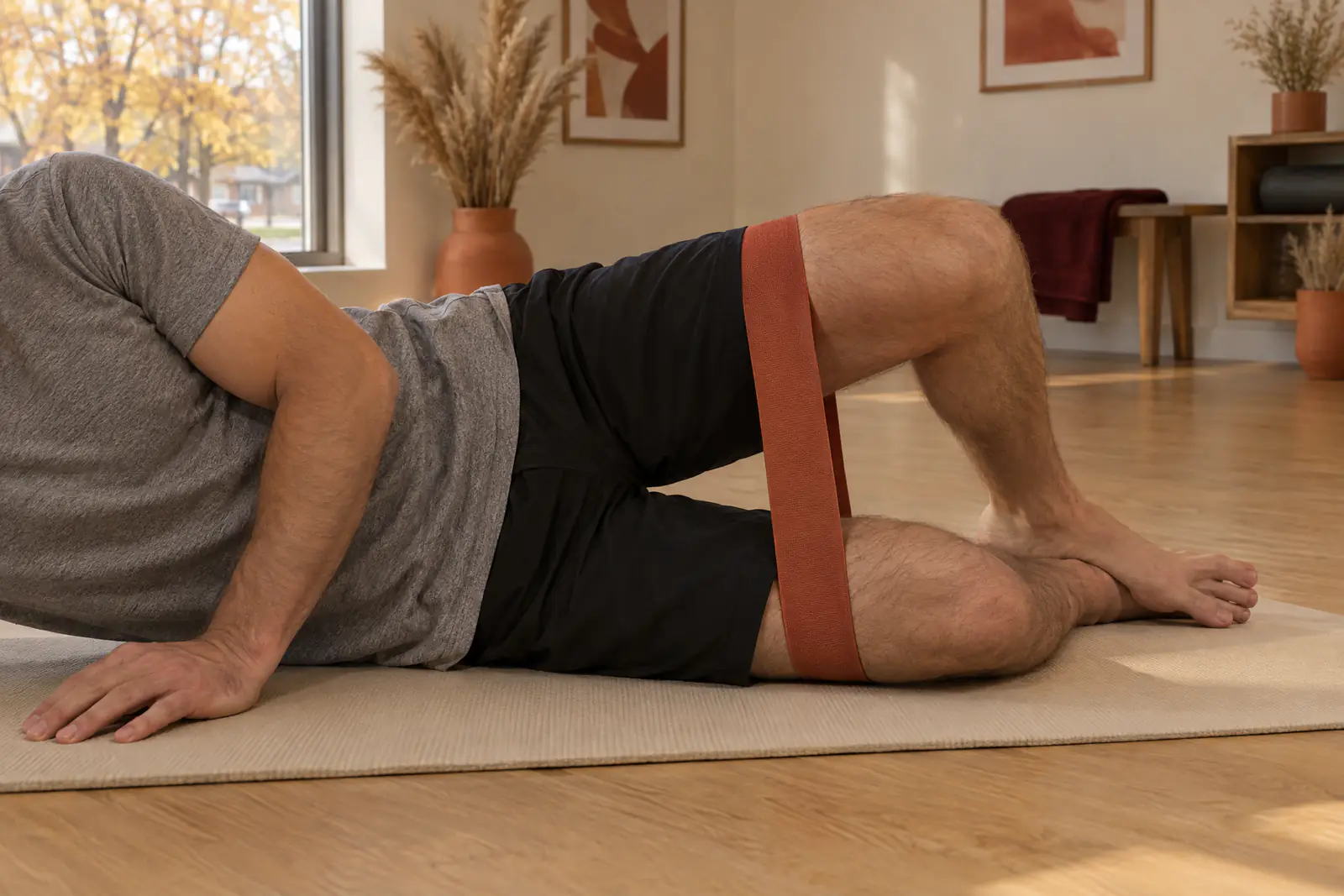
The right hip physio exercises depend on the cause, so treat these as examples rather than a programme. For outer hip pain, early exercises are usually gentle holds, called isometrics, such as pushing the leg out against a wall for 30 to 45 seconds. They often settle tendon pain without irritating it.
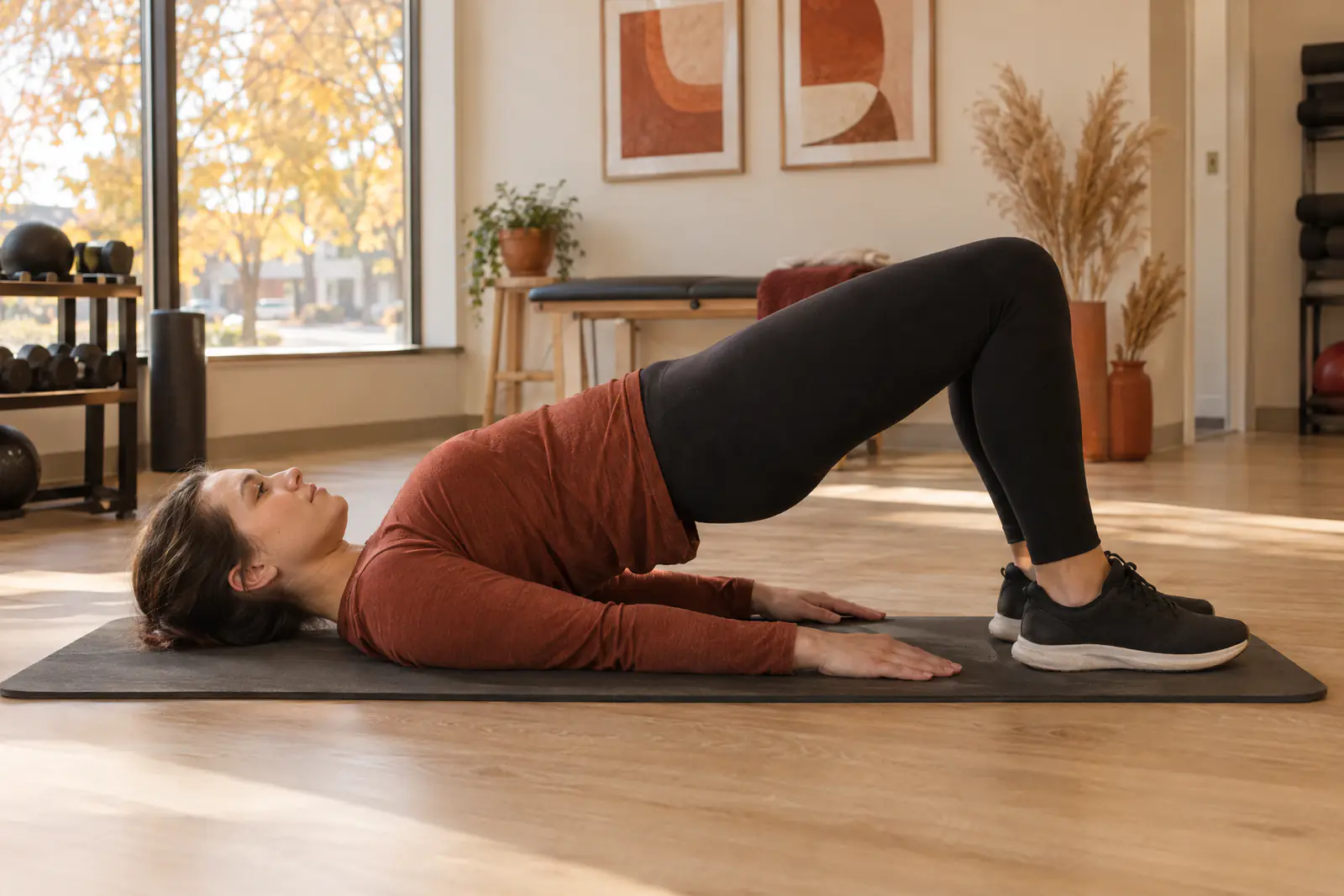
From there, exercises progress to loading the hip in standing: bridges, step-ups, sit to stand from a chair and eventually single-leg work. For hip osteoarthritis the emphasis shifts toward keeping the joint moving and building strength around it, often with a walking or cycling plan.
For lateral hip pain, what you stop doing matters as much as what you start. Avoid crossing your legs, hanging your weight on one hip while standing, and sitting in low, soft chairs. Sleep with a pillow between your knees. Skip hard IT band stretches and foam rolling the side of the hip until we have looked at it.
How long does hip pain take to settle?
It depends on the cause and on how long it has been going on. An irritated joint or a mild strain often settles over a few weeks with the right changes. Tendons and arthritic joints take longer, because strength and tendon capacity take time to build.
For gluteal tendinopathy, the LEAP trial published in the BMJ tested a physiotherapy-led education and exercise programme of 14 sessions over eight weeks. At eight weeks, 51 of 66 people in that group reported their hip had improved, compared with 38 of 65 who had a corticosteroid injection and 20 of 68 who waited and saw. The exercise group also did better than the injection group at one year.
In practice, many people notice a change in pain over the first few weeks and keep gaining strength for two to three months or more. Everyone responds differently, and a long-standing problem usually takes longer to turn around.
When should you see a doctor instead of a physio?
Most hip pain is mechanical and well suited to physiotherapy. Some is not. Go to an emergency department or call 911 if you have fallen and cannot stand or bear weight on the leg, which is a real risk on Edmonton ice for older adults, or if the leg is cold, pale or numb.
See your doctor promptly, or call Health Link at 811, if you have:
- hip pain with fever, chills or a hot, red, swollen joint
- unexplained weight loss, or a history of cancer
- pain that wakes you at night and does not ease with changing position
- sudden, severe pain with no clear cause
- calf or groin swelling and redness, which can signal a blood clot
- new trouble controlling your bladder or bowels
A child or teenager with a limp or with hip, thigh or knee pain should always be seen by a doctor first. MyHealth Alberta’s hip pain care instructions list the same warning signs.
The bottom line
Groin, outer hip and buttock pain are three different problems that happen to share a name. Finding out which one you have, and checking your back and knee along the way, is the first step toward a plan that fits.
Important: This article is general information only. It is not medical advice and it cannot be used to diagnose or treat any condition. Every patient is assessed first by one of our registered physiotherapists or our registered massage therapists before any treatment, and your care plan is based on that assessment. If you have symptoms, please book an assessment.
You do not need a referral to see a physiotherapist in Alberta. Book a hip assessment with Coronation Physiotherapy at 14315 118 Ave NW, where there is free parking front and back, or call us at (825) 451-6263.