

Shockwave therapy, northwest Edmonton
For the tendon that has not settled in months
Shockwave delivers short, intense pressure waves into stubborn tissue to restart a stalled repair response. Non-invasive, no medication, and often felt within three to five sessions.
The short answer
What shockwave therapy is
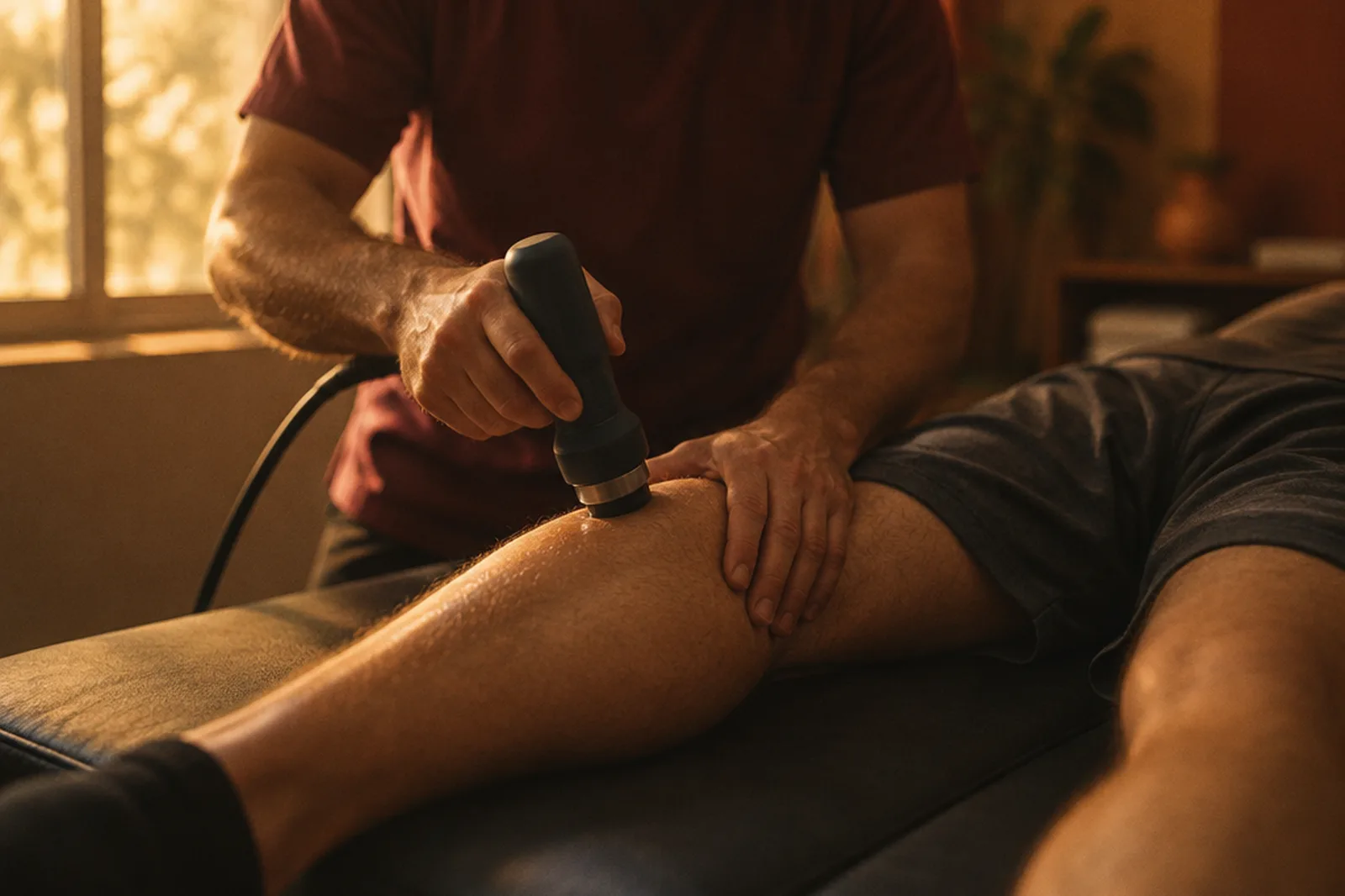
Shockwave therapy is a non-invasive treatment for musculoskeletal conditions and injuries. It delivers short but intense mechanical pressure waves into the affected tissue, which activates the body's anti-inflammatory response, promotes blood flow, and helps stimulate repair and regeneration. It also has a pain-relieving effect of its own.
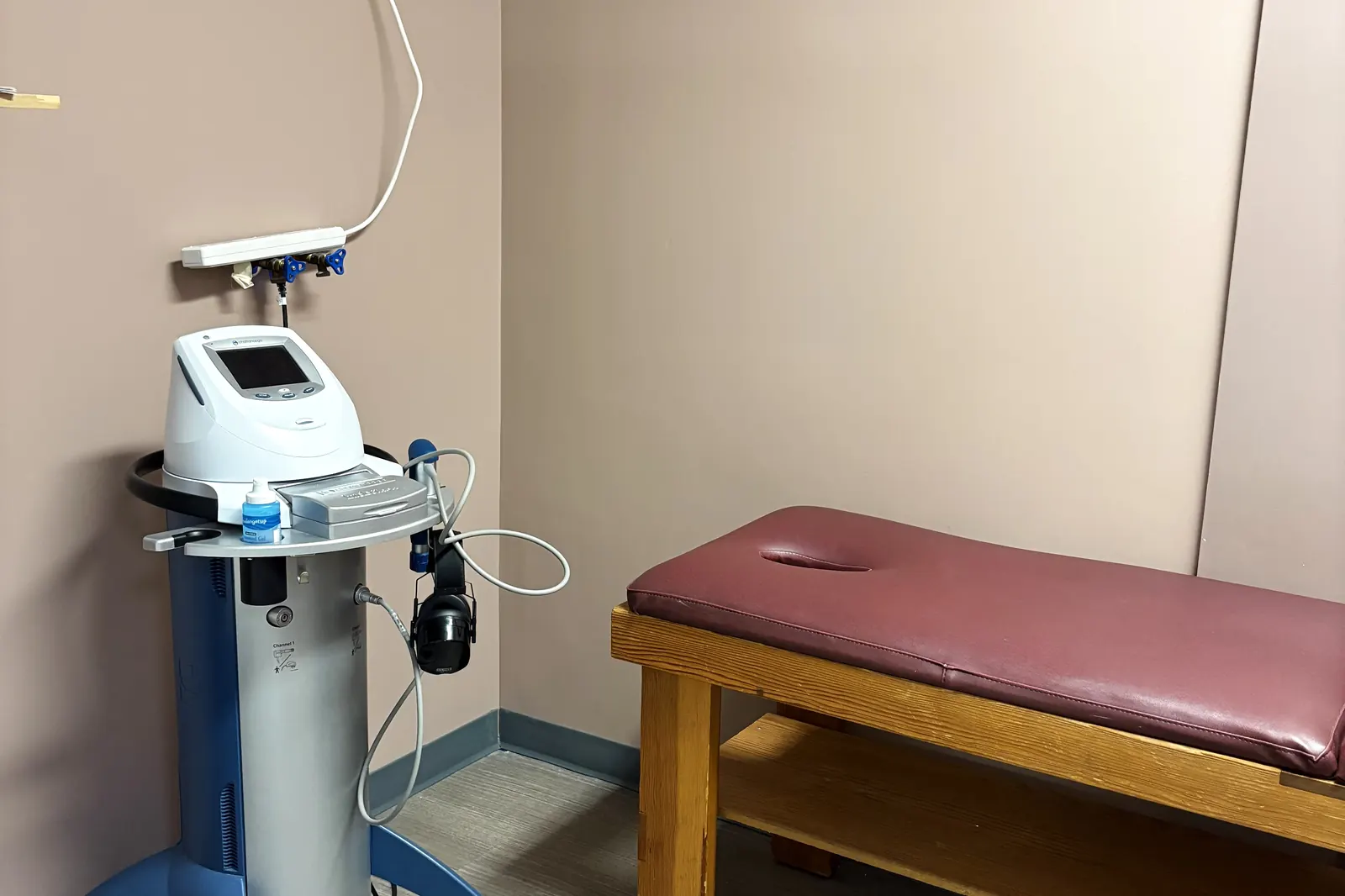
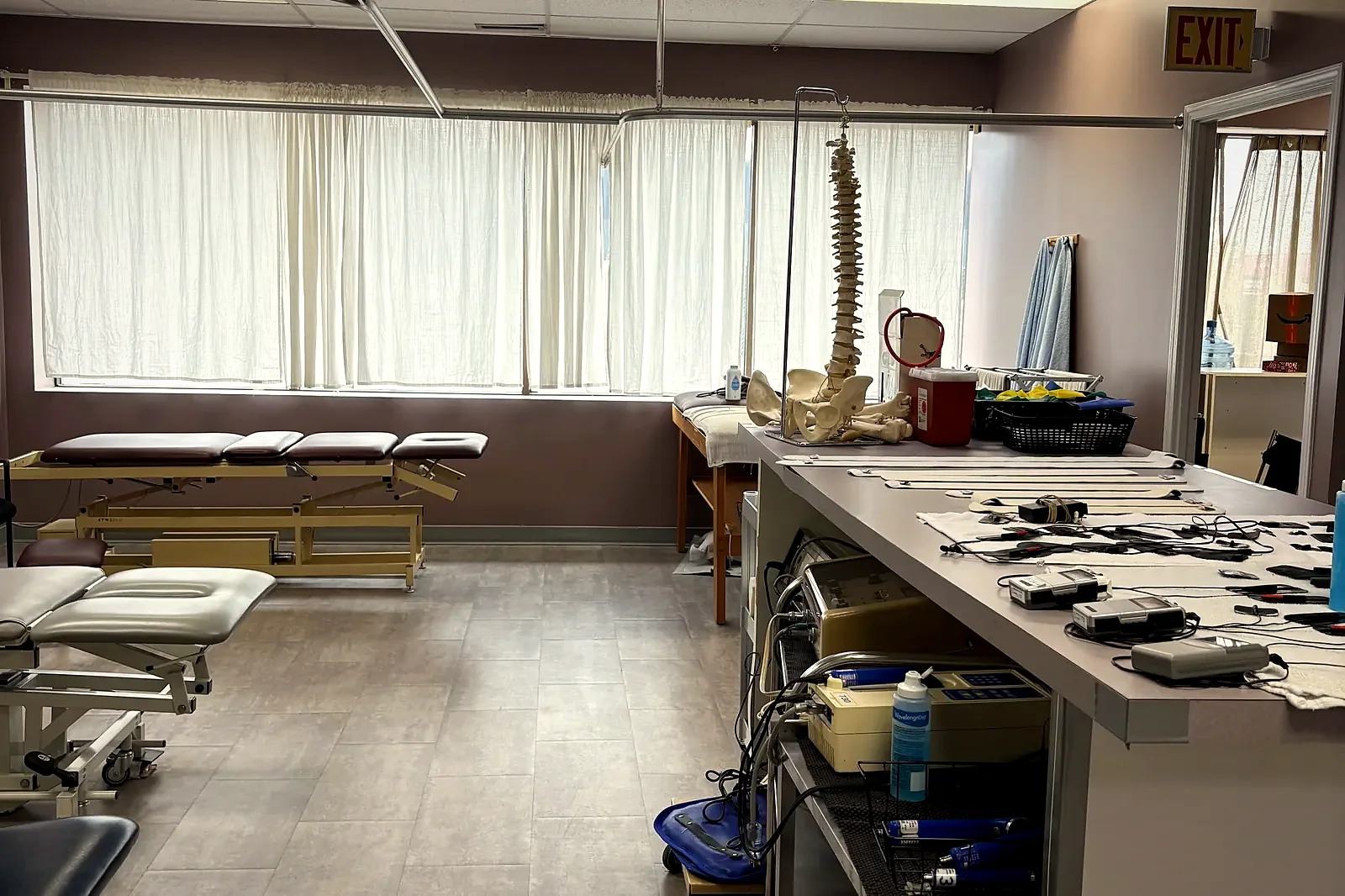
Coronation Physiotherapy runs three types of shockwave in a 3,400 square foot facility in northwest Edmonton. A registered physiotherapist assesses you first to determine the root cause of the pain, then applies the type suited to the depth and tissue involved.
Why patients choose Coronation Physiotherapy
Trusted since 1987
A practice Edmonton has relied on from the same northwest location since 1987, now led by an experienced team.
Owner operated
Both owners are registered physiotherapists who treat patients themselves, every day, in this clinic.
3,400+ sq ft
A dedicated rehabilitation facility with a full exercise gym, private treatment rooms and advanced equipment.
4.8 from 101 reviews
Rated 4.8 on Google by 101 patients across northwest Edmonton.
The mechanism
Two things happen when the wave reaches the tissue
Pain signalling drops
The acoustic waves lower the concentration of Substance P, a neurotransmitter that carries pain signals to the central nervous system and is associated with chronic, intense pain. Less Substance P means less pain reaching the brain from that site.
Blood supply improves
The kinetic energy triggers the formation of new blood vessels, a natural and critical part of repairing damaged tissue. Microruptures created in tendon and bone prompt increased production of repair proteins, and the new vessels raise blood supply and oxygen to the area.
Why patients choose it
Non-invasive, and it works with your own biology
Patients like that it is non-invasive and a safer alternative to surgery or medication. The treatment promotes the body's own healing capacity while providing pain relief along the way.
It is comparatively inexpensive, and results can often be felt within a few sessions, commonly three to five. Some patients notice improvement after one treatment.
It is also versatile. Many studies show shockwave is effective on its own, but the benefit is maximised when it is combined with the rest of physiotherapy treatment, particularly a progressive loading programme for the tendon.
See how treatment is built

Conditions commonly treated
Where shockwave earns its place
Straight answers
Shockwave therapy questions
What does shockwave therapy feel like?
A rapid tapping against the area, firm rather than sharp. Intensity is adjusted to what you can tolerate, and the treatment head is moved continuously rather than held in one spot.
How many sessions will I need?
Results are often felt within three to five sessions, and some patients notice improvement after one. Your physiotherapist gives you an expected range once the assessment identifies the tissue involved.
Is shockwave therapy surgery or medication?
Neither. It is non-invasive, and it works by prompting your own repair response rather than by adding anything to the body.
What conditions is it best suited to?
Stubborn tendon problems above all: plantar fasciitis, Achilles and other lower limb tendinopathies, tennis and golfer elbow, and calcific tendon conditions in the shoulder. It suits problems that have not settled with time and exercise alone.
Is it used on its own?
Rarely. Studies support shockwave on its own, but the benefit is greater combined with the rest of physiotherapy treatment, particularly a loading programme for the tendon.
Are there different types of shockwave?
Yes, and we run three of them in this clinic. Which one is used depends on the depth and the type of tissue being treated.
Related guides
Conditions where shockwave is sometimes used

Plantar Fasciitis Physiotherapy in Edmonton: Why Mornings Hurt
Why your first steps in the morning hurt, what drives plantar heel pain, and how physiotherapy helps you load the foot again.
Read the guide
Rotator Cuff Injury Physiotherapy in Edmonton: Tears, Tendons, Rehab
Tendinopathy, partial tear or full tear: how physiotherapy helps a rotator cuff injury, what to expect and how long recovery often takes.
Read the guide
Hip Pain Physiotherapy in Edmonton: Where It Hurts Tells You a Lot
Groin, outer hip and buttock pain usually have different causes. Here is how a physiotherapist sorts them out and what treatment involves.
Read the guideBook a consultation for shockwave therapy
Start with an assessment so the right tissue gets treated, and the right type of shockwave gets used.