Knee Pain Physiotherapy in Edmonton: How Treatment and Recovery Work
How knee pain physiotherapy works in Edmonton: what the assessment checks, how treatment is built, how long recovery takes and when to get checked sooner.
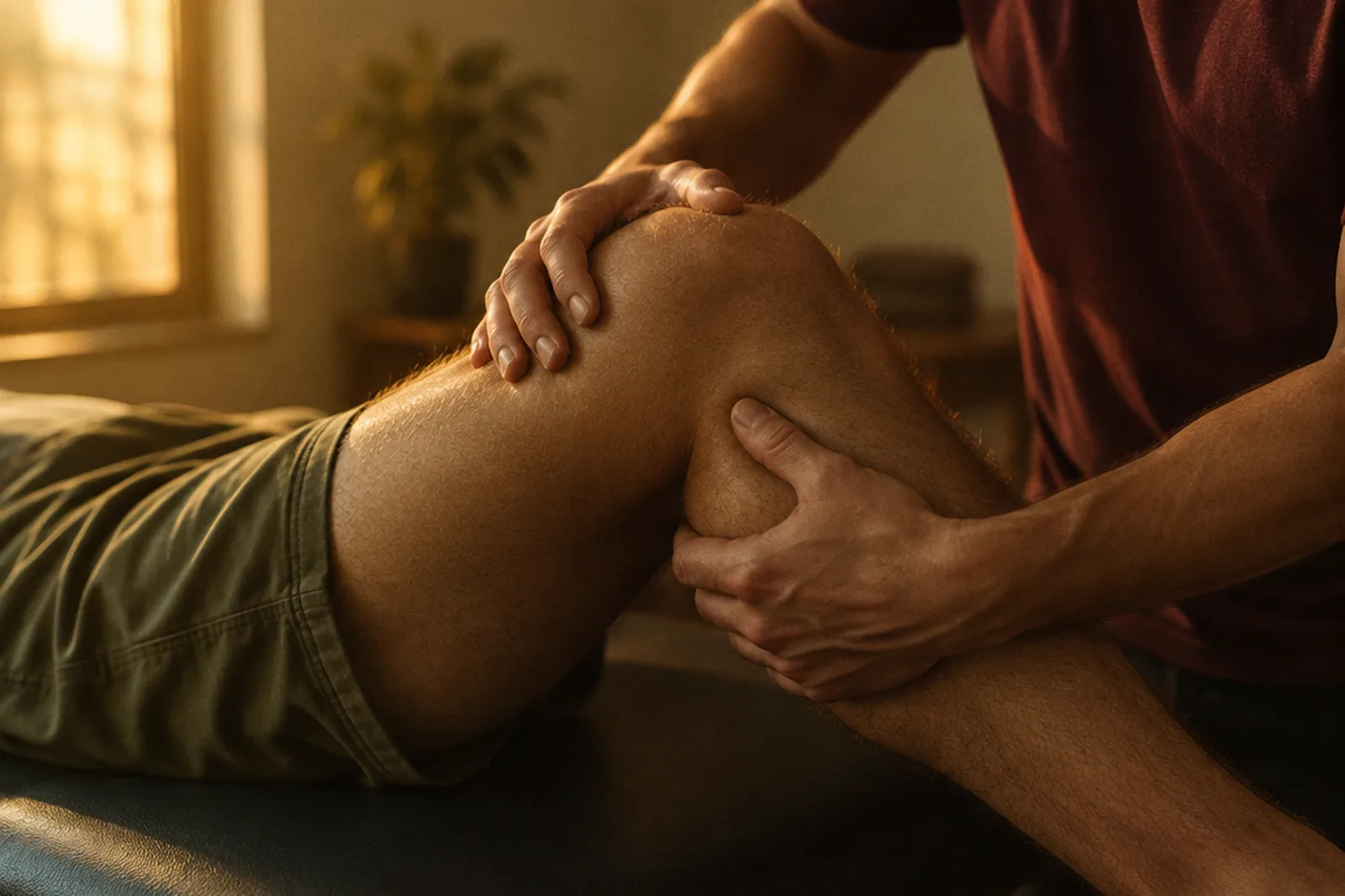
Knee pain usually responds well to physiotherapy because most knee problems are mechanical: the joint, the muscles around it, or the way you load it are not working together the way they should. A physiotherapist assesses how your knee moves, finds the source of the pain, and builds a treatment plan to reduce it and rebuild strength. In Edmonton you do not need a doctor referral to start.
General information only, not a diagnosis. Our physiotherapists and massage therapists assess every patient first.
What causes knee pain?
Knee pain rarely comes from the knee alone. The hip, thigh and ankle all influence how force travels through the joint, so an assessment looks at the whole chain. These are the causes we see most often in the clinic.
- Patellofemoral pain, often called runner’s knee. Aching around or under the kneecap, often worse with stairs, squatting, or sitting for long periods. Usually a loading and muscle-control issue rather than damage.
- Ligament sprains, ACL and MCL. Common in sport and after a twist or awkward landing. These range from mild to a full tear that may need surgical review.
- Meniscus irritation. The cartilage cushion in the knee, often sore with twisting or deep bending.
- Tendon problems. Patellar or quadriceps tendinopathy, where pain builds with jumping, running or repeated loading.
- Osteoarthritis. Gradual stiffness and ache, most common over age 50, which responds to strengthening and activity modification.
- Post-surgical recovery. Rehabilitation after a knee replacement or ligament reconstruction, where guided loading matters at every stage.
How does physiotherapy help knee pain?
Physiotherapy treats the cause of the pain, not just the symptom. After an assessment, treatment is tailored to your specific problem, but most plans combine a few core elements.
Assessment first
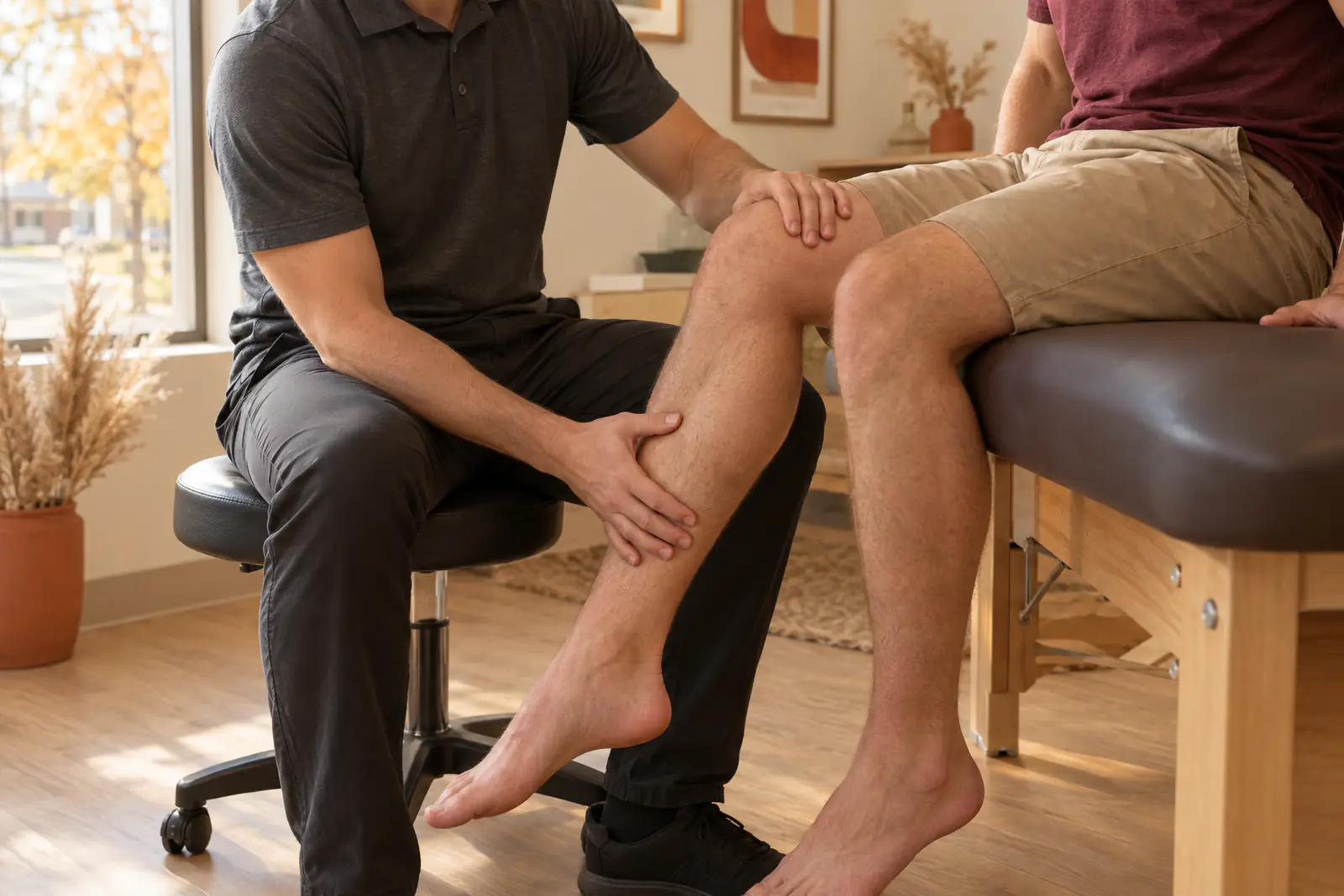
Your physiotherapist checks your knee’s range of motion, strength and stability, watches how you walk, squat and step, and screens the hip and ankle. The goal is to identify why the knee is painful so the plan targets the real driver.
Hands-on treatment and pain relief
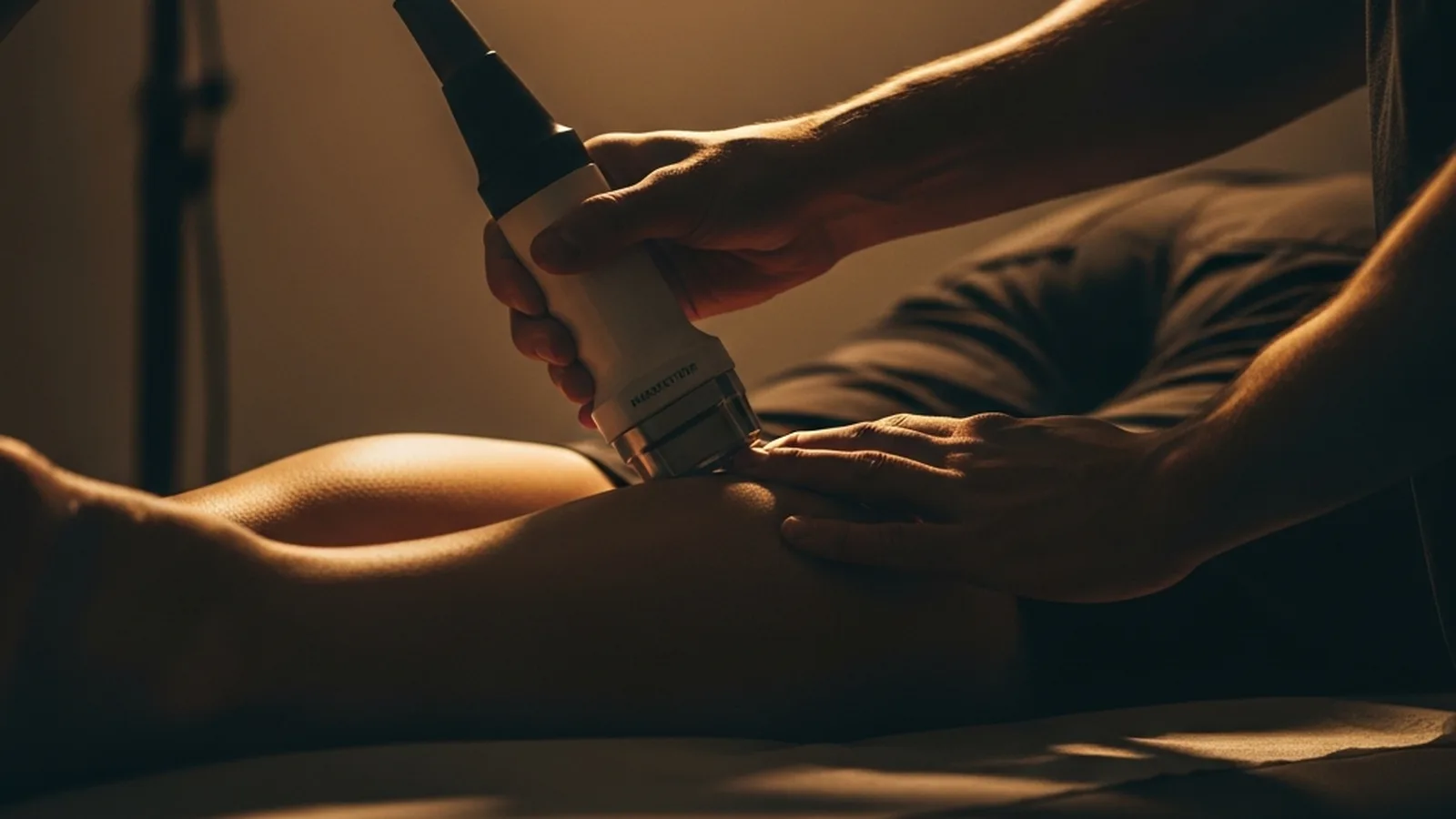
Manual therapy, soft tissue work and treatments such as shockwave therapy or dry needling can calm irritated tissue and improve movement early on. These make it easier to progress to the part that creates lasting change, which is exercise.
Progressive strengthening
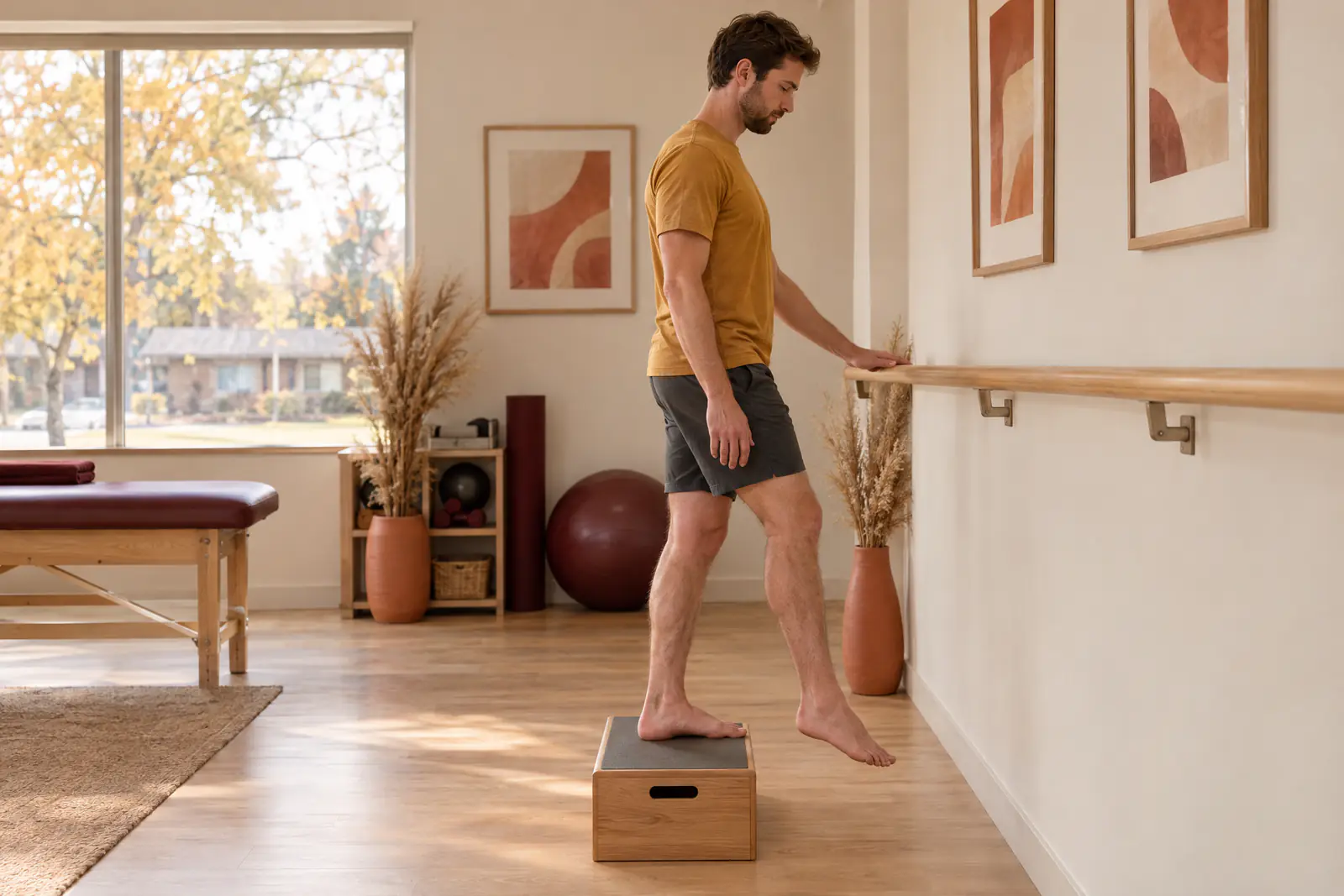
Research consistently shows that targeted strengthening of the quadriceps, glutes and hip muscles is the most effective long-term treatment for most knee pain, including osteoarthritis. Your programme starts at a level you can manage and builds as the knee tolerates more.
Return to activity
Whether the goal is climbing stairs without a wince, getting back to running, or returning to sport, the final stage rebuilds the specific movements you need and teaches you how to keep the knee resilient.
How long does knee pain take to settle?
It depends on the cause. Irritable patellofemoral pain often improves within weeks once loading is managed. Tendon problems and post-surgical rehabilitation take longer and progress in stages. Your physiotherapist gives you an expected range after the assessment and reassesses as you go rather than committing to a fixed block up front.
When to get a knee checked sooner
Book promptly if the knee gave way or locked, if it swelled rapidly within an hour of an injury, if you cannot put weight through it, or if it is hot and you feel unwell. These need assessment rather than waiting it out.
Not sure what kind of knee pain you have? Our guide to front, outside and locking knee pain explains what each pattern usually points to.
Important: This article is general information only. It is not medical advice and it cannot be used to diagnose or treat any condition. Every patient is assessed first by one of our registered physiotherapists or our registered massage therapists before any treatment, and your care plan is based on that assessment. If you have symptoms, please book an assessment.
Booking knee physiotherapy in Edmonton
No referral is needed in Alberta. If your knee has not settled on its own, an assessment will tell you what is driving it and what the plan should be.