Arthritis Physiotherapy in Edmonton: Movement Is the Treatment
Arthritis physiotherapy in Edmonton for knee and hip osteoarthritis: guideline-based exercise, education and hands-on care. No referral needed in Alberta.
For osteoarthritis of the knee and hip, movement is the treatment. Clinical guidelines put exercise and education first, ahead of injections or surgery, because stronger muscles and a joint that moves every day tend to hurt less and work better. Arthritis physiotherapy in Edmonton is how you get that exercise right for your joint, your pain and your life.
At Coronation Physiotherapy in northwest Edmonton, that means an assessment of how your knee or hip is actually behaving, a plan you can do at home and in the gym, and hands-on care where it helps. You do not need a doctor referral to start.
General information only, not a diagnosis. Our physiotherapists and massage therapists assess every patient first.
Key takeaways
- Exercise and education are recommended as first-line care for knee and hip osteoarthritis, not a last resort after everything else.
- Some discomfort during exercise is usually safe. Learning the difference between hurt and harm is part of treatment.
- Strength work, aerobic activity and staying on your feet often matter more than any single technique.
- Many people notice a change over 6 to 12 weeks of steady work, though everyone responds differently.
- A hot, swollen joint, fever or sudden inability to bear weight needs a doctor first, not physio.
What is osteoarthritis, and why does movement help?
Osteoarthritis is a change in the whole joint: the cartilage that covers the ends of the bones thins, the bone underneath remodels, and the lining and surrounding muscles respond. It is the most common form of arthritis in Canada, affecting more than four million Canadians, according to the Arthritis Society Canada.
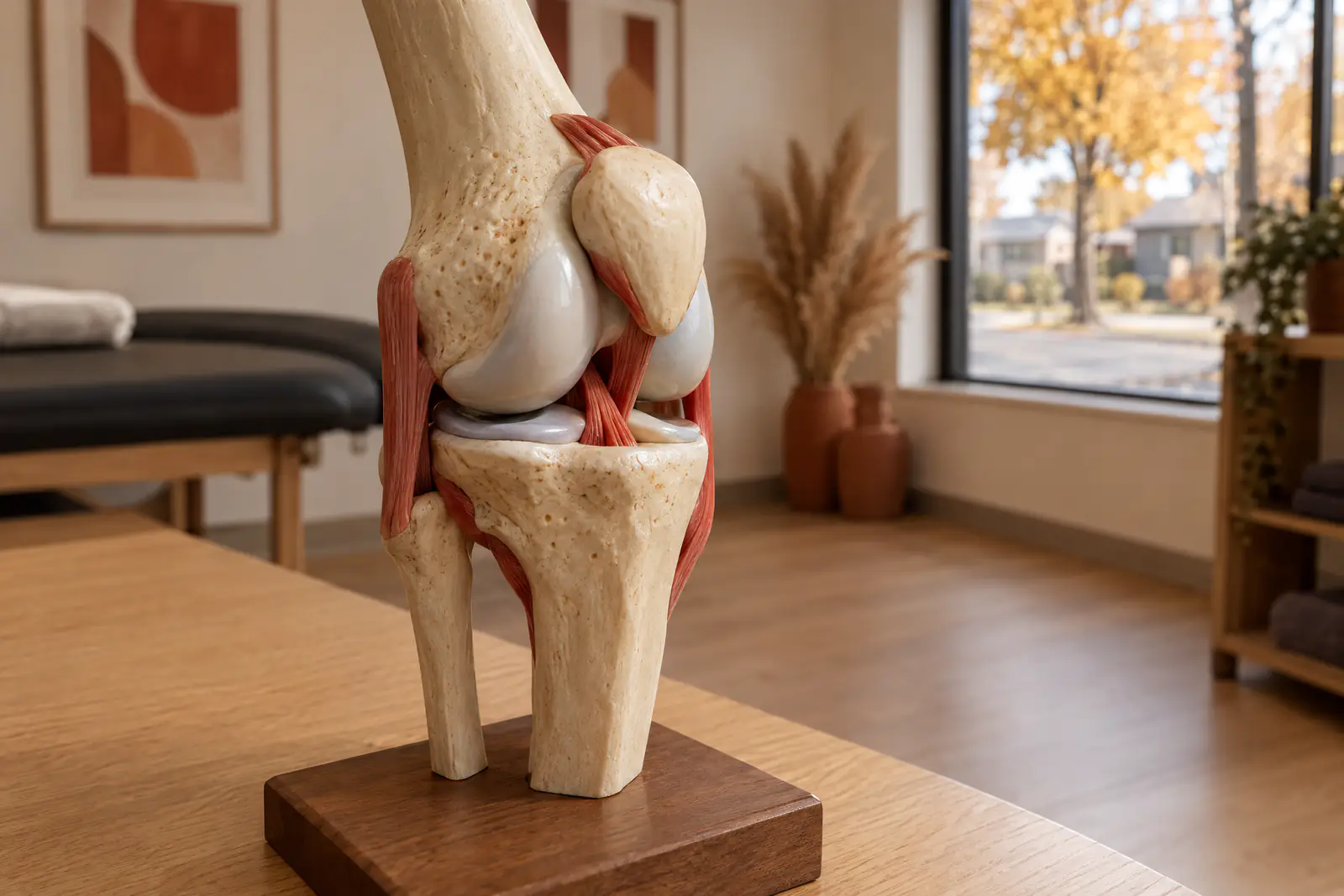
The old advice was to rest a sore joint and save it. That advice tends to backfire. Cartilage gets its nourishment from the fluid inside the joint, and that fluid moves when you do. The muscles around the knee and hip also act as shock absorbers. When they weaken from lack of use, more load lands on the joint, which often means more pain and more stiffness.
So the goal is not to protect the joint from use. It is to load it in the right amount, often enough, so it gets stronger rather than more irritable.
Why is exercise for arthritis the first-line treatment?
The Osteoarthritis Research Society International (OARSI) guidelines for knee, hip and multi-joint osteoarthritis list exercise and education as core treatment for nearly everyone, with weight management added where it applies. The Arthritis Society Canada makes the same point plainly: resting a painful joint is a common misconception, and too little movement can lead to weakness, more pain and more stiffness.
Canada has a well-known example of this approach in GLA:D Canada, an evidence-based program for hip and knee osteoarthritis that combines education with supervised exercise. You do not need to be in a formal program to benefit from the same principles: understand your condition, build strength and control, and keep moving.
None of this means surgery is never the answer. Some people with advanced joint changes do go on to a replacement. But a good exercise program is worth doing either way, because stronger, fitter people tend to recover better from surgery too.
Does it hurt or harm? Exercising with knee osteoarthritis and hip arthritis
This is the question that stops most people. If your knee aches on the stairs, it feels wrong to squat on purpose. But with osteoarthritis, hurt and harm are not the same thing.
A common guide is a simple pain scale from 0 to 10. Discomfort that stays at a level you find acceptable during exercise, and settles back to your usual within about 24 hours, is generally a sign the joint is coping with the load. Pain that climbs sharply, makes you limp, or leaves the joint more swollen and sore the next day tells us to adjust the dose, not to stop altogether.
Pacing is the other half. Many people swing between big days and crash days: a long Saturday of yard work, then three days on the couch. Spreading activity more evenly across the week, and building it up gradually, usually gives the joint a better chance to adapt.
What does arthritis physiotherapy in Edmonton look like at Coronation?
Your first visit is one-on-one and assessment-led. We ask what you are struggling with, whether that is stairs, getting off the floor, walking the dog or a round of golf, then look at how your hip and knee move, how strong the surrounding muscles are, and how you walk and balance. Gugan Dakshnamurthy has a particular interest in knee problems, and Muthu (Muthuukaruppan Muthiah), the most senior physiotherapist on our team, brings 24+ years of clinical practice across musculoskeletal and rehabilitation care.
Strength and weight-bearing
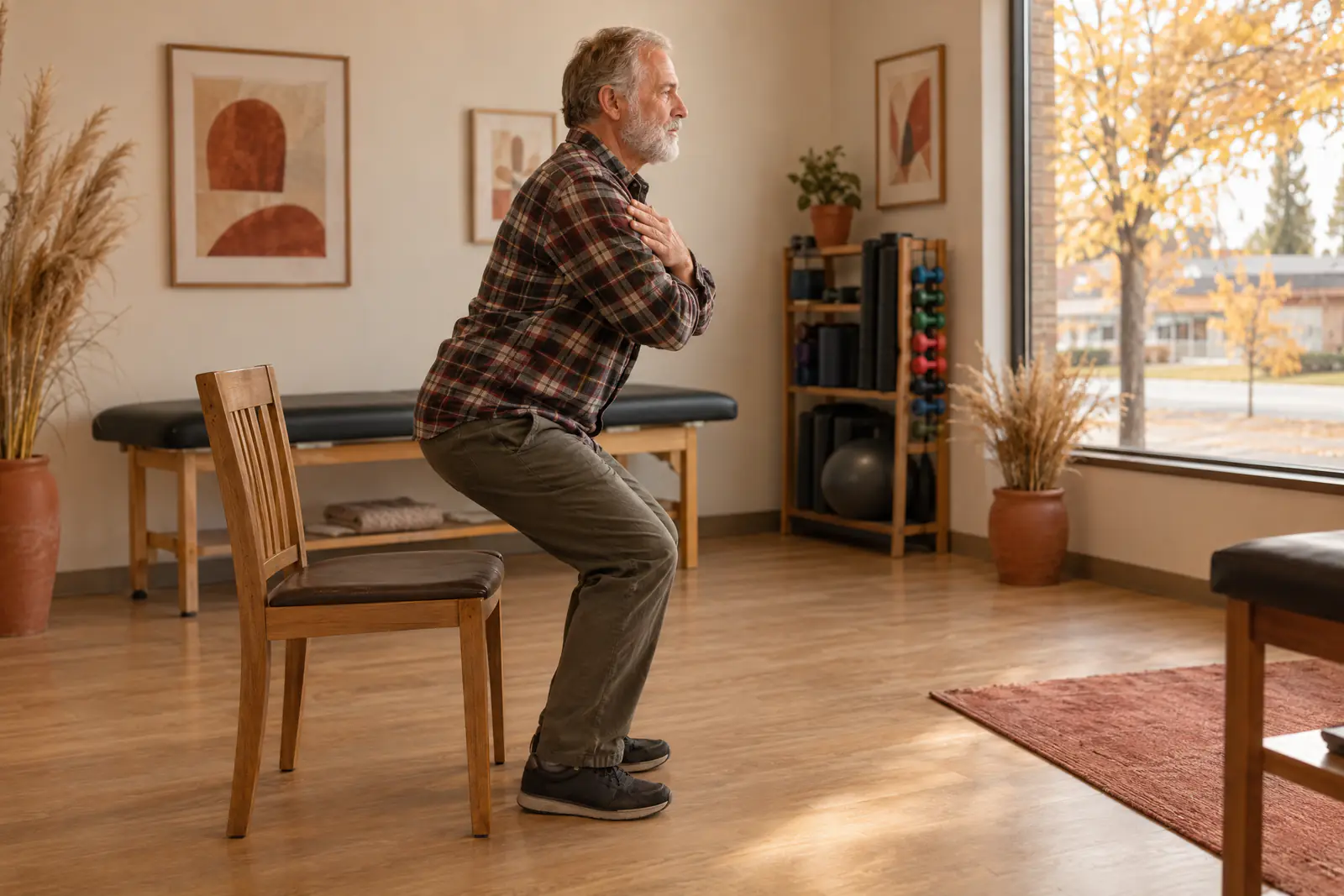
Expect hip and thigh strengthening, done standing where possible, because your joints were built to take your weight. Sit to stand from a chair, step-ups and controlled squats are common starting points, adjusted to your height, range and pain.
Aerobic activity, hands-on care and walking aids
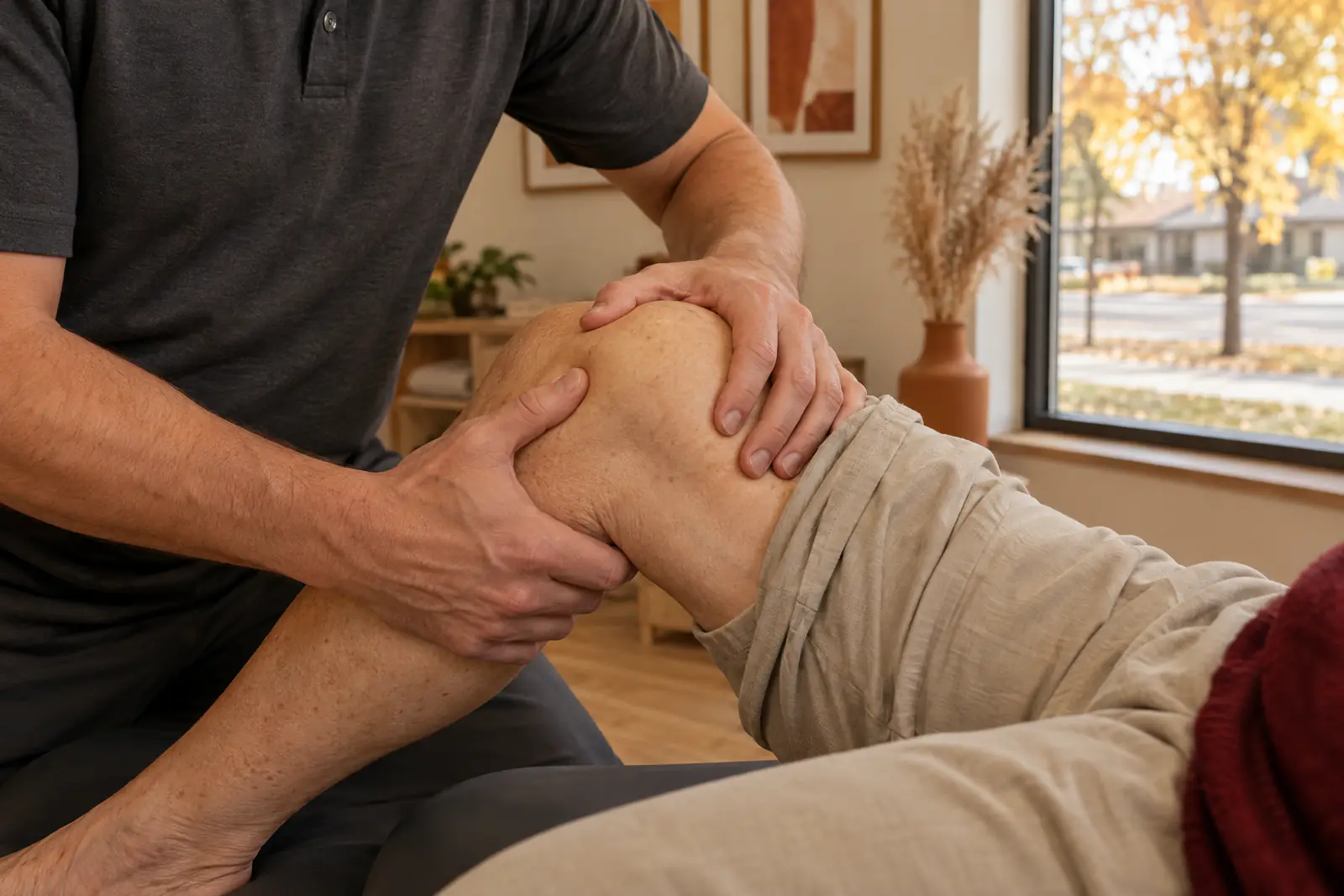
We pair strength work with aerobic activity you can keep up, such as cycling, walking or pool work. Manual therapy can ease stiffness and make exercise more comfortable, but we use it as support for the exercise plan, not a substitute. If a cane or walking poles would let you walk further, we will show you how to use them: the NHS advises holding a stick on the side opposite the sore leg.
For more on specific joints, see our guides to knee pain causes, treatment and recovery and hip pain physiotherapy.
How long does osteoarthritis physiotherapy take to work?
Muscles take time to change. In the first two to three weeks, many people notice they move with more confidence and understand their pain better, even before much changes in strength. Over roughly 6 to 12 weeks of regular exercise, it is common to see real gains in strength, walking distance and everyday tasks like stairs.
That is a range, not a promise. How far your joint has changed, your general fitness, other health conditions and how consistently you do the home program all play a part. Visits are usually more frequent at the start, then spread out as you take over the program yourself.
The aim is independence. Osteoarthritis is a long-term condition, so the plan that matters most is the one you can keep doing at home, at the gym or at a community centre after you stop coming in.
How do you stay active with arthritis through an Edmonton winter?
Many people say their joints feel stiffer in the cold. Whatever the reason, the bigger problem is often the change in routine. Icy sidewalks from November to March make walking feel risky, so people stop, and joints that were improving in September stiffen up by January.
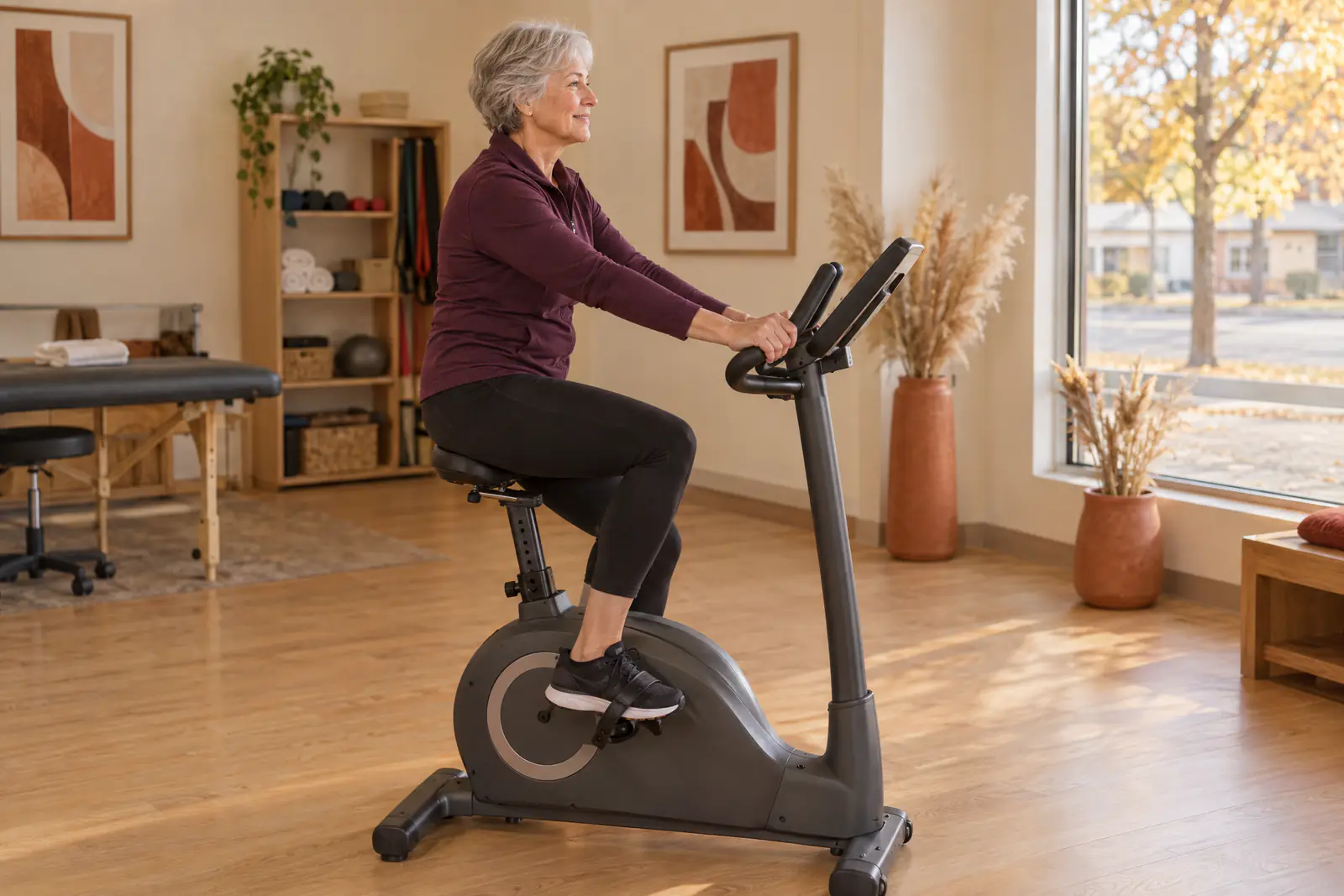
Plan your winter version before the first snow. Indoor options in Edmonton include walking laps at a shopping mall before stores open, the indoor tracks and pools at city recreation centres, and a stationary bike at home. Ice cleats and walking poles help if you want to keep using the river valley trails.

Keep the strength exercises going regardless. They need nothing more than a chair, a step and about 20 minutes, and they keep your legs ready for spring.
Can physiotherapy help rheumatoid arthritis?
Rheumatoid arthritis is different from osteoarthritis. It is an inflammatory condition where the immune system targets the joint lining, and it needs medical management, usually led by a rheumatologist. The Arthritis Society Canada notes that early diagnosis and treatment matter for limiting joint damage.
Physiotherapy works alongside that care, not instead of it. Rheumatoid arthritis physiotherapy focuses on keeping joints moving, maintaining strength and fitness, protecting hands and feet in daily tasks, and adjusting activity during a flare. In a flare, the plan usually shifts to gentle range of motion and rest for the hot joints, then a gradual return to strengthening as things settle.
When to see a doctor instead
Physiotherapy is a good fit for most stiff, achy knees and hips. Some signs point to something that needs medical assessment first. See your doctor or go to an emergency department if you have:
- A joint that is suddenly hot, red and swollen, especially with fever or feeling unwell, which can signal infection
- A sudden inability to bear weight, particularly after a fall
- Morning stiffness lasting more than an hour with several swollen joints, which can suggest inflammatory arthritis
- Pain that keeps you awake every night or comes with unexplained weight loss
- Calf swelling and pain, or new numbness or weakness in the leg
If you are unsure, tell us at your assessment. We will refer you on rather than treat the wrong problem.
The bottom line
For knee and hip osteoarthritis, arthritis pain relief without surgery usually starts with the same things: a clear explanation, the right exercise at the right dose, and a plan you can keep up through an Edmonton winter. It takes weeks rather than days, and the gains come from the work you do between visits.
Important: This article is general information only. It is not medical advice and it cannot be used to diagnose or treat any condition. Every patient is assessed first by one of our registered physiotherapists or our registered massage therapists before any treatment, and your care plan is based on that assessment. If you have symptoms, please book an assessment.
If your knee or hip is starting to shrink your day, arthritis physiotherapy in Edmonton is a practical place to start: book an assessment or call (825) 451-6263. We direct bill most major insurers, and you can learn more about our approach on our physiotherapy in Edmonton page.