Plantar Fasciitis Physiotherapy in Edmonton: Why Mornings Hurt
Heel pain on your first steps out of bed? Learn what causes plantar fasciitis and how physiotherapy in Edmonton uses stretching, strength and load changes.
If your heel hurts most on the first few steps out of bed, then eases once you get moving, the most common cause is plantar fasciitis, also called plantar heel pain. It is an irritated, overloaded band of tissue under the foot, and plantar fasciitis physiotherapy in Edmonton focuses on calming that load down, then building the foot and calf back up so they can handle your day.
At Coronation Physiotherapy in northwest Edmonton, we start with an assessment to confirm what is driving your heel pain before we choose any treatment.
General information only, not a diagnosis. Our physiotherapists and massage therapists assess every patient first.
Key takeaways
- Plantar fasciitis is the most common cause of heel pain, and pain on your first steps in the morning is its classic sign.
- It usually comes from load: long hours standing, a jump in running volume, tight calves, unsupportive footwear or a change in body weight.
- Stretching, progressive strength work and adjusting your load form the core of treatment. Insoles and taping are short-term supports.
- Shockwave therapy may help selected persistent cases, used alongside exercise rather than instead of it.
- Recovery often takes a few months, so a clear plan matters more than a quick fix.
What does plantar fasciitis feel like, and why do the first steps in the morning hurt?
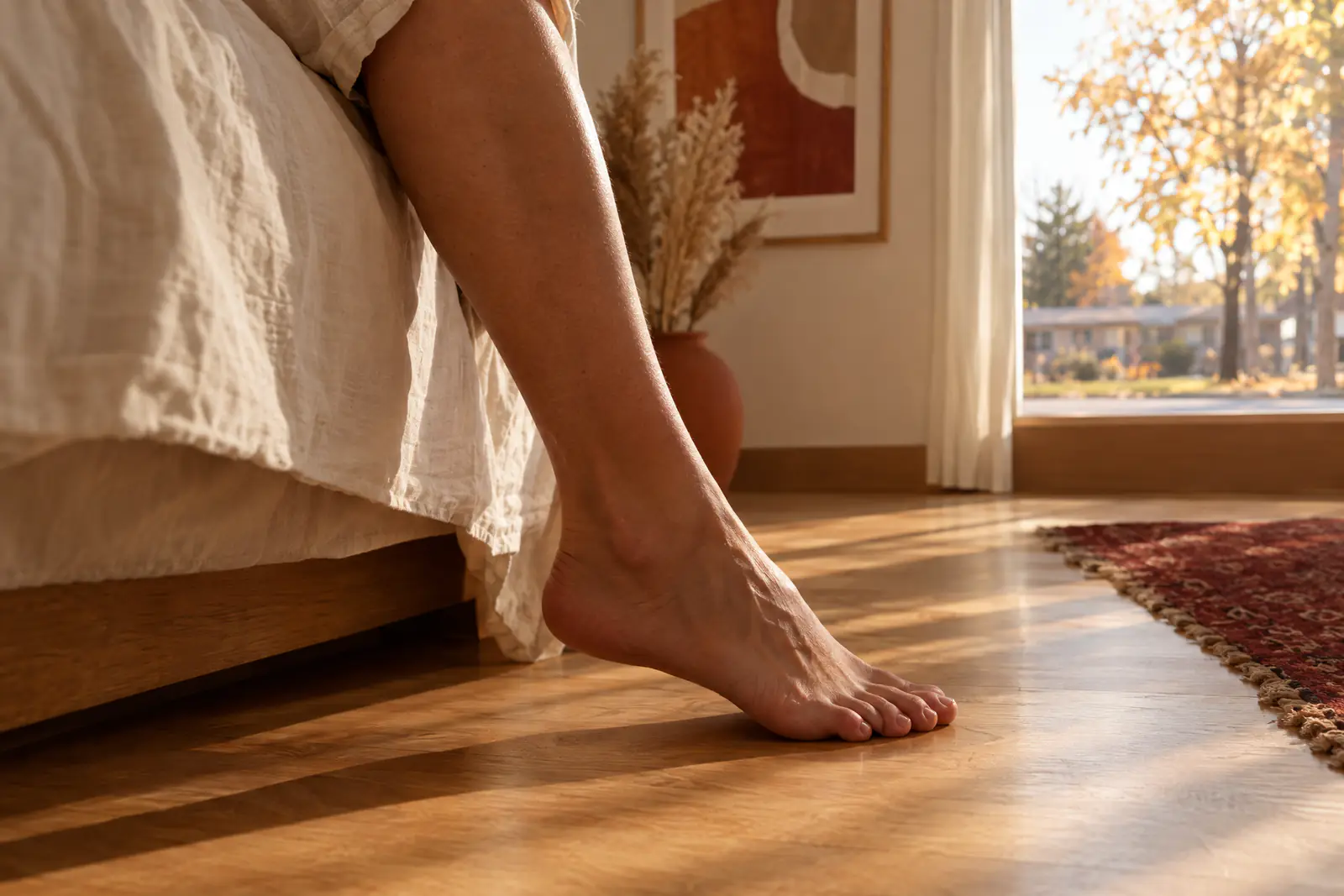
Most people describe a sharp or bruised feeling on the inside of the heel, sometimes running into the arch. The telltale pattern is heel pain in the morning: the first steps out of bed are the worst, it settles after a few minutes of walking, then returns after you have been sitting for a while or on your feet all day.
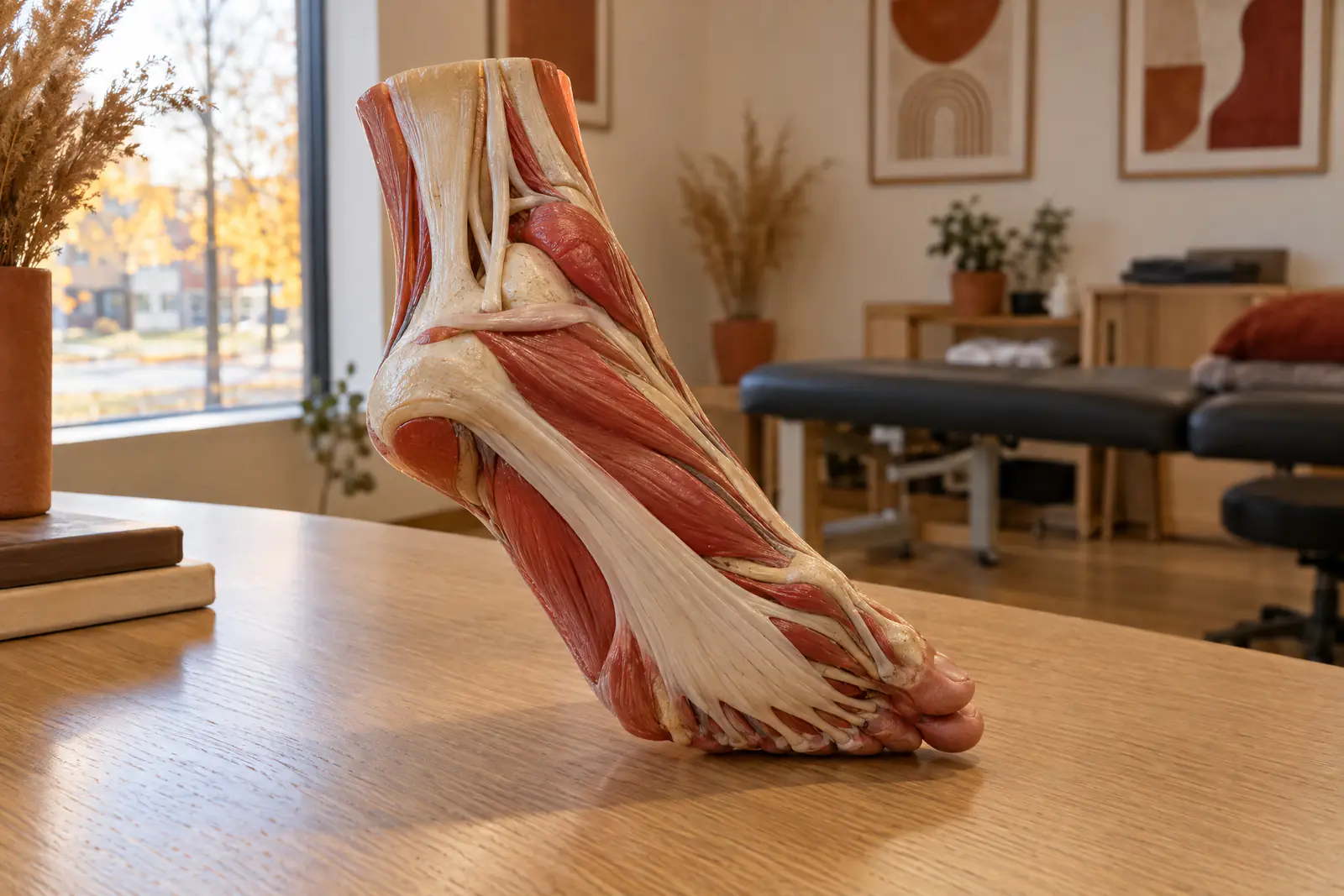
The plantar fascia is a thick band of tissue running from your heel bone to the base of your toes. It helps hold up your arch and acts like a spring each time you push off. Overnight, your foot rests with the toes pointed slightly down, so the fascia and calf sit in a shortened position. Those first steps load the tissue suddenly before it has warmed up, which is why the morning hurts most.
MyHealth Alberta describes this first-step pain, after getting out of bed or after sitting for a long time, as the main symptom of the condition.
What causes plantar heel pain?
Plantar fasciitis is rarely about one bad step. It builds when the load on the foot outpaces what the tissue is ready for. The NHS lists being aged 40 to 60, tight calves, exercising on hard surfaces, carrying extra body weight and poor footwear among the common factors.
In Edmonton, we see a few patterns come up again and again:
- Standing jobs. Long shifts on concrete floors in warehouses, retail, hospitals and kitchens.
- Running volume. A spring jump in mileage once the river valley trails dry out, or a new hill or speed block.
- Footwear changes. Moving from supportive winter boots to flat sandals, or spending more time barefoot on hard floors at home.
- Calf tightness and weakness. A stiff or weak calf passes more strain to the fascia.
- Weight change. A recent gain, including during pregnancy, adds load with every step.
Usually two or three of these stack up at once. Finding which ones apply to you shapes the whole plan.
What happens at a heel pain physiotherapy assessment in Edmonton?
A good assessment answers two questions: is this plantar fasciitis, and why did it start now? Your physiotherapist will ask when the pain began, what makes it better or worse, what you do for work and exercise, and what shoes you wear most.
The hands-on part usually includes pressing along the inside of the heel and arch to find where it is tender, checking ankle and big toe movement, measuring calf flexibility, and testing calf and foot strength, often by counting how many single leg heel raises you can do on each side. We watch you walk and, if you run, may look at how you load the foot.
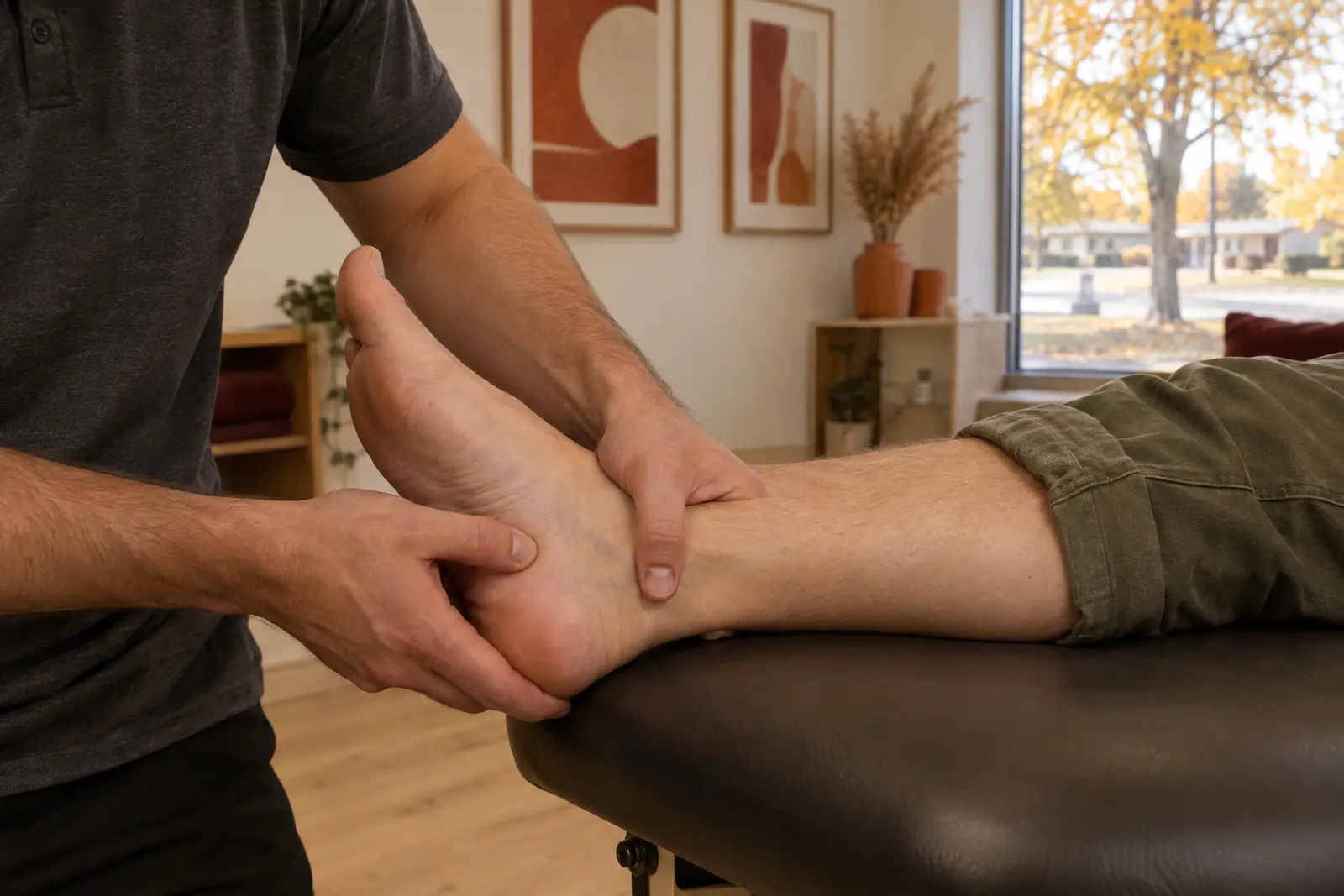
We also screen for things that look similar but need a different approach, such as a nerve irritation, a stress fracture or pain referred from the lower back. If something does not fit, we will tell you and point you to your doctor.
What does plantar fasciitis physiotherapy in Edmonton look like at Coronation?
Every plan starts from your assessment, so no two look quite the same. Most combine four parts.
- Education and load management. We help you work out how much standing, walking or running your foot can handle right now, and how to build back up without flaring it. That might mean shorter runs on softer ground for a few weeks, or a supportive shoe at work.
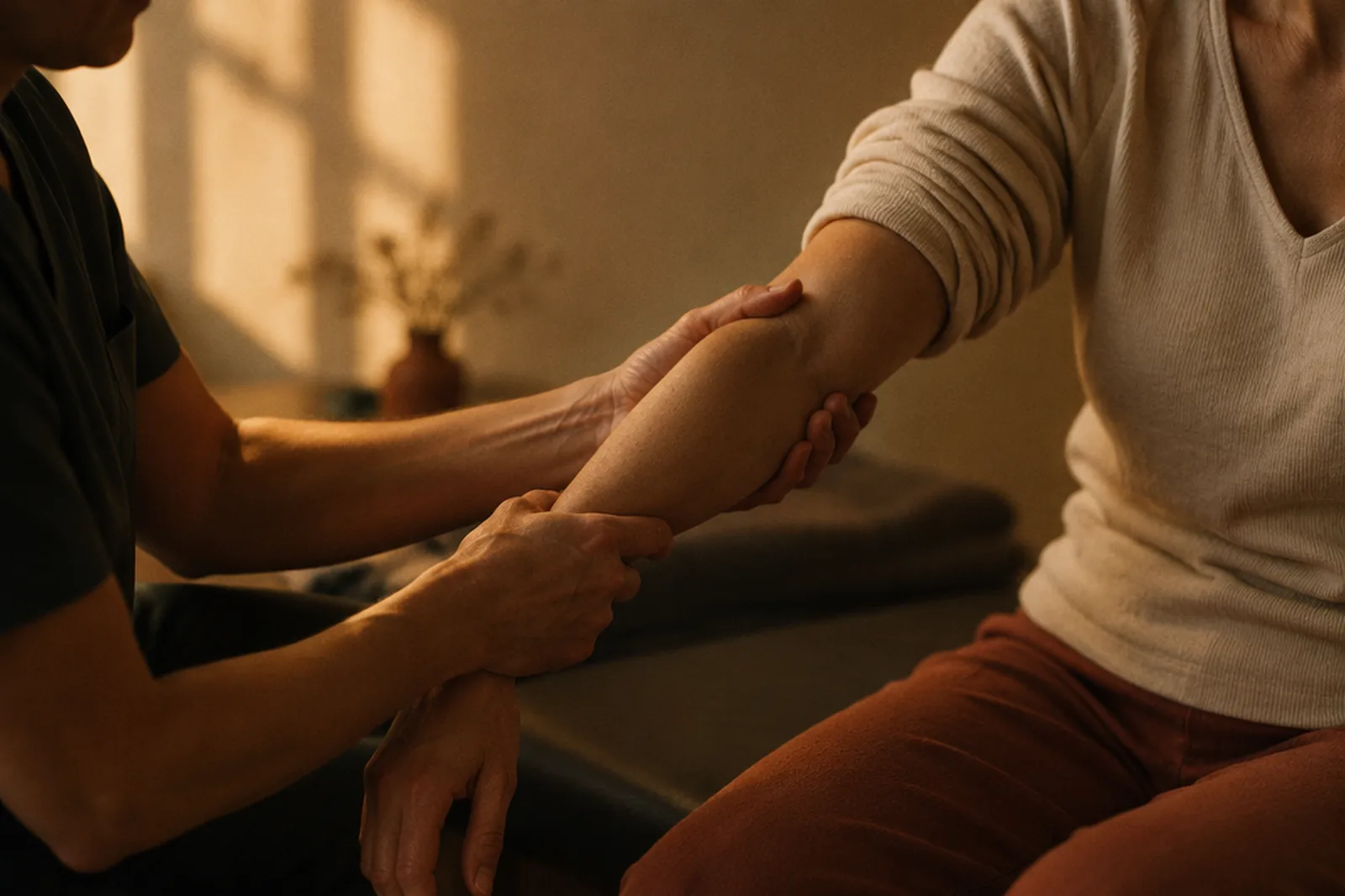
- Hands-on care. Manual therapy to the calf, ankle and foot can ease pain and stiffness in the short term so you can do your exercises more comfortably.
- Exercise. Stretching and progressive strength work, covered below, are the backbone of treatment.
- Short-term supports and options. Taping, heel cups or off-the-shelf insoles can take the edge off while the tissue settles. For persistent cases, shockwave or dry needling may be discussed.
Your care is one-on-one with one of our co-owners and registered physiotherapists: Gugan Dakshnamurthy, who brings 14+ years of musculoskeletal practice and uses shockwave, manual therapy, dry needling and exercise, or Muthuukaruppan (Muthu) Muthiah, the most senior physiotherapist on our team with 24+ years of clinical practice. Heel pain is often part of a wider picture, so foot and ankle pain physiotherapy here looks at the whole leg, not just the sore spot. You can read more about our general physiotherapy services in Edmonton.
Which plantar fasciitis stretches and exercises help most?
The 2023 revision of the heel pain clinical practice guideline published in the Journal of Orthopaedic and Sports Physical Therapy recommends plantar fascia-specific stretching and calf stretching for both short and long-term pain relief. Strength work is the other half.
Plantar fascia and calf stretches
A plantar fascia stretch is simple: sit, cross the sore foot over your knee, and pull your toes back toward your shin until you feel a stretch along the arch. Doing this before your first steps in the morning can make them noticeably easier for many people.

MyHealth Alberta has a clear set of plantar fasciitis exercises with pictures if you want a starting point at home.
Calf and foot strengthening
Stretching alone often is not enough. Slow, heavy heel raises build capacity in the calf and the tissues under the foot. We usually begin with both feet on the floor, then progress to single leg raises on a step, sometimes with a rolled towel under the toes to put more stretch through the arch. Slow and controlled matters more than many reps.
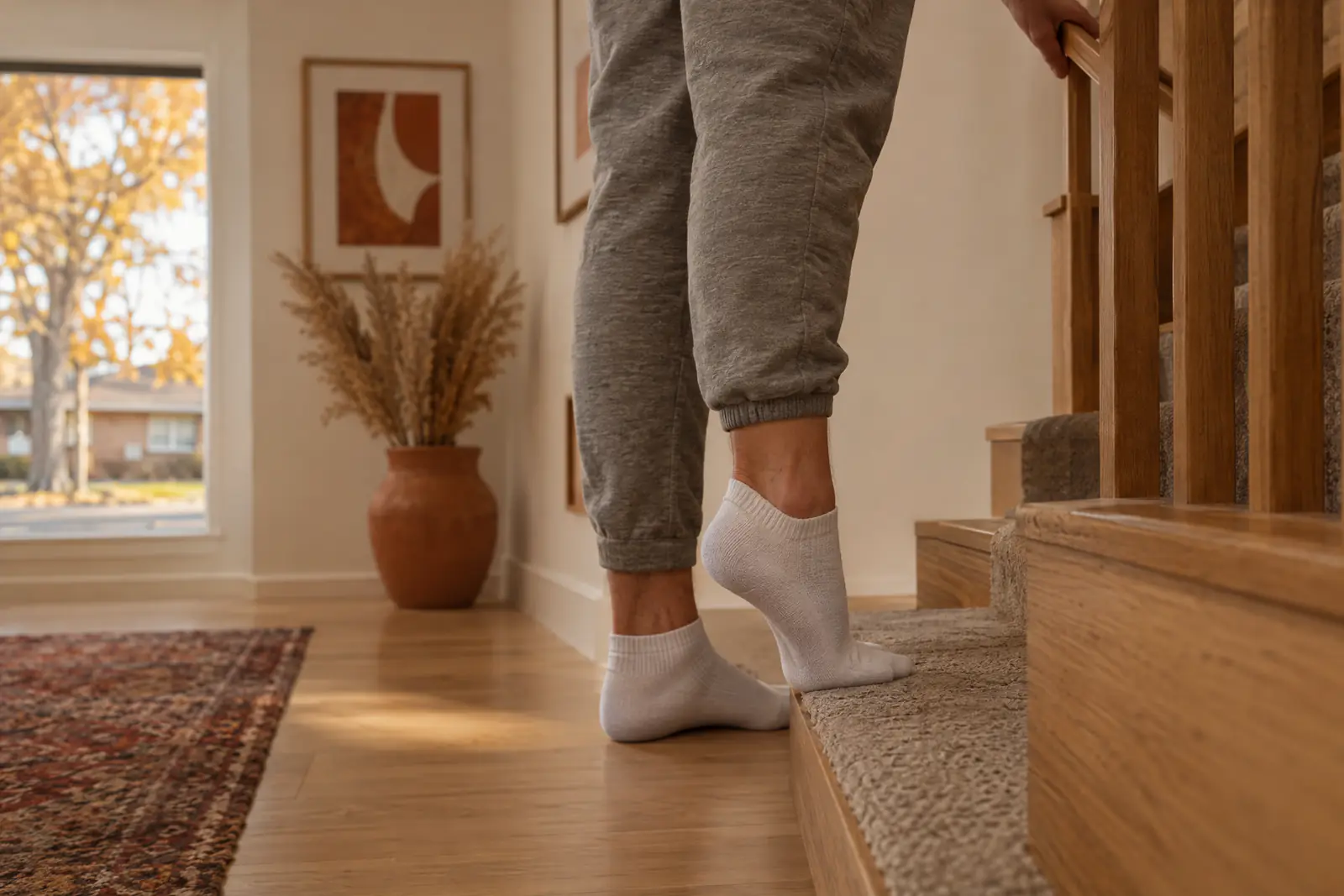
Some soreness during strength work is acceptable. Pain that is worse the next morning means the dose needs adjusting, and that is exactly what follow-up visits are for.
Does shockwave for plantar fasciitis help?
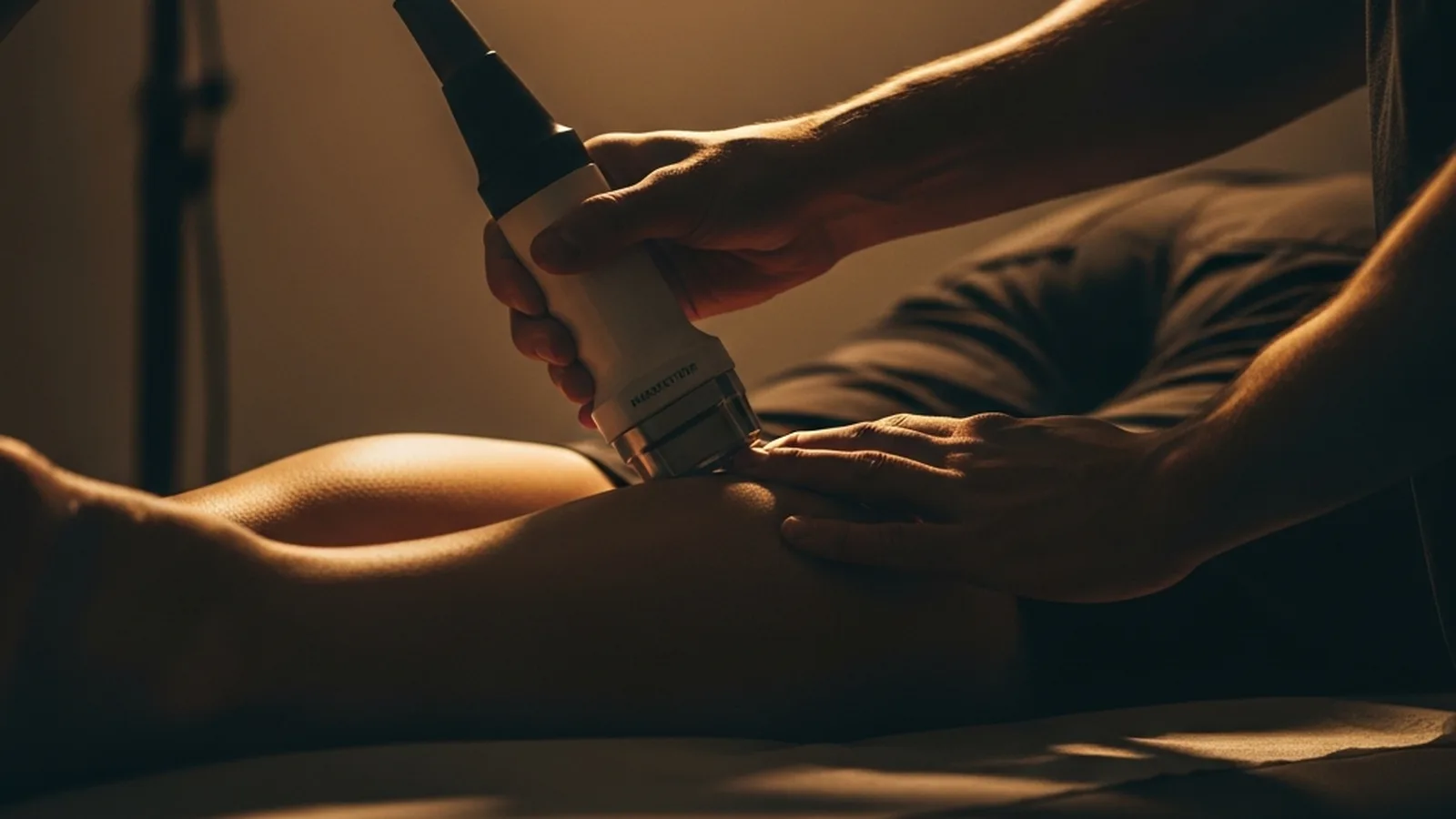
Shockwave therapy sends pulses of acoustic energy into the sore tissue. It is generally kept for heel pain that has hung on despite a good run of exercise and load management, and the NHS lists it among the options for people whose pain does not settle with self-care.
It is not a stand-alone fix. Shockwave may help selected persistent cases settle enough to progress your strength work, and it is meant to be used alongside that exercise. Treatment is usually a short series of sessions, and it can feel uncomfortable at the heel while it is being applied.
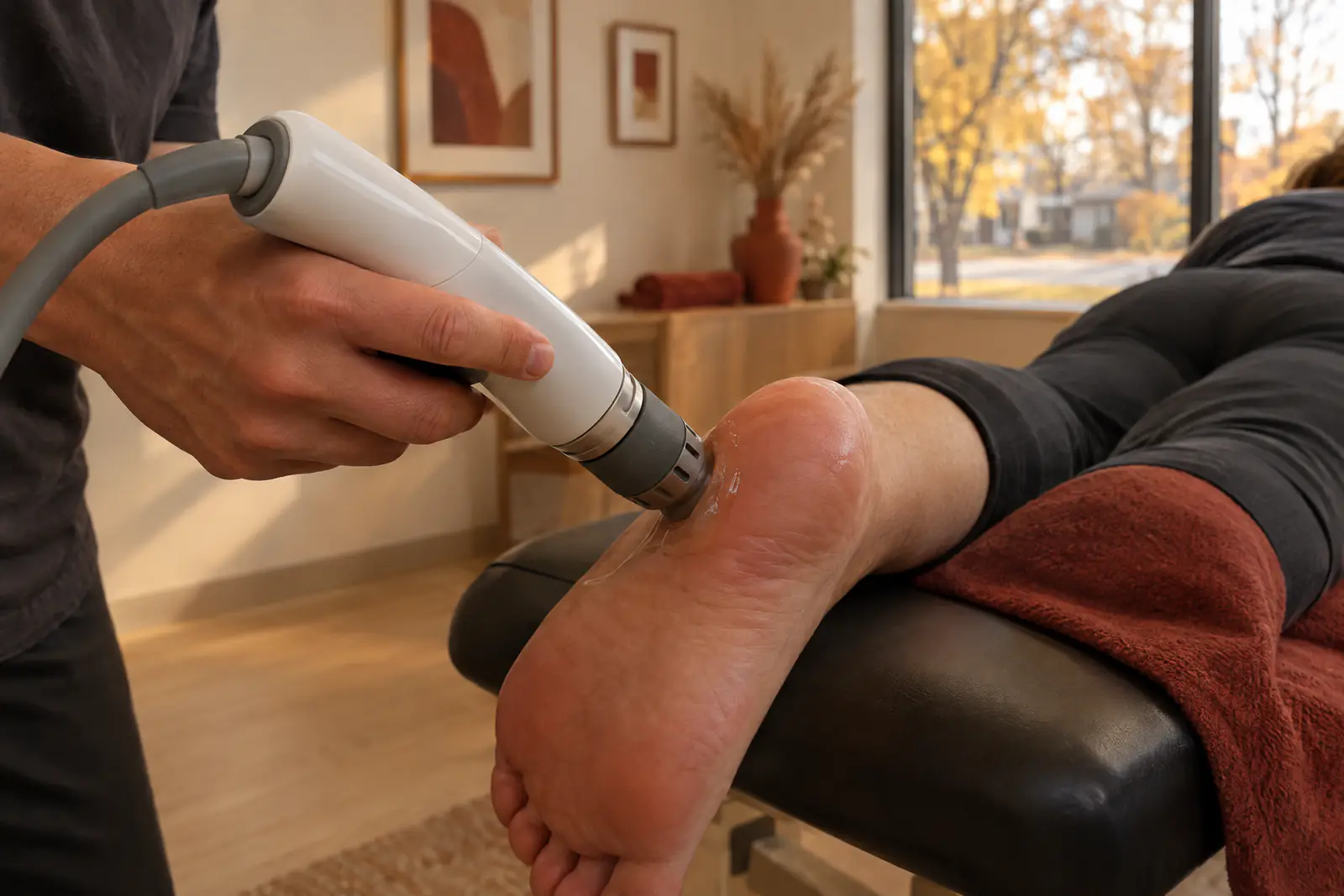
Coronation offers three types of shockwave, and whether it suits you is decided at your assessment, not before. You can read more about how we use shockwave therapy in Edmonton.
How long does plantar fasciitis treatment take?
Honestly, longer than most people hope. MyHealth Alberta notes that pain often eases within a few weeks of starting treatment but can take a few months to a year to go away completely. Everyone responds differently, and the timeline depends on how long the pain has been there, how much load you carry each day, and how consistent the home program is.
What we often see is a pattern of steady change rather than a sudden switch. The morning pain becomes shorter first, then you can stand or walk longer before it builds, and only later does the heel stop reminding you by evening.
If you are a runner, the goal is usually to keep some running going at a level the foot tolerates rather than stopping completely. Our guide on returning to sport after an injury covers how to build volume back safely.
When should you see a doctor instead?
Most heel pain is mechanical, but some signs mean you should see a doctor first, or go to emergency, rather than start with physiotherapy:
- Numbness, tingling or burning in the foot, which can point to a nerve problem.
- Pain at night or at rest that does not change with movement or position.
- Sudden swelling, bruising or being unable to put weight on the foot after a fall, a jump or a twist.
- Heel pain with fever, or a foot that is hot, red and swollen.
- Foot pain if you have diabetes, especially with a wound or colour change.
- Pain in both heels alongside swelling or stiffness in other joints.
Your doctor can arrange imaging, blood work or medication if needed. Physiotherapists do not prescribe medication. If any of these come up during your assessment, we will stop and refer you on.
The bottom line
Plantar fasciitis is common, it is usually a load problem, and it tends to improve with the right mix of stretching, strength work and smarter daily load. It does take patience, and a plan you can follow on a busy week matters more than any single treatment.
Important: This article is general information only. It is not medical advice and it cannot be used to diagnose or treat any condition. Every patient is assessed first by one of our registered physiotherapists or our registered massage therapists before any treatment, and your care plan is based on that assessment. If you have symptoms, please book an assessment.
If your first steps each morning are starting to dictate your day, book an assessment with plantar fasciitis physiotherapy in Edmonton at Coronation, or call us at (825) 451-6263. No doctor referral is needed in Alberta, and we direct bill most major insurers.