Front, Outside or Locking Knee Pain: What Your Knee Pain Usually Means
Pain at the front or outside of the knee, locking, catching or arthritis: what each pattern usually points to and when an X-ray or MRI actually helps.
Most knee pain is a load problem, not a damage problem. The knee hurts because the demand placed on a structure has outpaced what that structure is currently conditioned to tolerate. That distinction matters, because load problems respond well to graded strengthening and poorly to complete rest, while the smaller number of true structural injuries need a different plan.
Below is how the common presentations differ, what an assessment looks for, and when imaging is actually useful.
General information only, not a diagnosis. Our physiotherapists and massage therapists assess every patient first.
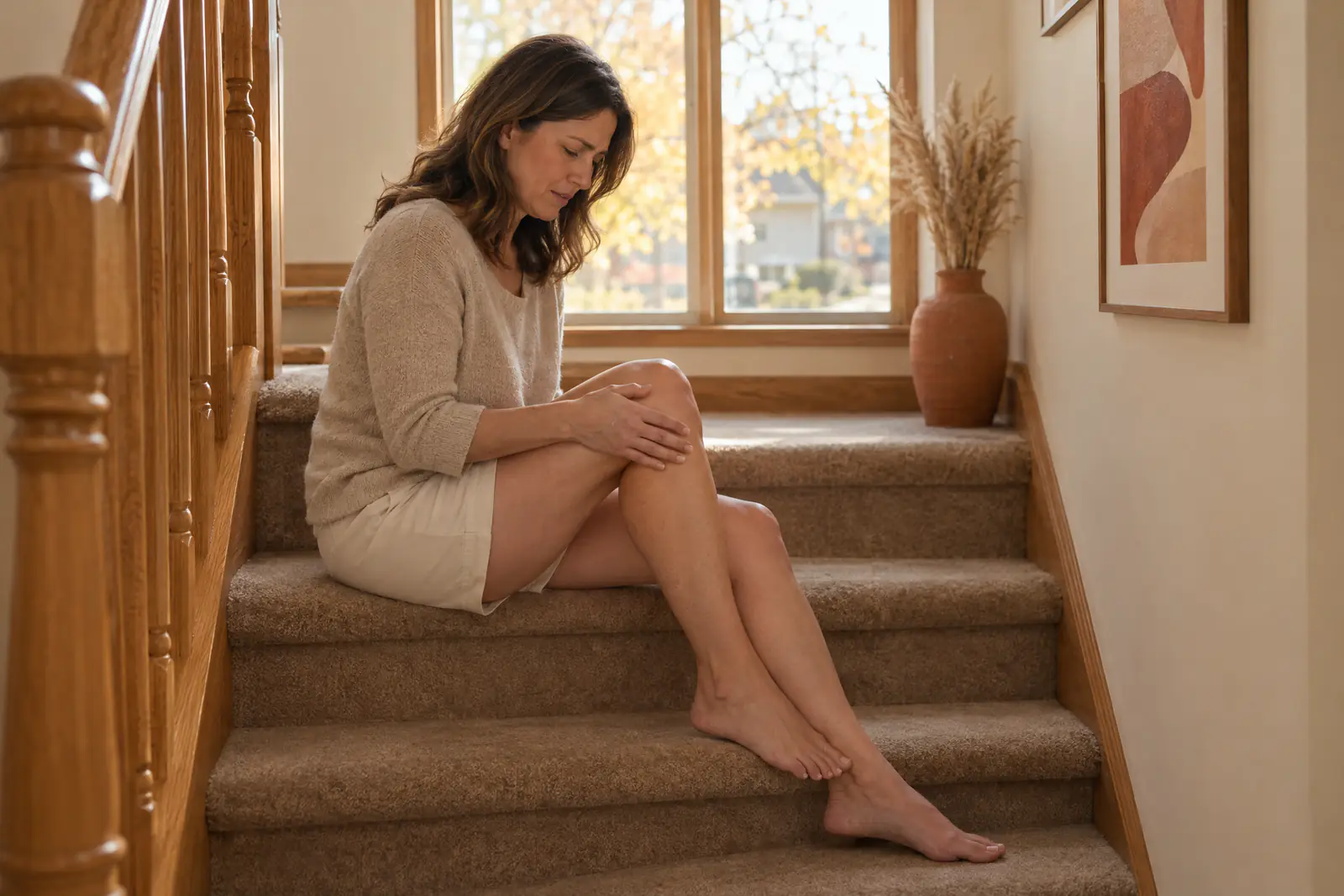
Pain at the front of the knee
Pain around or under the kneecap that shows up on stairs, on descents, after sitting for a long stretch, or during squatting is usually patellofemoral pain. It is the most common knee complaint in active adults.
The pattern is recognisable: it builds with activity rather than starting with a single incident, it settles with a few days of rest, and it returns at roughly the same distance or load. That returning-at-the-same-point behaviour is the signature of a tolerance problem.
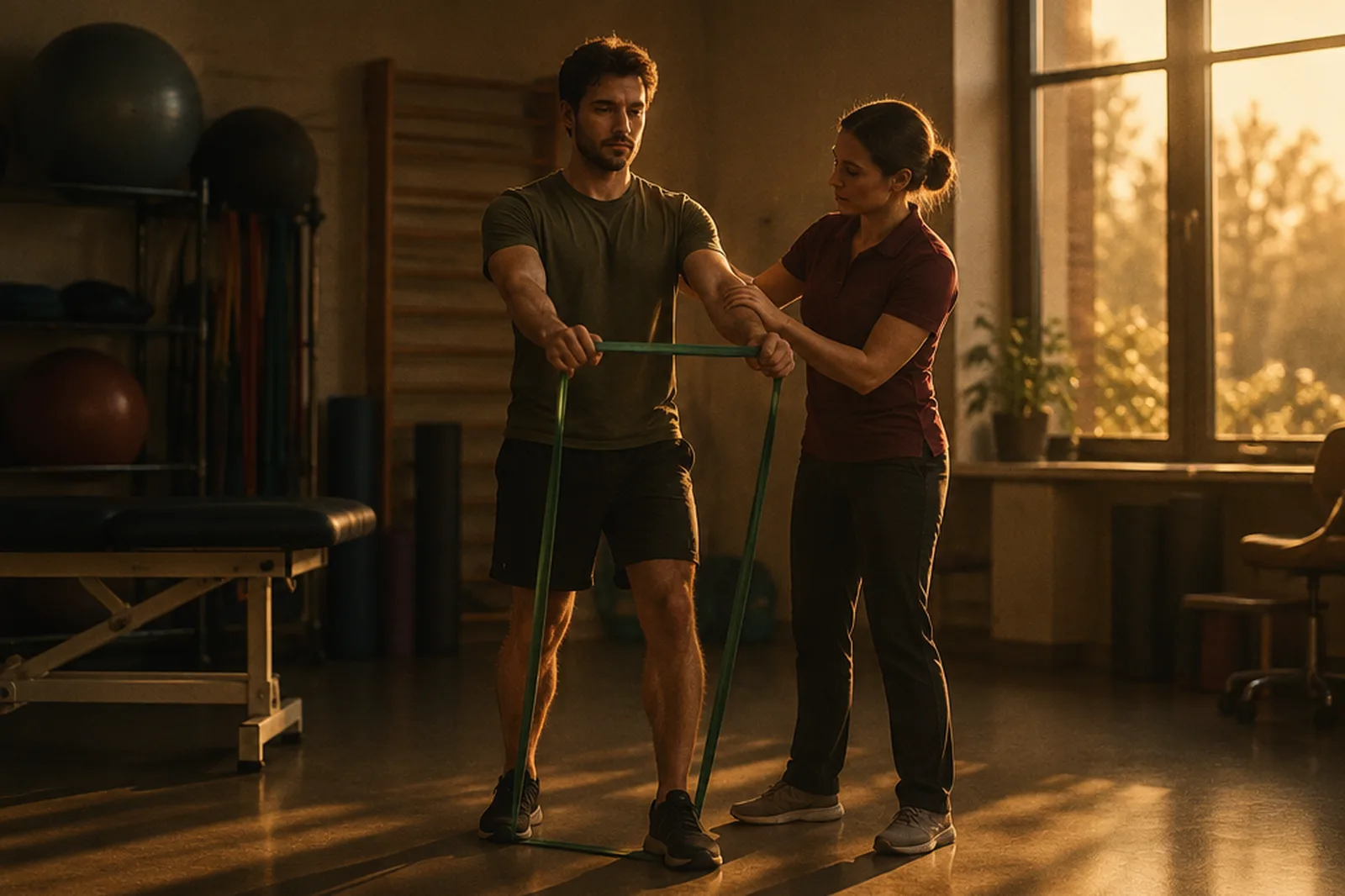
Treatment centres on building capacity in the quadriceps and hip muscles, and on adjusting how quickly load is being added. Taping or bracing can reduce symptoms in the short term, but neither changes the underlying capacity.
Pain at the outside of the knee
Lateral knee pain in runners and cyclists is often iliotibial band related. It typically appears at a predictable point in a run, feels sharp rather than achy, and eases quickly on stopping.
The useful lever here is rarely stretching the band itself, which is a very stiff structure and does not lengthen meaningfully. Hip abductor strength, running cadence, and downhill volume tend to be the factors worth addressing.

Pain with locking, catching, or giving way
These are different, and they matter. A knee that locks, catches, or gives way is describing a mechanical symptom rather than a load symptom. Meniscal tears, loose bodies, and ligament instability sit in this group.
An assessment will include specific tests for these. Not every meniscal tear needs surgery, and many degenerate tears in middle-aged adults respond well to structured rehabilitation. But a knee that genuinely gives way under you should be assessed rather than trained through.
Knee osteoarthritis
Osteoarthritic knee pain tends to be stiffer in the morning, better with gentle movement, and worse after prolonged loading. It often affects both knees, though rarely equally.
Exercise therapy is a first line treatment for knee osteoarthritis in current clinical guidelines, alongside education and weight management where relevant. The aim is not to reverse joint changes. It is to build the muscular support and movement tolerance that determine how much those changes actually limit you.
Do you need an X-ray or MRI?
Usually not, at least not first. Imaging findings in knees correlate poorly with pain: meniscal changes and cartilage wear are common in people with no symptoms at all. Imaging is most useful when there was significant trauma, when there is true locking or instability, or when a clinical picture is not adding up.
Starting with a physical assessment avoids the trap of treating a scan finding that was never the source of the pain.
What a first assessment involves
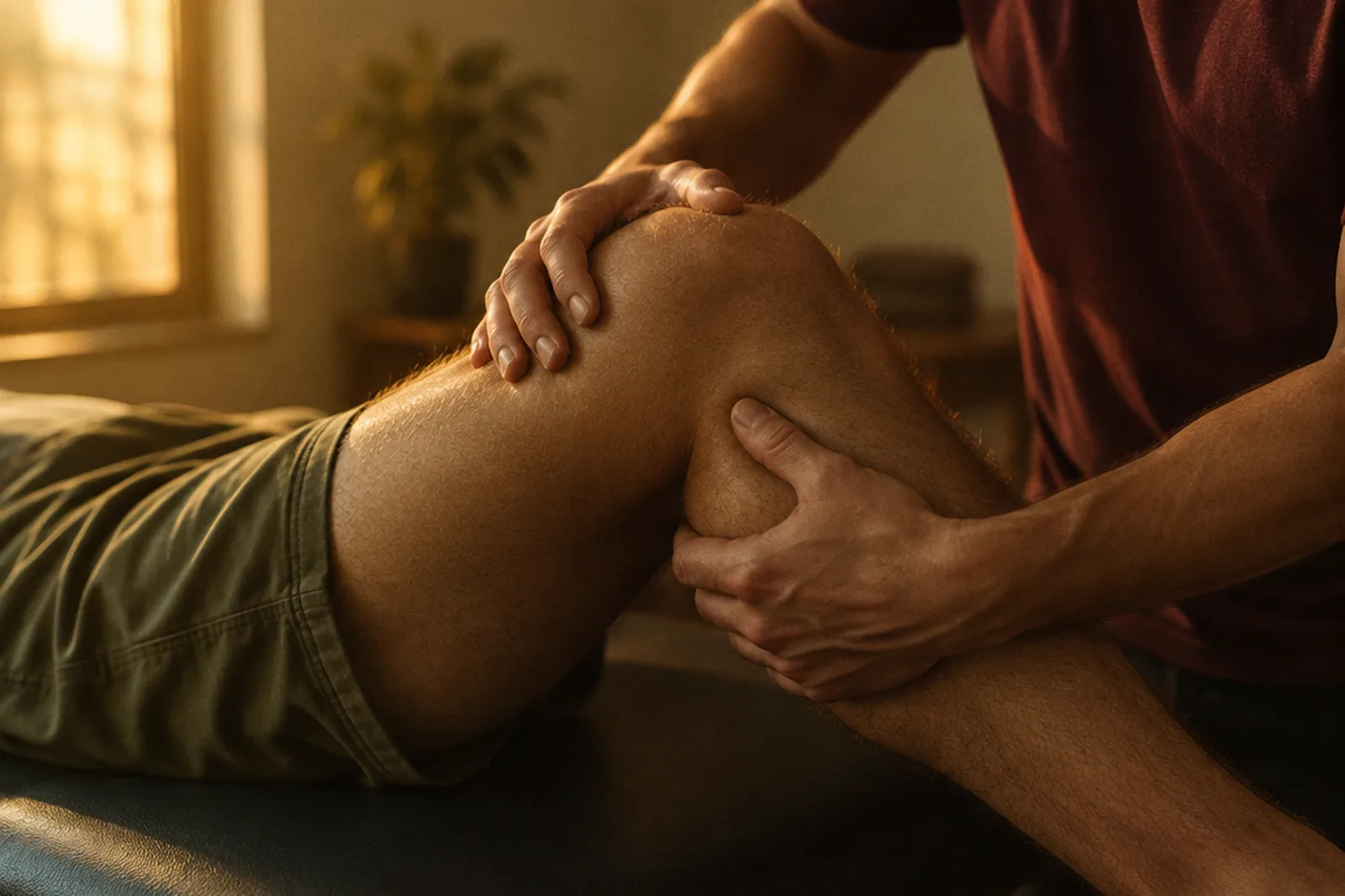
About an hour. History first, because the timeline and behaviour of the pain narrow the possibilities faster than any single test. Then movement testing, strength testing, joint-specific tests, and assessment of the hip and ankle, both of which influence what the knee has to absorb.
You leave with an explanation of the likely driver, a plan, and two or three exercises to begin.
Ready to understand how treatment works? Read how knee pain physiotherapy in Edmonton is planned, and what recovery usually involves.
Frequently asked questions
Should I rest completely?
Rarely. Complete rest reduces capacity, and reduced capacity is often what caused the problem. Relative rest, meaning reducing the aggravating load while maintaining everything else, is usually the better route.
How long does it take?
Tendon and load related knee pain generally responds over weeks rather than days, and the timeline depends on how long it has been present and how much capacity has to be rebuilt.
Do I need a referral?
No. Physiotherapy can be accessed directly in Alberta. Check your extended health plan, as some require a referral for reimbursement.
Important: This article is general information only. It is not medical advice and it cannot be used to diagnose or treat any condition. Every patient is assessed first by one of our registered physiotherapists or our registered massage therapists before any treatment, and your care plan is based on that assessment. If you have symptoms, please book an assessment.
Coronation Physiotherapy, 14315 118 Ave NW, Unit 142, Edmonton. Call (825) 451-6263 or book at coronationphysio.ca.
Gugan Dakshnamurthy is a Registered Physiotherapist and co-owner of Coronation Physiotherapy with more than 14 years of experience in musculoskeletal and rehabilitation care. He is certified in assessing and treating BPPV (vertigo), and combines manual therapy, shockwave, dry needling, and exercise. Serving northwest Edmonton since 1987.