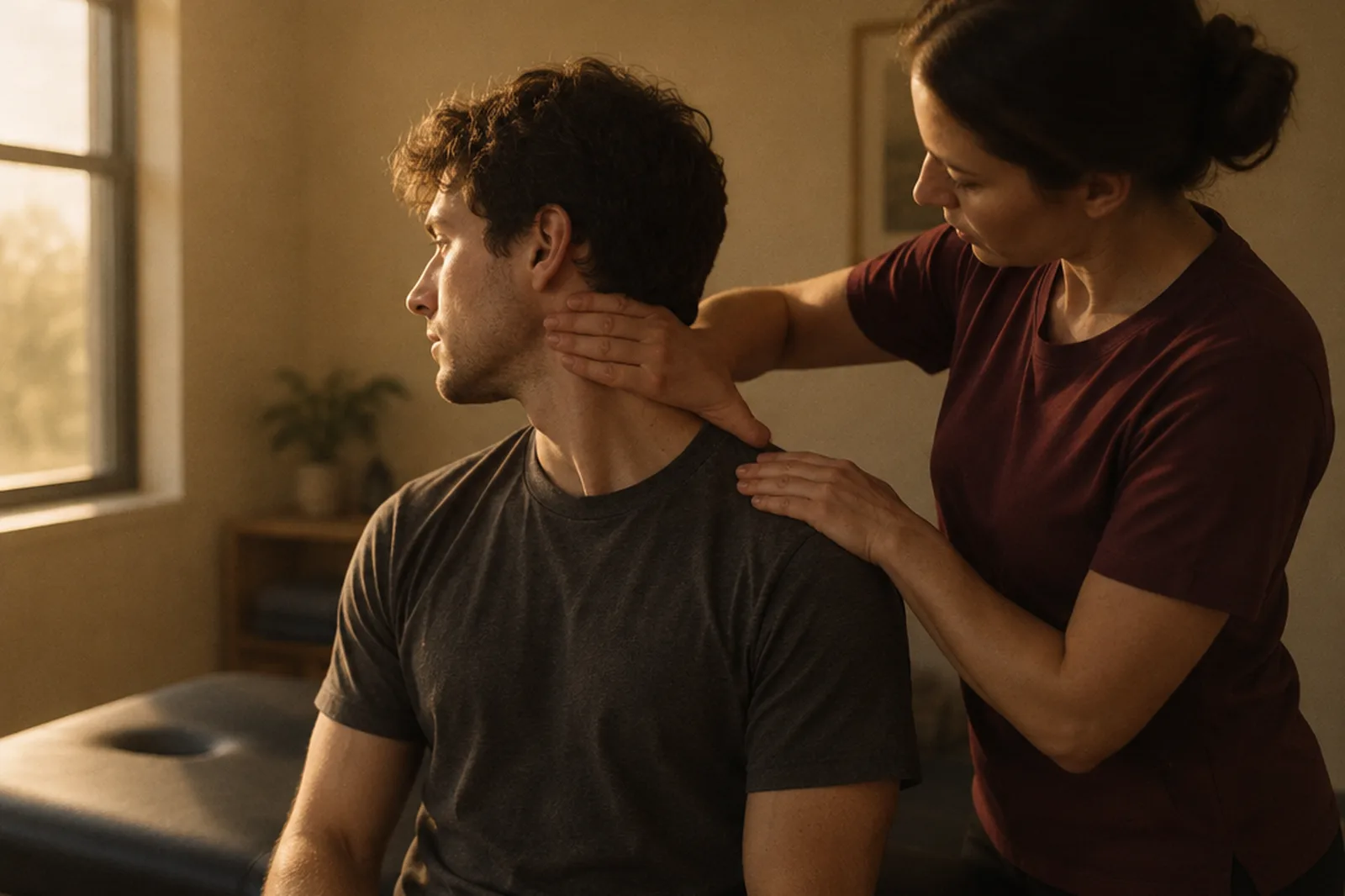
Dizziness Treatment in Edmonton: When It Is Not BPPV
Dizziness treatment in Edmonton for inner ear weakness, neck-related and post-concussion dizziness and balance problems. No referral needed. Book today.
Not all dizziness is BPPV. If your dizziness is not the brief spinning you get when you roll over in bed, it may come from a weak inner ear after an infection, from your neck, from a concussion, or from a balance system that has slowly lost its edge. Many of these respond to vestibular rehabilitation, an exercise-based form of physiotherapy and the main focus of our dizziness treatment in Edmonton.
At Coronation Physiotherapy in northwest Edmonton, we start by working out which kind of dizziness you have, rule out anything that needs a doctor first, and then build a plan of specific exercises and hands-on care around what we find.
General information only, not a diagnosis. Our physiotherapists and massage therapists assess every patient first.
Key takeaways
- Sudden dizziness with facial droop, arm weakness, slurred speech, double vision, a severe sudden headache, trouble walking, chest pain or fainting is an emergency: call 911.
- Dizziness comes in three broad types: spinning (vertigo), lightheadedness and unsteadiness. Each points to different causes.
- Beyond BPPV, vestibular physiotherapy can help with inner ear weakness after vestibular neuritis or labyrinthitis, dizziness after concussion, neck-related dizziness and age-related balance decline.
- Treatment is mostly retraining: gaze stabilisation, habituation, and balance and gait work, plus neck treatment where it is relevant.
- You do not need a doctor referral to see a physiotherapist for dizziness in Alberta.
What kind of dizziness do you have?
“Dizzy” covers a lot of ground, and the word you would use in your own kitchen is a useful first clue. Physiotherapists and doctors usually sort it into three groups.
Spinning (vertigo). You or the room feel like you are moving when you are not. This usually points to the inner ear balance organs or the nerve that connects them to the brain.
Lightheadedness. You feel faint, woozy or like you might pass out, often when you stand up quickly. MyHealth Alberta notes this is commonly linked to a drop in blood pressure, dehydration or medications. That is a conversation for your doctor or pharmacist, not usually a physio problem.
Unsteadiness. The world is not spinning, but you feel off balance, drift when you walk, or grab the railing more than you used to. This is where weak balance systems, the neck and the after-effects of a concussion often show up.
Plenty of people have a mix. Telling us which one came first, and what sets it off, saves a lot of guesswork at your assessment.
When should you see a doctor or call 911 instead of a physiotherapist?
Some dizziness is a sign of a stroke or a heart problem, and minutes matter. Call 911 straight away if dizziness comes on suddenly together with any of these:
- Face drooping, arm or leg weakness, or slurred or jumbled speech
- Double vision or sudden loss of vision
- A severe, sudden headache unlike anything you have had before
- Sudden trouble walking or staying upright
- Chest pain, a racing or irregular heartbeat, or fainting
The Heart and Stroke Foundation’s FAST signs (face, arms, speech, time) are worth knowing for this reason. Call 911 rather than driving yourself.
Sudden hearing loss in one ear, with or without dizziness, also needs urgent medical care the same day, because early treatment can matter for hearing. And if you feel lightheaded mainly when you stand, or since starting a new medication, talk to your doctor or pharmacist first.
If anything in your history at Coronation points to a medical cause, we will tell you and send you to the right place rather than treat the wrong thing.
What causes dizziness that is not BPPV?
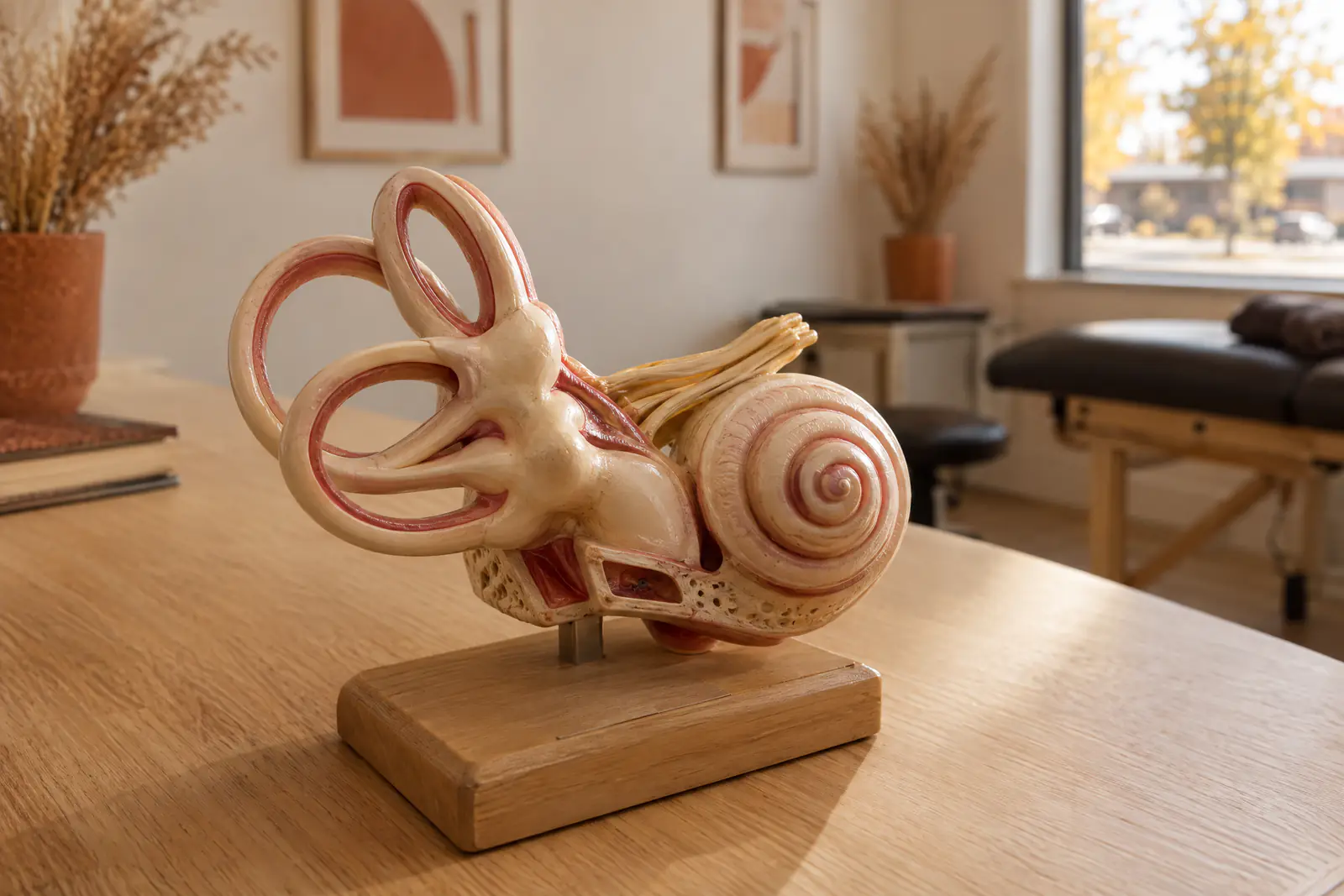
BPPV, where loose crystals in the inner ear cause short bursts of spinning with certain head positions, is the most common cause of vertigo. We cover it in detail in our guide to vertigo and BPPV treatment. If your symptoms do not fit that pattern, these are some of the other causes vestibular physiotherapy can help with.
Inner ear weakness after vestibular neuritis or labyrinthitis
A viral infection can inflame the balance nerve (vestibular neuritis) or the inner ear itself (labyrinthitis, which can also affect hearing). The first few days are often intense spinning and nausea. Once that settles, many people are left with a weaker balance organ on one side, a vestibular hypofunction. You feel fine sitting still, then worse in busy places, when turning your head quickly, or walking in the dark.
Persistent postural-perceptual dizziness (PPPD)
Sometimes dizziness carries on for months after the original trigger has healed. PPPD is a recognised condition where the brain stays on high alert for movement, so standing, walking, busy visual environments like grocery store aisles, and screens make it worse. It is a real, measurable problem, not imagined. It is usually identified by a doctor, and care often combines medical input with gradual vestibular exercise.
Can your neck or a concussion cause dizziness?
Yes, both can, and they often overlap after a car crash or a fall on the ice.
Dizziness linked to the neck
Cervicogenic dizziness is unsteadiness that tracks with neck pain and stiffness, often worse with certain neck positions or after long stretches at a desk. Your neck sends constant position signals to the brain, and when those are disturbed by injury, the balance picture can feel off. It is a diagnosis of exclusion: the inner ear, the heart, blood pressure and other causes need to be ruled out first. Gugan Dakshnamurthy has a clinical interest in the neck, which helps when deciding how much of your dizziness the neck is really responsible for.
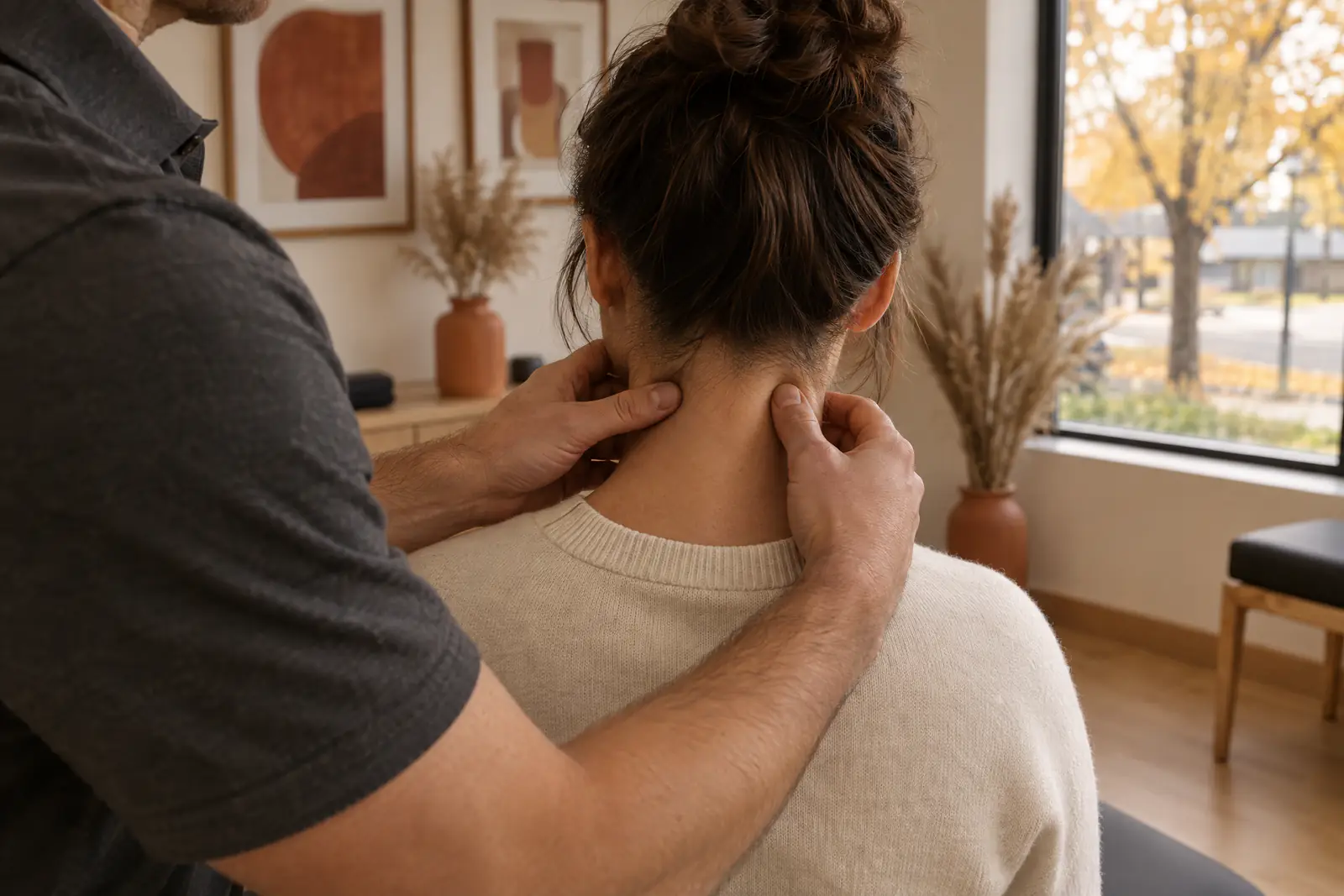
If your dizziness started after a rear-end collision, whiplash and dizziness are often assessed together as part of motor vehicle accident physiotherapy.
Dizziness after concussion
After a concussion, dizziness can come from the inner ear, the neck, the visual system, or all three. Many people notice visual motion sensitivity: scrolling on a phone, busy patterns, traffic or a crowded mall bring the symptoms on. Any new or worsening headache, repeated vomiting, confusion or drowsiness after a head injury needs a doctor first.
Are balance problems just part of getting older?
Some change is normal. The inner ear, eyesight, the sensation in your feet and leg strength all tend to decline with age, and the brain relies on all four to keep you upright. When several fade together, you may feel unsteady without ever having a spinning episode.
The reason to take it seriously is falls. An Edmonton winter means icy parking lots, snowbanks and uneven sidewalks, and a fall can mean a broken wrist or hip. Balance is trainable at any age, and an assessment shows which parts of your system are carrying the load and which need work.

Signs worth booking for: you have had a fall or a near miss, you avoid stairs without a railing, you have stopped walking outdoors in winter, or someone in your family has noticed you shuffling.
What does dizziness treatment in Edmonton look like at Coronation Physiotherapy?
Your first visit is one-on-one with a registered physiotherapist: either Gugan Dakshnamurthy, who is certified in assessing and treating BPPV, or Muthuukaruppan Muthiah (Muthu), the most senior physiotherapist on our team with 24+ years of clinical practice. We take a full history, then test eye movements, head movement responses, positional tests, your neck and your balance, so we can identify where the problem is coming from. Treatment is then built from a few main tools in our vertigo and vestibular physiotherapy service.
Gaze stabilisation
These exercises retrain the reflex that keeps your vision steady while your head moves. They are simple to do at home, usually a few minutes several times a day.

Habituation
Controlled, repeated exposure to the movements or visual settings that bring on symptoms, kept at a level you can tolerate. Over time the brain often becomes less reactive to them.
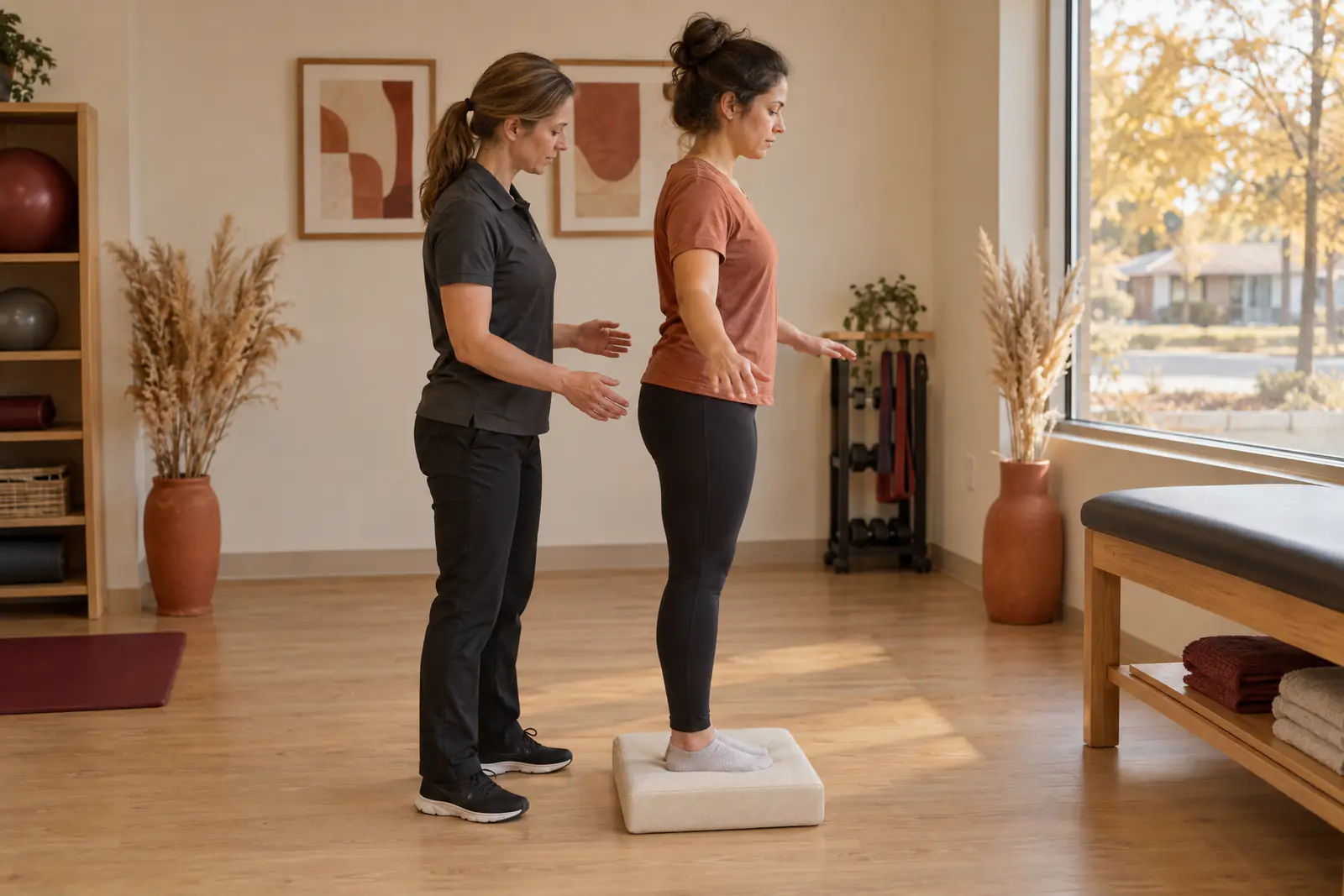
Balance and gait retraining
Standing and walking tasks that get harder as you improve: narrower stances, eyes closed, soft surfaces, head turns while walking. This is the part that carries over to stairs, ice and crowds.
Neck treatment and graded return
Where the neck is involved, we add manual therapy and neck exercise from our wider physiotherapy care. Throughout, we plan a graded return to work, driving, screens and sport, so you are building tolerance rather than just waiting it out.
How long does vestibular rehabilitation take?
It depends on the cause, how long you have had symptoms, and your general health, and everyone responds differently. After vestibular neuritis or labyrinthitis, the NHS notes balance often returns within 2 to 6 weeks, though it can take longer, and vestibular rehabilitation is used when problems persist.
As a rough guide, many people with inner ear weakness or concussion-related dizziness notice change within a few weeks of consistent home exercise, and a full program commonly runs from several weeks to a few months. Long-standing dizziness, PPPD and age-related balance decline can take longer. Doing the exercises daily matters more than the number of clinic visits.
Expect the exercises to stir up mild symptoms at first. That is often part of the retraining, and we adjust the dose so it stays manageable.
The bottom line
If your dizziness does not fit the classic BPPV pattern, there is still a good chance it can be assessed and helped. Dizziness treatment in Edmonton does not have to mean waiting it out. Rule out the emergencies first, then get a clear answer on which part of your balance system needs work.
Important: This article is general information only. It is not medical advice and it cannot be used to diagnose or treat any condition. Every patient is assessed first by one of our registered physiotherapists or our registered massage therapists before any treatment, and your care plan is based on that assessment. If you have symptoms, please book an assessment.
We are at 14315 118 Ave NW in northwest Edmonton, with free parking front and back, direct billing to most major insurers, and no referral needed. Book a dizziness and balance assessment or call us at (825) 451-6263.